[@ChrisWillx] “Your Inner Critic Is Often Wrong” - Jimmy Carr
![[@ChrisWillx] Summarizer](https://summaries.pages.dev/img/logo.webp)
Link: https://youtu.be/TUYrlW7EJ1k
Short Summary
Here's a breakdown of the provided YouTube transcript:
-
Most Important Action Item/Takeaway: Refrain from vague criticism and strive for specific, actionable feedback from your inner critic. Turn it into a "specific coach" by identifying the precise concerns and finding concrete steps to address them.
-
Executive Summary: It is healthy to have an inner critic, but it's important to transform it from a general source of discontent into a specific coach. The inner critic should offer actionable feedback that can be used for improvement and iteration, rather than simply stating that something is "bad." Treat yourself with the same understanding and care you would offer a friend, aiming for specific and constructive self-assessment.
Key Quotes
Here are four quotes extracted from the transcript:
-
"Treat others as you want to be treated, and then there's the treat yourself as you treat others. Most people are very kind, like you're nicer to me than you are to yourself. Like I if you said the [ __ ] you say to yourself, to me, we wouldn't be friends."
-
"Inspiration is perishable. Act on it immediately."
-
"Confidence without competence is delusion."
-
"You're not fragile. You're just finely tuned."
Detailed Summary
Okay, here's a detailed summary of the YouTube video transcript, focusing on the core discussion points and excluding advertisements, in bullet-point format:
-
The Inner Critic: A Necessary Evil?
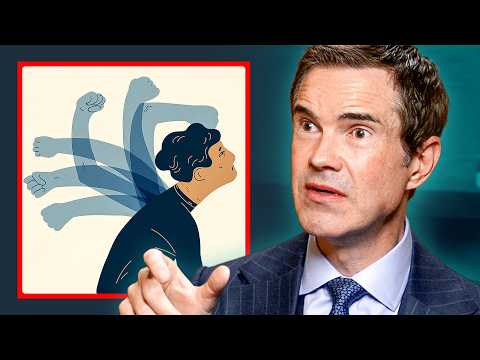
- Having an inner critic is generally healthy.
- However, it's crucial to treat yourself with at least as much kindness as you would treat others ("platinum rule"). People are generally nicer to others than to themselves.
- The inner critic should be process-driven, providing actionable feedback instead of just general negativity.
- It should give you something to work on, aiming towards improvement. It can't just be "that's bad;" it needs to be "that didn't work, so we need to change it."
-
Compartmentalizing Criticism:
- Walt Disney's method of separating creative, management, and critical stages. Only in the final stage were people allowed to criticize ideas. This is a concept to compartmentalize phases in your project.
-
Never Refuse the Muse:
- Always write down creative ideas immediately, as inspiration is perishable.
-
From Vague Critic to Specific Coach:
- Tim Ferriss quote: "The world rewards the specific ask and punishes the vague wish."
- The vague inner critic ("I don't feel good about this") needs to be transformed into a specific coach.
- Move from general discontent to identifying precise concerns.
- Example: Instead of "I don't feel good about the presentation," ask, "What precisely am I concerned about? Do I know that it's true?"
- Fear can masquerade as the inner critic. Address those fears directly.
-
Iteration, Not Repetition:
- Doing the same thing repeatedly doesn't necessarily improve performance.
- Iteration – tweaking and refining based on feedback from the inner critic – is essential for growth.
-
Confidence vs. Competence:
- "Self-confidence without evidence is delusion" (or "Confidence without competence is delusion").
- The inner critic can help prevent delusion by grounding you in reality.
-
Fragile vs. Finely Tuned:
- Reframe inner criticism: Instead of viewing yourself as fragile, see yourself as finely tuned.
- Like a Ferrari that requires careful maintenance and may still have hiccups, a "finely tuned" person needs to manage their self-belief and address vulnerabilities.
-
Treat Yourself as You Would a Friend:
- It's easier to be kind to others than to yourself.
- Don't let your inner critic say things to you that you wouldn't tolerate someone else saying to a friend.
-
Trajectory vs. Position:
- Trajectory is more important than current position.
- Being lower on the ladder but climbing rapidly is better than being near the top but declining.
- Reasons: Recency bias, novelty, dopamine rush of new things.
- People romanticize potential future growth.
- Focus on the trajectory of growth and avoid labeling people heroes and losers based on the present.
-
The Ladder Analogy:
- Three types of people on a ladder: at the bottom, in the middle, and at the top. The best is the one still climbing.
-
What Happens When You Arrive?
- What happens when you achieve your goals? Don't let it be a one-time event.
- Avoid constantly needing to "run it back" to prove yourself or chasing ever-higher targets just to validate achievements.
- Consider a process-oriented approach: keep doing what you're doing if it aligns with your values and opportunities.