[@jackneel] Power Expert: How to Outsmart Narcissists & Spot A Liar Instantly! (Robert Greene Interview)
![[@jackneel] Summarizer](https://summaries.pages.dev/img/logo.webp)
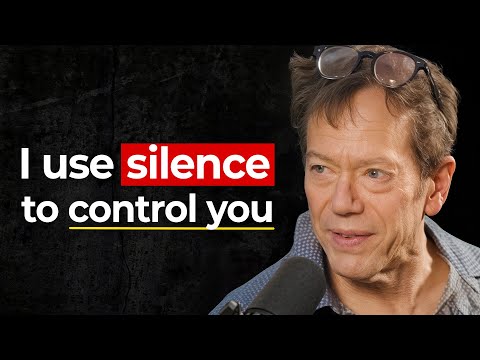
Link: https://youtu.be/vh7TAnbeK70
Short Summary
Okay, here's the requested information based on the provided transcript:
Number One Most Important Action Item/Takeaway:
Trust your gut feeling about people. If something feels sneaky or untrustworthy, there's likely a reason, and you should investigate or proceed with caution.
Executive Summary:
Robert Greene discusses the importance of understanding human nature and power dynamics, both in professional and personal relationships. He emphasizes being aware of the masks people wear, the political games they play, and the importance of not taking things too personally. He also stresses the need to have a spirit of adventure, not to take things for granted, and that life is a game.
Key Quotes
Here are 5 direct quotes from the YouTube transcript that represent valuable insights, interesting data points, surprising statements, or strong opinions:
-
"Oftentimes, the person who plays being subservient or inferior is actually the one in control of the whole dynamic. And the person who thinks they're the boss and thinks they're in control actually isn't. So, it's very tricky and it goes back and forth and back and forth." (Discussing power dynamics in marriage, highlights the subtle and often reversed roles in relationships.)
-
"When men feel the need to like assert themselves and be the one in control and have the final say, it comes from insecurity. It comes from a place of weakness. You're not secure about your own masculinity. You have to assert yourself. You have to prove that you're superior to the woman, right? " (Strongly worded opinion on the roots of male dominance in relationships.)
-
"So, the way I say it is there's a kind of a deadness in their eyes. They're looking at you. They're listening to you, but you can see they're not really connecting. They're the wheels are spinning inside their brain about what they can do with the information you're giving them." (Describing facial qualities in narcissists)
-
"I want you to like trust your gut about people. If you feel like there's something sneaky or slimy or not trustworthy about this person, then then it's probably there's probably something there." (Advice on trusting instincts when assessing people's character.)
-
"The sublime is um I go through the chapters of it. It's about being aware of how strange it is to be alive. like what I've been talking about what a miracle it's it's the and I explain in the book the fact that you and I are sitting here in this room talking is so incredibly unlikely and I explain why it's so unlikely that if you think about it everything in your life is like it's like a dream it's like some it's almost you can almost believe that aliens are running a program it's so weird life is so surreal I talk about your childhood and how incredibly sublime your childhood was and how you can hold on to it and how you can retain that quality." (Describing the feeling of the sublime)
Detailed Summary
Here's a detailed summary of the YouTube video transcript in bullet points, excluding advertisements:
Key Topics and Arguments:
- Power Dynamics:
- The conversation begins discussing how to navigate power dynamics, particularly in professional settings.
- Robert Greene emphasizes being aware of a superior's ego and insecurities, especially when starting out in a new job.
- He advises against trying to outshine the master initially, focusing instead on making the superior look good and learning the power game.
- There are times when it may be beneficial to impress others in the company. However, patience and learning are emphasized over immediate promotion or financial gain.
- Personal Experience with Power Dynamics:
- Greene shares an anecdote from a job where his superior fired him due to his attitude, despite his strong performance.
- He reflects on how he should have played the political game better, even though he hated it.
- Power Dynamics in Marriage:
- Discusses that playing power games in marriage is detrimental.
- The interactive nature of relationships is emphasized, stating blame is rarely one-sided.
- Advises against seeking power in a relationship, instead promoting support, love, and understanding.
- Asserting control stems from insecurity and can create an unfulfilling relationship.
- Gender Roles and Power:
- Acknowledges biological differences between men and women and different needs.
- Challenges the notion that men should always have the final say in decisions, linking it to insecurity and weakness.
- Advocates for respect, avoiding artificial boundaries, and adapting to maintain a fulfilling relationship.
- Seduction:
- Discusses the art of seduction, naming Cleopatra as the greatest female seducer.
- Highlights Cleopatra's ability to understand and exploit the weaknesses of powerful men.
- Compares Cleopatra and Marilyn Monroe, contrasting seduction of the public with seduction of an individual.
- Explains Marilyn Monroe's public persona as a creation, fueled by a need for love, but notes her individual seduction skills were less profound.
- Leadership & the Ability to Adapt:
- Discusses notable emperors like Julius Caesar, Genghis Khan, and Napoleon, mentioning their strengths and weaknesses.
- Emphasizes the importance of adaptability as a key quality of a great leader.
- Critiques Elon Musk, suggesting that while he is adaptable, his marketing brilliance is his strength and he may not be fully in control of himself.
- Self-Deception and Lies We Tell Ourselves:
- Argues that people often lie to themselves because they lack self-awareness, particularly regarding their emotions.
- Highlights how people often deny negative qualities like narcissism and aggression.
- Discusses the benefits of occasional self-deception, suggesting that it's sometimes good to believe that good things are deserved, even if built on nothing.
- Discusses the importance of some level of self-love for energy, purpose, and meaning, without going too far with healthy narcissism.
- Narcissism:
- Explores how people high in narcissism often lean toward art as a means of channeling their self-absorption.
- The interviewee mentioned that people often say, oh no, I'm not a narcissist as a key sign of their narcissism.
- Notes that many successful artists and business leaders are narcissistic to some extent.
- Describes how narcissists often seem interested in others, but with a deadness in their eyes.
- The speaker acknowledges his own narcissistic tendencies, explaining that recognizing them allows him to control them.
- Understanding People:
- Discusses the impossibility of truly knowing another person, emphasizing the importance of beginning from a position of ignorance and observing.
- Advises against pigeonholing people, acknowledging their complexity and constant change.
- Recommends viewing people as characters in a movie to better understand their motivations and complexities.
- Suggests that those characters that are in a movie all have their own fantasies, dreams, and childhood traumas.
- Relationships and Seduction's After-Effects:
- Stresses the importance of maintaining mystery and surprise in relationships.
- Warns against becoming too familiar, leading to the destruction of sexual tension.
- Advises against checking a partner's phone, emphasizing the importance of trust and confronting suspicions directly.
- Highlights the importance of trusting one's gut feelings about people.
- The First Meeting:
- Explains the gut feelings and vibes you pick up from somebody on the first meeting and how they are lost as you become closer to the person.
- Chameleon Nature of Humans:
- Points out the importance to not mistake those quick assumptions for what they actually are.
- Ugliness of Envy:
- Identifies envy as one of the ugliest emotions due to its often unacknowledged and destructive nature.
- Notes that people often justify evil actions out of envy, stemming from feelings of inferiority.
- Spiritual Stance:
- Explains that people who are certain of themselves may be very evil because their certainty is not based on anything real.
- Discusses how its good to have warm and human qualities where you can admit when you don't know or you are uncertain of your own feelings.
- Addresses Robert Greene's agnostic spiritual stance, expressing belief in something larger than individual existence, akin to cosmic energy or a transcendent spirit.
- Experiences and Perspectives on Life:
- Shares experiences from various jobs in his 20s, emphasizing the importance of adventure and accumulating experiences.
- Reflects on the accelerated passage of time with age and the loss of youthful energy.
- Stroke and Vulnerability:
- Shares the impact of suffering a stroke and losing physical control.
- Notes that it led to a greater empathy and understanding for those who lack power in life.
- Underlines the need to cherish one's health and abilities.
- The Sublime:
- Shares that it can feel frustrating to cherish good health when it is taken away from you.
- Discusses upcoming book on the sublime, a state of heightened awareness and connection to something beyond the conventional.
- Describes it's not a book that just makes the rich people go and buy more stuff, but rather a state of connectedness with anything in the world.
- The book will talk about strange things throughout the world, like your relationship with animals, and how the brain creates a reality.
- The 49th Law of Power:
- Greene is very confident in that he covered the idea of power throughout all cultures.
- Final Thought:
- If Greene's works were destroyed and he only had a minute to impart wisdom, he would emphasize the importance of seeing the world as a stage full of actors playing roles.
- That if you are not angry with them, then all you need to do is observe the game to see how it is played.
- The speaker emphasizes that nothing in this world is personal.
- He encourages listeners to not complain, shut up, and play the game well.