[@DwarkeshPatel] Terence Tao – How the world’s top mathematician uses AI
· 7 min read
![[@DwarkeshPatel] Summarizer](https://summaries.pages.dev/img/logo.webp)
Link: https://youtu.be/Q8Fkpi18QXU
Duration: 83 min
Short Summary
Mathematician Terence Tao discusses the historical evolution of astronomical models from Kepler to Newton, contrasting them with modern AI capabilities. The conversation highlights how artificial intelligence is transforming mathematical research by solving decades-old problems like Erdős conjectures and automating routine tasks.
Key Quotes
- "The take I want to try on you is that Kepler was a high-temperature LLM." (00:01:31)
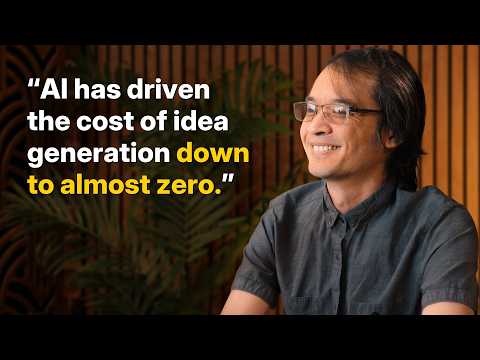
- "I think AI has driven the cost of idea generation down to almost zero, in a very similar way to how the internet drove the cost of communication down to almost zero." (00:04:27)
- "The evidence for natural selection is overwhelming in a certain sense, but it's cumulative and retrospective, whereas Newton can just say, 'Here are my equations. Let me see the moon's orbital period and its distance, and if it lines up, then we've made progress.'" (00:08:10)
- "You're in some sort of mountain range with all kinds of cliffs and walls. Maybe there's a little wall which is three feet high, and one that's six feet high, and then there's fifteen feet high, and then there are some mile-high cliffs. You're trying to climb as many of these cliffs as possible, but it's in the dark." (00:11:44)
- "They can suggest random things, but often I find that trying to chase them down to make them work, and finding they don't work, wastes more time than it saves." (00:15:39)
Detailed Summary
Episode Summary: Historical Models and AI in Science
Kepler and the Foundations of Planetary Science
- Kepler built upon Copernicus's heliocentric model, initially theorizing that five Platonic solids fit between the spheres of the six known planets, though this model was later revised due to data discrepancies.
- Tycho Brahe's observatory provided decades of naked-eye planetary observations with accuracy ten times greater than previous standards, which was essential for Kepler's discoveries.
- Kepler determined that planetary orbits are ellipses rather than circles, establishing two laws regarding elliptical orbits and equal areas sweeping equal times.
- A decade after his initial findings, Kepler discovered his third law linking orbital periods to a power of the distance to the Sun, published in 'The Harmonics of the World'.
- Newton provided a theoretical explanation for Kepler's three laws a century later using the principles of F=ma and centripetal acceleration.
Bode's Law and the Discovery of Planets
- Johann Bode identified a missing planet in the gap between Mars and Jupiter based on a shifted geometric progression of planetary distances, which later led to the discovery of Ceres.
- The discovery of Uranus by Herschel fit the geometric progression pattern exactly, while Neptune's discovery was off-pattern, suggesting the law might be a numerical fluke.
Evolution of Scientific Methodologies
- Classical science paradigms evolved from theory and experiment to include numerical simulation in the 20th century and big data in the late 20th century.
- Modern science often reverses the classic method by collecting large datasets first to draw patterns and deduce thoughts, contrasting with the hypothesis-first approach of the past.
- Darwin's theory of evolution introduced the non-obvious concept that species are not static, published in 1859, two centuries after Newton's Principia Mathematica in 1687.
- Lucretius proposed that species adapted to their environment in the first century BC, centuries before Darwin formalized the theory without knowledge of heredity mechanisms or DNA.
Artificial Intelligence in Mathematics and Research
- AI programs have solved 50 out of 1,100 Erdős problems over the last few months, utilizing a combination of obscure techniques and existing literature results.
- Listener Shawn solved a Jane Street puzzle involving a ResNet with 96 shuffled layers, pairing them into 48 blocks to control residual streams and recover exact orderings.
- Current problem-solving involves human-AI collaboration for proof strategies, critiques, and numerical data generation, with AI acting as 'jumping machines' capable of reaching heights two meters above human capability.
- Once AIs reach Terence Tao-level intelligence, they could replicate a million instances to solve a million problems simultaneously, significantly advancing the field.
- AI tools are expected to revolutionize the experimental side of mathematics by gathering large-scale data on what works and what does not, a capability historically lacking in the discipline.
The Future of Mathematical Proof and AI Integration
- Papers in top math journals typically address problems where existing methods solve 80%, requiring a new technique for the remaining 20%, a process AI can assist with error detection.
- The speaker predicts that by 2026 AI will act as a trustworthy co-author in mathematics, having already become 2x more productive in generating code and pictures for papers.
- Fully autonomous one-shot approaches are not the right strategy; instead, human-AI interplay offers more value, allowing for the generation of hundreds of paper versions and millions of Riemann zeta function variants.
- Lean code formalization allows for the atomic study of individual lemmas, distinguishing boilerplate steps from key argument components to facilitate future ablation studies.
- Systematic studies show an AI tool has a 1% to 2% success rate on any given problem, driving efforts to create a standard set of challenge problems to avoid publishing only wins.
The Impact of AI on Mathematical Research
- Current AI systems perform frontier math that is superintelligent and beyond human capabilities, distinct from traditional human mathematical frontiers.
- Within a decade, many tasks currently done by math students and included in papers are expected to be performed by AI.
- Tools like Mathematica, Wolfram Alpha, and AI can solve fluid equations in a few minutes, a task that once required 19th-century mathematicians to laboriously complete.
- If a Millennium Prize Problem is solved this year, there is a 95% probability that an AI accomplished it autonomously.
- AI tools like Lean enable high school students to contribute to mathematical research frontiers, a feat previously requiring years of education and a PhD.
Strategic Frameworks for Scientific Progress
- Measuring scientific progress is currently limited by having only one timeline of history and approximately 100 stories of historical turning points.
- Access to a million alien civilizations with different scientific development histories could enable a formalized framework for measuring progress and strategy.
- Simulating mini-universes with AI solving basic arithmetic problems can serve as laboratories to test strategies and learn from evolving small AIs.
- The failure of the Riemann hypothesis would indicate a secret pattern to primes, leading to the potential abandonment of prime-based cryptography due to exploits.
The Role of Distraction and Learning Methods
- Serendipitous interactions often occur when attending obligatory events outside one's comfort zone, leading to unexpected networking and learning opportunities.
- Remote meetings during COVID maintained meeting frequency but eliminated serendipitous interactions like hallway encounters and coffee breaks.
- Physical browsing in libraries allowed for accidental discovery of interesting articles, a benefit lost in efficient digital search methods.
- A one-year research stay at the Institute for Advanced Study provided a distraction-free environment, though inspiration waned after several months.
- Writing a blog post takes between half an hour and several hours depending on the topic and helps retention by preventing the loss of knowledge that occurred six months after initial learning.
Fintech and Personal Application
- The speaker opened their first Mercury account in 2023 and values the bank's continuous updates, including the Insights feature that summarizes transactions and highlights anomalies.
- Using Mercury Insights, the speaker reviewed monthly spending data for 2025 to determine cash needs for the upcoming year of operations.
- Mercury is a fintech company and not an FDIC insured bank, with banking services provided through Choice Financial Group and Column NA.
Economic and Educational Shifts
- Sequencing the genome of a single organism, which previously required a full PhD effort, now costs approximately $1,000 using modern sequencers.
- Hybrid human-AI teams are expected to dominate mathematics for the long term, pending additional breakthroughs beyond current capabilities.
- The current era is characterized by high unpredictability, where traditional career paths and educational models in math and science may become obsolete or revolutionized.