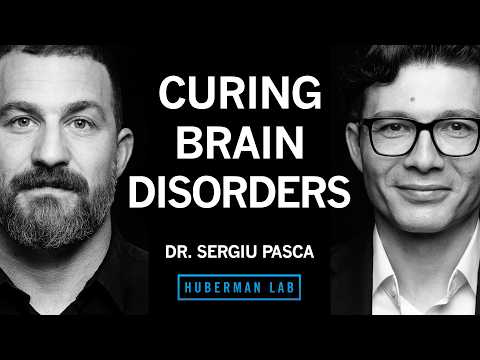
[@hubermanlab] Using Stem Cells to Cure Autism, Epilepsy & Schizophrenia | Dr. Sergiu Pașca
![[@hubermanlab] Summarizer](https://summaries.pages.dev/img/logo.webp)
Link: https://youtu.be/H4mMZ0vliMo
Short Summary
Number One Action Item/Takeaway:
Support and prioritize research efforts aimed at understanding and treating profound autism by focusing on the development and utilization of innovative technologies like organoids and assemblids, which allow scientists to study human brain circuitry directly and develop targeted therapies.
Executive Summary:
Dr. Sergu Pasca discusses cutting-edge research using stem cells, organoids, and assemblids to understand and potentially cure profound autism and other psychiatric conditions. These technologies allow researchers to model human brain development and disease in a dish, overcoming the limitations of animal models and leading to the development of novel, targeted therapies, including a clinical trial for Timothy syndrome. The episode also addresses the ethical considerations surrounding these technologies, emphasizing the importance of careful nomenclature and communication with the public.
Key Quotes
Here are 5 direct quotes from the YouTube video transcript that represent particularly valuable insights, interesting data points, or strong opinions:
- "So autism is a complex condition. It's a spectrum, as you said. uh in a way you could say autism and neurodedevelopmental disorders. It's behaviorally defined. There's no biomarker. So in a way it's a condition that is defined exclusively by observing behavior which is actually the case for most psychiatric disorders."
- "Another way of like thinking is about autism is that autism is not one disease. And I think, you know, no psychiatrist or even biologists who studying autism would ever consider that this is one single disease. The way I look at it um sometimes is like think about the fever of the 19th century in medicine, right? So you see this very often in movies, right? They will say, "Oh, he has a fever, high fever. He's going to die from high fever." Well, that fever could have been a viral infection, a bacterial infection, could have been cancer, metastatic cancer, right? Could have been an autoimmune disease. The treatments are very different. But in that time, that's all we knew. It was we were observing that behavior in which case raising of the temperature, but we didn't know the biology."
- "Yeah. Well, presumably you could inject into the brain as well, right? There are ways in which you can inject through either surgery or through an injection in the spinal canal like intrathecally. So that's certainly one way in which you can do it. It is very challenging though because of course the brain has a lot of cell types and you know you very often the way you deliver this like through a virus or through other modalities you know there's only so much of that virus that you can actually put inside the nervous system and the efficiency is not yet like very high. "
- "...the words matter uh a lot and in fact that has been uh you know one of the things that we've done over the years. uh a few years ago I thought it would be really important to get most of the scientists in the field together and start thinking about these terms really carefully and so we got together created sort of like an ad hoc consortium and through many many calls one-on-one in various groups we came up with one paper which was published in nature a couple of years ago really comes as a nomature for the field we as scientists decided these are like the way we classify them these are the terms that we all agreed should be used..."
- "So what we did is essentially we thought about like the simplest circuit for movement which is like the cortical spinal tract. Right? So that means that a neuron in deep layers of the cortex, sends a long axons all the way to the spinal cord, finds a motor neuron, makes a connection, then the motor neuron leaves the spinal cord, goes to the muscle. And essentially, you only have these two neurons, right, that are connecting with each other with the muscle. Two connections, one between the two of them and one with the muscle. So the simplest of circuits that you can have."
Detailed Summary
Here is a detailed summary of the YouTube video transcript, using bullet points and highlighting key information:
Key Topics:
- Autism (including prevalence, genetic component, treatment, profound autism)
- Schizophrenia
- Human Brain Development (during pregnancy, childhood, and into the third decade)
- Stem Cells (including embryonic, induced pluripotent, ethical considerations, umbilical cord stem cells)
- Organoids and Assemblids (development, use in research, ethical implications)
- Gene Therapy and CRISPR Technology
Arguments and Information:
-
Autism Spectrum Disorder:
- Autism is a complex, behaviorally-defined spectrum disorder; there are no biomarkers.
- Prevalence is rising (now almost 3% of the general population).
- Strong genetic component, debunking the "refrigerator mother" theory.
- Likely not one disease but a collection of conditions with similar behavioral manifestations (like "fever" in the 19th century).
- Higher prevalence in males (ratio of 1:4 males to females); potential explanations include differences in diagnosis, masking of symptoms in females, differences in brain development/resilience to injury between sexes, and/or something related to SRY gene, the gene that makes functional males.
- Anecdotal reports exist of improved symptoms during fever, potentially linked to the neurodenergic system, cytokines, or ion channel activity.
- While microbiome imbalances and sleep disturbances can affect quality of life, they are likely not primary causes.
-
The Problem of Diagnosis:
- Autism is diagnosed based on the presence or absence of behaviors.
- Genetic testing can provide a diagnosis in ~20% of cases; hope is that individualized genetic treatments will develop, potentially through "genetic or otherwise."
- Remaining patients fall into idiopathic (unknown cause) category.
-
Increasing Autism Prevalence:
- Likely due to changes in diagnostic criteria, diagnostic migration (children diagnosed with intellectual disability now fitting autism criteria), service availability, and possibly some environmental factors (e.g., thalidomide exposure in utero). The cause remains largely unknown.
- Autism prevalence is similarly increasing in other countries.
-
Genetic Components:
- Hundreds of genes are associated with specific forms of autism; mutation of these genes are associated with specific forms of autism.
- These genes code for proteins involved in synapses, ion channels (channelopathies), synaptic function (synaptopies), chromatin packing (chromatinopathies), and others.
- Elegant experiments have shown that these mutations also affect peripheral systems (sensory neurons, skin, hearing, microbiome), suggesting that brain deficits may be a byproduct of these other changes.
-
Current Autism Treatment:
- There is no single treatment for autism because autism is not one single disease.
- If a family walks into a clinic with a diagnosis of autism, there's like a 20% probability that they'll leave the clinic with a genetic diagnosis (point mutation).
- Timothy syndrome a genetic form of autism where the mutation is very clear and causes a relatively similar presentation in all of these patients (Timothy syndrome is a very clear one).
-
Gene Therapy and CRISPR:
- Gene therapy encompasses a variety of approaches to correct genetic defects.
- Approaches include delivering a functional gene via a virus (like AAV adeno-associated virus), delivering a missing enzyme (protein), or directly correcting the DNA using CRISPR.
- CRISPR involves guiding enzymes to specific DNA locations for cutting and repairing.
- Challenges of gene therapy include efficient delivery to affected cells (especially in the brain), gene size limitations (too big to fit in the virus), and potential immune reactions, particularly from adeno-associated viruses.
- CRISPR offers potential to edit genes in adulthood.
- "Biohacking" and unapproved stem cell therapies raise significant safety and ethical concerns.
-
Stem Cells:
- Stem cells can self-renew indefinitely and differentiate into other cell types.
- Embryonic stem cells (from early embryos) are pluripotent (can become most cell types), but their use raises ethical concerns.
- Umbilical cord stem cells are restricted in potential (mainly for blood disorders).
- Induced pluripotent stem cells (iPSCs) can be created from adult cells (e.g., skin) by introducing Yamanaka factors, circumventing the ethical issues associated with embryonic stem cells.
- Stem cell injections are not universally applicable, particularly when these therapies involve injecting cells, particularly brain/eye cells, whose function or origin are not well-known and which could create, e.g., tumors.
-
Organoids and Assemblids:
- Organoids are 3D cultures of cells that self-organize to resemble structures from the brain (or other organs), however, they are not entire organs.
- Assemblids combine multiple organoid regions to model circuit interactions.
- Useful for studying human brain development and disease in vitro.
- Developmental timing is recapitulated: Organoids in a dish spontaneously shift to a post-natal state around nine months.
- Example of cortical-spinal assemblid to model motor control circuitry; sensory neurons can be wired in, and responses measured.
- Can be used to study and potentially treat genetic pain conditions.
- Assembleids can also be used to understand a number of diseases like: Timothy syndrome, severe intellectual disability, forms of schizophrenia, intractable forms of epilepsy.
-
Ethical Considerations (Organoids & Assemblids):
- Need for proper consent for cell use.
- Ethical considerations regarding harm to animals.
- Potential for emergent properties (learning, computation, awareness/sentience) to arise.
- Importance of accurate communication and nomenclature (avoiding misleading terms like "mini-brains").
-
Transplantation:
- The timing of transplantation is key, for example, the brain can only form new connections early in development.
- Early in development, parts of the brain have higher permissivity for connection and integration.
- However, you need to control the factors.
-
Eugenics:
- People are basing genetic decisions when having children, even in the more old fashioned way.
-
General Science and Ethics:
- Essential for scientists to use specific language.
- Science is self-correcting.
- Most scientist are trying to move science in the right direction.
This summary provides a detailed overview of the topics discussed in the video, as well as the key arguments and information presented by the speakers.