[@RenaissancePeriodization] Exercise Scientist vs Navy SEAL: Does Their Training Work?
![[@RenaissancePeriodization] Summarizer](https://summaries.pages.dev/img/logo.webp)
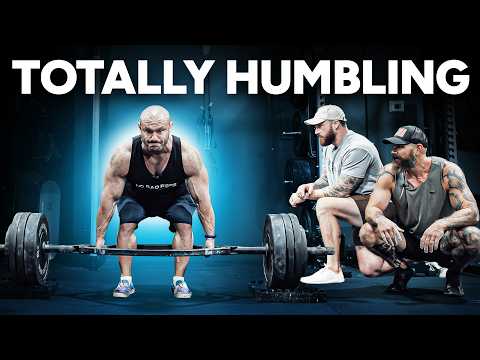
Link: https://youtu.be/60vVC-L-KBY
Short Summary
Number One Action Item/Takeaway:
Aspiring tactical professionals should strive for well-rounded physical fitness encompassing strength, explosiveness, endurance, and core stability, not just general fitness.
Executive Summary:
The GBRS performance program emphasizes a tiered fitness standard for tactical professionals, encompassing minimum standards, elite levels, and a "be a pro" benchmark. The program tests various physical attributes including broad jump, trap bar deadlift, pull-ups, farmer's carry, bench press, plank, and an 800-meter run to assess a well-rounded tactical professional. The goal is to develop and maintain a high level of physical capability to keep operators "in the game" for as long as possible.
Key Quotes
Here are 4 quotes extracted from the transcript that I found particularly insightful or interesting:
-
"What we're trying to do is develop a well-rounded tactical professional. We will have the first one which is our minimum standards where we think if you are on a SWAT team, military things that you should absolutely be able to check the box on and hopefully be able to maintain those for as long as possible. And then we also want to constantly be pushing that needle a little bit further...". This quote highlights the GBRS philosophy of not only meeting minimum requirements but striving for continuous improvement in tactical fitness.
-
"It's not just getting them into the game. It's keeping them in the game as long as possible and being able to maintain that level of physical fitness." This underscores the importance of sustainable fitness for operators, rather than just short-term peak performance.
-
"Aesthetics matter. Like presence matters. when someone walks into a room, especially in tactical profession, like it'll deescalate a situation when someone walks in in a uniform and they look like they're capable of doing something versus someone that's not, and everyone's like, "Gh, I don't feel comfortable now." This offers a perspective on the practical value of physical appearance in tactical situations, beyond just physical capability.
-
"I think it is very much the standard that you want to be shooting for because a lot of standards are just carryover physical fitness standards from way back in the 60s or some shit back when our understanding wasn't as specific to the task as it could have been." This critiques traditional fitness tests and praises the GBRS program for its task-specific and modern approach.
Detailed Summary
Here's a detailed summary of the YouTube video transcript, presented in bullet points, focusing on the core content and excluding advertisements or promotional material:
Key Topics:
- GBRS Performance Program Fitness Test: The video focuses on Dr. Mike taking a physical fitness test designed by GBRS, a group specializing in training individuals for special operations and tactical professions.
- Three Performance Tiers: The test is structured around three levels of fitness:
- Minimum Standard: The baseline level expected for SWAT team members or military personnel.
- Elite: A higher level of performance, pushing beyond the minimum.
- Be a Pro: The highest level, aimed at maintaining peak physical condition and longevity in the field.
- Importance of Well-Rounded Tactical Professional: The goal is to develop individuals who are physically and mentally capable across various tactical demands.
- Maintaining Fitness over Time: Emphasis is placed on not just achieving a certain level of fitness, but maintaining it consistently over a long period.
The Fitness Test & Results:
- Broad Jump:
- Purpose: Measures horizontal power, acceleration, mobility, and the ability to cover ground dynamically (CQB).
- Minimum Standard: 5'9" (Mike barely achieved it).
- DJ: 9'4"
- Trap Bar Deadlift (5 Reps):
- Purpose: Measures strength.
- Minimum Standard: 1.5 times body weight (Mike achieved this).
- Be a Pro Standard: 2x bodyweight
- DJ: Achieved 2x body weight
- Pull-Ups:
- Purpose: Measures upper body strength, functional overhead movement, and grip strength.
- Minimum Standard: 10 pull-ups (Mike achieved this).
- Be a Pro Standard: 20 pull-ups
- DJ: 22 pull-ups
- Farmer's Carry (Body Weight):
- Purpose: Measures postural strength, grip, stance, and the ability to carry weight for sustained distances under fatigue.
- Minimum Standard: 175 feet (Mike achieved this).
- Be a Pro Standard: 250 feet.
- DJ: Achieved Be a Pro Standard
- Bench Press (Body Weight):
- Purpose: Horizontal pressing power; replicating combatives skills for pushing opponents away.
- Minimum Standard: 10 reps.
- Be a Pro Standard: 20 reps
- DJ: 22 reps.
- Mike: 2 reps.
- Plank:
- Purpose: Core strength and endurance
- Minimum Standard: 2 minutes (Mike achieved this)
- Be a Pro Standard: 3 minutes
- DJ: Achieved Be a Pro Standard
- 800 Meter Run:
- Purpose: Measures aerobic capacity.
- Minimum Standard: 3 minutes 15 seconds.
- Be a Pro Standard: Under 2 minutes 45 seconds.
- DJ: 2 minutes 42 seconds (Be a Pro).
- Mike: 5 minutes 30 seconds.
Arguments & Information:
- Aesthetics Matter in Tactical Professions: Appearance and physical presence can de-escalate situations. A fit-looking individual commands more respect and confidence.
- Emphasis on Practical Strength: The tests are designed to mimic real-world tactical scenarios, such as moving heavy objects or carrying injured individuals.
- Critique of Traditional Fitness Standards: Traditional military fitness tests (e.g., long runs and push-ups) are considered less specific to the demands of modern tactical operations.
- Importance of Mental Health: Joking about the difficulty of the test leads to a moment of seriousness when they emphasis not wanting to create mental scar tissue, only physical, and that there's value in ending the test on a positive note.