[@JesseMichels] BREAKING: Massive Power Grid Found Beneath Pyramids of Egypt
· 4 min read
![[@JesseMichels] Summarizer](https://summaries.pages.dev/img/logo.webp)
Link: https://youtu.be/NvQXmtcwHA8
Duration: 249 min
Short Summary
Researchers Filipo Biandi and Jeffrey Drum present new theories regarding the Great Pyramid of Kufu, utilizing advanced synthetic aperture radar to reveal internal structures. Their evidence suggests the pyramid functioned as an ancient energy machine, potentially predating standard timelines to the Saharan humid period. The discussion contrasts these findings with muon scanning results, highlighting the discovery of significant subterranean chambers and vertical shafts.
Key Quotes
- "There is also electricity inside this fossilized lightning through these iron veins." (00:00:20)
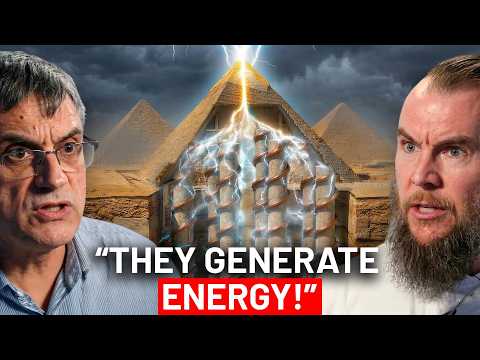
- "Each pyramid is producing a specific chemical and the sequence of these chemicals transforms one product into the next product into the next product." (00:00:41)
- "If we do have tubular structures, pillars with coils wrapping around them that go a kilometer deep with a foundation underneath them, that's insane. That's huge." (00:00:53)
- "There is also electricity inside this fossilized lightning through these iron veins. What is creating the lack of signature here?" (00:00:20)
- "So, so my next question here and as we'll see in just a moment, the S team has detected some features that go around the king's chamber." (00:19:13)
Detailed Summary
The Great Pyramid: New Discoveries and Advanced Scanning
Executive Overview
- Researchers Filipo Biandi, a data scientist with 30 years of experience, and engineer Jeffrey Drum are utilizing the Beyond Method and Synthetic Aperture Radar Doppler Tomography to visualize internal voids without invasive excavation.
- The episode explores the hypothesis that the Great Pyramid functioned as an ancient energy machine, potentially originating during the Saharan humid period between 8,500 BC and 5,300 BC, predating standard Ministry of Culture timelines.
Key Structural Findings and Subterranean Systems
- The Great Pyramid contains approximately 2.3 million stone blocks, some weighing up to 70 tons, built around 2500 BC for Pharaoh Kufu.
- Scans identified a three-level Osiris shaft structure on the eastern causeway, featuring a 33-meter underground triple-chamber system connected to an independent subterranean aquifer not linked to the Nile.
- A new passage, designated Tag 17, was discovered under the northern chevrons; it is approximately 9 meters long and connects to the Grand Gallery.
- Eight enormous cylindrical tubular structures extending hundreds of meters beneath the Giza plateau were detected by Biandi and Curado Malonga in 2022.
- Huge tubes with a 20-meter diameter were found descending more than 1 kilometer deep, potentially linked to hydrothermal vents.
Scanning Technologies and Methodological Comparisons
- The discussion contrasts muon scanning, established since the 1970s, with SAR Doppler tomography, noting that muon scans sum all horizontal layers while SAR provides distinct slice capabilities.
- A major discrepancy exists regarding the Big Void's orientation; Muon scans indicate a longitudinal structure, whereas the SAR team suggests a transverse orientation.
- The Beyond protocol interprets micro vibrations or phonons using a 10 GHz central frequency radio carrier, requiring a 15-second signal integration for a 5 km by 5 km scan footprint.
- Processing time for tomographic synthesis is expected to reduce from 15 days to 30 seconds through software re-conversion and increased GPU processing power.
Functional Theories and Geological Evidence
- Aerospace engineer Christopher Dunn proposes the pyramid generated power through vibrations interacting with quartz crystals, while Jeffrey Drum hypothesizes it harnessed atmospheric electricity to produce hydrogen gas.
- Evidence from Filippo's team identifies extensive iron ore veins and hydrothermal vent systems within the Giza Plateau containing rare earth elements and fulgarites.
- Water samples from the Osiris shaft were identified as brackish, sourced from an aquifer distinct from the Nile, supporting the theory of chemical manufacturing involving hydrogen sulfide gas.
Future Plans and Verification
- The Muon team plans to excavate the Great Pyramid in 2026 to investigate the Big Void, pending approvals in Egypt.
- Matt Bell from the Limitless podcast is financing robotics development to investigate shafts in the Queen's Chamber.
- Action items include conducting thinly sliced structural analyses similar to the Grand Sasso study to verify the copper pyramid's structures.