[@JesseMichels] The Most Controversial Biologist Alive Breaks Down Telepathy

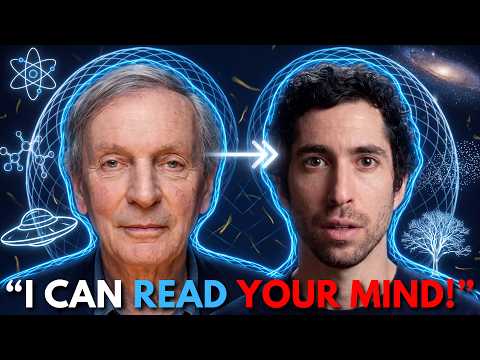
Link: https://youtu.be/uvRzhb2Pef4
Duration: 136 min
Transcript: Download plain text
Short Summary
This long-form interview features biologist Rupert Sheldrake, a former Cambridge zoologist and author of "The Physics of Angels" and "A New Science of Life," who argues that non-material "morphic fields" carry memory through morphic resonance and explain instinct, telepathy and the perception of being watched. He is joined by experimental parapsychologist Dean Radin, author of "pro-appesia," who reports presentiment experiments, animal-based earthquake prediction and intelligent plasma. Together they argue theory should be built from anomalies, and that public technological demonstrations would sway opinion more than peer-reviewed papers.
Key Quotes
- "the shaping of animals and plants as they grow and the shaping of self-organizing systems depends on a new kind of field of physics which I call morphic fields." (00:00:00)
- "And the first generation of rats took about 250 trials until after 20 or 30 generations, they got down to about 25 trials." (00:01:30)
- "And in order to bias it, they don't have to be a form of energy. This magnet is not a form of energy. It's the magnetic field has energetic consequences, but it's not doing it by expending energy." (01:03:33)
- "Um, but actually fields don't work energetically. They're not a for a kind of energy. They're a kind of form. Their role is formative, not energetic." (00:58:07)
- "It's not I don't think it's terribly important cosmic principle. I mean it is an important cosmic principle in that it says that in energetic processes there's uh uh you you you have differences in heat or pressure tend to equalize and um so it's I mean it's important in in practice in designing and making machines but it doesn't explain any of the order in the universe." (01:35:56)
Detailed Summary
Detailed Episode Summary
Participants and Guiding Thesis
The long-form interview brings together biologist Rupert Sheldrake and experimental parapsychologist Dean Radin, who discuss fields, consciousness, anomalous experiences, and limits of mainstream scientific models. Their shared methodological preference is to begin with anomalies that existing frameworks cannot explain and to seek demonstrations capable of changing public and professional opinion.
- Rupert Sheldrake is a British biologist and former Cambridge zoologist who developed the theory of morphic fields and authored A New Science of Life, The Physics of Angels, and Ways to Go Beyond and Why They Work. His work on biological form drew partly from that of his father, British biologist Richard Lancelot Sheldrake.
- Sheldrake recounts an unusual encounter during a speech in which a man stabbed him in the leg after claiming that Sheldrake was telepathically controlling him. Sheldrake describes the man as paranoid and delusional and says people had to carry him on a stretcher to an ambulance for surgery.
- Dean Radin is a long-time experimental parapsychologist who has studied presentiment, telepathy, remote viewing, and related phenomena in laboratory settings. As a schoolboy, he won a science prize for reading Fred Hoyle’s Frontiers of Astronomy.
- Both guests treat anomalous experiences as possible evidence of causal structures omitted from conventional physics, particularly fields that carry form and memory. They argue that a viable theory should be constrained by anomalies rather than generated solely from existing equations.
- Both also argue that peer-reviewed publication alone has little power to change minds. Radin and Sheldrake repeatedly favor public technological demonstrations—such as an earthquake-warning system based on animal behavior—as a more persuasive test of whether anomalous effects are real.
Morphic Fields and Morphic Resonance
Sheldrake’s central proposal is that the organization of living things and other self-organizing systems depends on fields that are physical in effect but not composed of ordinary matter. These fields carry inherited form through resemblance across space and time.
- Morphic fields are described as structures in space that are not made of matter and whose function is to shape form. Sheldrake extends the concept from the development of a leaf or flower to quantum matter fields that shape electronic orbitals around a nucleus.
- Their proposed function is morphic resonance: similar structures influence similar structures across space and time. Sheldrake characterizes this as a “handshake across space and time” through which a developing organism can inherit patterns already established by earlier organisms.
- A baby spider provides the central example: it spins a species-specific web without attending “spider school,” supposedly by resonating with the accumulated habits of past spiders. An oak seedling is said to tune in to previous oaks because it shares their DNA, cell structure, and overall form.
- On this account, nature’s regularities are inherited habits rather than immutable laws fixed at the Big Bang. Memory would then exist not only in individual species, crystals, and organisms but also in larger structures such as planets and stars.
- Morphic fields need not transmit energy in the ordinary mechanical sense. Their proposed influence is instead to bias the intrinsic randomness of quantum processes and higher-level chaotic processes such as weather.
- Sheldrake rejects a centralized “client-server” model in which an organism uploads or downloads information from one storage location. He compares the internet’s thousands of distributed data centers with a direct resonance among similar organisms: an oak seedling responds to past oaks worldwide rather than consulting a central archive.
- He considers extra dimensions or an akashic record unnecessary theoretical complications at this stage. The priority is to establish empirically whether resonance occurs, after which multiple theoretical explanations could be compared.
- For epigenetic studies, Sheldrake recommends a morphic-resonance control involving organisms not descended from the exposed parents. This would test whether an effect arises from inheritance or would occur anyway through resonance with similarly treated organisms.
The Rat Experiments and Inheritance of Acquired Characters
The discussion turns to a multigenerational rat-learning program that Sheldrake treats as the strongest evidence that acquired behavior can cross generational boundaries without ordinary genetic transmission. The Melbourne control group is presented as the decisive and most surprising part of the story.
- The original Harvard water-maze experiment, described by Sheldrake as the largest and longest series of rat experiments, was designed to test the inheritance of acquired characters rather than morphic resonance directly.
- Rats escaped through the dim exit rather than the lit one and received an electric shock when they chose incorrectly. The correct exit alternated at random, preventing the animals from solving the task through a fixed directional rule.
- Learning improved over successive generations. The first generation required roughly 250 trials, the next about 200, and the following generation about 150, falling to approximately 25 trials after 20 or 30 generations.
- Replications at Edinburgh University and Melbourne University used the same rat breed and maze and began at roughly 25 errors, effectively continuing where the Harvard experiment had left off.
- The Melbourne study included a control line descended from untrained parents. According to Sheldrake, the trained and control lines improved at approximately the same rate, despite only one line having parents that had learned the maze.
- Sheldrake interprets that result as evidence for morphic resonance rather than genetic or epigenetic transmission: both trained and untrained descendants apparently benefited from the accumulated habit of earlier rats solving the same task.
- The episode does not treat this interpretation as universally accepted. Instead, the Melbourne result is repeatedly singled out as the experimental surprise that distinguishes morphic resonance from conventional inheritance.
Darwin, Epigenetics, and Acquired Traits
Sheldrake places morphic resonance in a longer history of debate over whether acquired characteristics can be inherited, connecting it with both Darwin’s own writing and modern epigenetics. The discussion distinguishes inherited chemical regulation from the broader claim that learned behavioral patterns can cross generations.
- Sheldrake argues that Charles Darwin was far from a strict neodarwinian. Darwin believed that some acquired characteristics could be inherited, did not know of genes, and lived before genes were rediscovered around 1900, after his death.
- He cites a letter Darwin wrote to Nature about a dog terrified of butcher shops whose father had reportedly been mistreated or frightened by a butcher. Sheldrake presents the anecdote as consistent with a transgenerational form of memory.
- A later Nature mouse experiment trained male mice to fear acetophenone, a synthetic chemical associated with a cherry-like smell, by shocking their paws. The offspring and grandchildren subsequently froze when exposed to the odor.
- The mouse findings were attributed to epigenetic changes in sperm, including DNA methylation and small RNAs. They demonstrate a biological route by which experience can affect later generations.
- Sheldrake describes epigenetic inheritance as now mainstream despite its former taboo. Plants attacked by insects produce protective or repellent chemicals, and seeds from those plants can grow into offspring with greater resistance.
- Gene expression is presented as dynamic rather than static: acetylation typically switches genes on and methylation generally switches them off, although Sheldrake notes exceptions and describes this account as a high-level simplification.
- As an analogy for a newly achievable accomplishment, the host invokes the “banister effect.” Roger Bannister broke the four-minute mile in 1952, and roughly 11 other people did so within the following two years, as though the first accomplishment made the later ones easier.
- Results in which learned behavior appears to transfer among unrelated members of the same species are presented as a reason to consider whether epigenetics alone is sufficient.
Telepathy Between Closely Bonded Individuals
Sheldrake argues that telepathy is strongest between people with intense emotional bonds, which helps explain why laboratory effects can be weak even when everyday experiences seem compelling. He cites observational mother–baby evidence and controlled dog experiments as his principal examples.
- Sheldrake says there is “very good evidence for telepathy” and argues that categorical skepticism often begins by presuming anomalous evidence must be fraudulent rather than by examining it.
- In filmed nursing-mother and baby studies, mothers working several miles away reportedly experience milk let-down and breast tingling at moments when the baby is distressed, including outside normal feeding times. Sheldrake presents these synchronized observations as evidence of emotional telepathy.
- Randomly waking babies to test this effect would be unethical or impractical, so the mother–baby evidence is primarily observational and filmed rather than fully randomized.
- Sheldrake considers dogs and cats better suited to controlled experiments and says they are more telepathic than humans. In dog trials, an owner returns home at a randomized time and in an unfamiliar vehicle, reducing reliance on familiar sounds, scents, and routines.
- A dog named JT reportedly went to the window 11 seconds after the owner departed and sat there expectantly, waiting for the return that occurred at a randomly selected time.
- Controls addressed ordinary departure routines, vehicle sounds and smells, whether another household member knew the return time, and whether anyone was at home. Sheldrake says the dogs repeatedly anticipated returns at statistically significant levels.
- The claimed effect is restricted to emotionally closely bonded pairs—parents and children, spouses, lovers, siblings, identical twins, therapists and clients, and best friends. It is not described as a general facility for contacting strangers.
- About 85% of people reportedly report telepathic telephone experiences, such as thinking of someone who then calls or identifying the caller before checking the display. About 95% report a sense of being watched.
- Sheldrake attributes the weakness of many experiments to the difference between emotionally charged real-life situations and laboratory tasks. He also argues that the tradition of “prioritized skepticism,” taught since Francis Bacon, can itself influence experimental expectations.
- A dog’s apparent knowledge that its particular owner is returning illustrates a practical limitation: the effect may depend on a unique bond, making it poorly suited to espionage or ordinary commercial use.
Telephone Telepathy, Pro-Appesia, and Remote Viewing
Radin introduces more controlled telephone studies and a case-study approach to unexpected meetings. The discussion also connects telepathy and intention to random-event generators and long-running government remote-viewing programs.
- In Radin’s telephone experiments, participants asked to guess who was about to call performed no better than chance. When the eventual caller was actually thinking about the recipient, however, the results were strongly significant.
- Radin has written about hundreds of cases in which people anticipated an unexpected encounter, a category he calls “pro-appesia.” One example concerns a couple in Paris who thought of someone they had not seen for 20 years and then encountered that person around a corner.
- A friend of Sheldrake’s helped run the Princeton Engineering Anomalies Research Center, or PEAR, under engineering dean Bob Jahn. PEAR’s random-event-generator experiments suggested that intention could shift radioactive-isotope decay or the 50/50 outcome of a double-slit apparatus.
- Sheldrake notes that the CIA ran a remote-viewing program for 23 years, while suggesting that some form of the work likely continued afterward.
- Despite the existence of these programs and repeated laboratory results, the episode emphasizes that no commercial system has emerged with anything comparable to the speculative billion-dollar hedge fund imagined as a practical test.
The Perception of Being Watched
The claim that people can sense a gaze receives support from Sheldrake’s own experiments and occupational anecdotes, but the episode also contains a conspicuous controlled null result. That contradiction is one of the interview’s clearest surprises.
- Sheldrake reports that people who sense a gaze from behind often swivel around and look directly at its source rather than merely glancing in the general direction. He says the same response has been observed in animals.
- Anecdotal material came from security and surveillance personnel, including the drug squad at Heathrow airport and store detectives at Harrods.
- One Harrods detective described a shoplifter in the shoe department, watched by colleagues and a camera, who suddenly looked up toward the camera, put the shoes back, and left.
- Controlled FaceTime and Zoom trials lasted 10 seconds each. In each trial, the remote observer either looked at the subject, displayed a picture of someone else, or showed a distracting image, and the subject guessed whether they were being watched.
- Across thousands of trials, the results were reported as exactly at chance level. This result sharply undercuts the stronger everyday anecdotes and shows that ordinary people cannot reliably detect an electronic gaze.
- A visitor from the British Ministry of Defence with someone from MI5 asked whether terrorists could be trained to know when they were under CCTV surveillance. The answer was that anecdotes suggest trained individuals might be able to do so even though most people cannot.
How the Body Could Detect a Field
The episode considers what physiological mechanism could make a gaze detectable through clothing and fur. Sheldrake’s answer is a field surrounding the body, while his disagreement with developmental biologist Michael Levin centers on whether bioelectric fields actively shape anatomy or merely mediate between form and physical organization.
- Skin cannot plausibly be the primary detector because fully clothed people in winter respond without exposed skin, and furry animals respond through dense fur. Sheldrake therefore proposes a surrounding field that penetrates both clothing and fur.
- The brain’s electromagnetic field is weak but can be measured through EEG. The heart’s field is substantially stronger and can be detected from several feet away with standard electrical apparatus rather than dowsing.
- Levin’s work at Tufts University argues that the body’s bioelectric field plays a more fundamental role in limb development and morphology than DNA alone. The discussion uses Levin’s analogy of DNA as hardware and the bioelectric field as software writing that hardware.
- Sheldrake disputes the direction of causation. In his account, genetics establishes proteins, ion channels, and much of the physical “hardware,” while the bioelectric field is more passive and is produced by the developing organization.
- He nevertheless concedes Levin’s narrower point: bioelectric fields exist around cells and organisms and can reveal where an eye will form in a developing embryo.
- Sheldrake describes such fields as an interface between morphic fields and ordinary physical organisms, rather than the primary cause of morphology.
- Conventional electromagnetic forces weaken approximately as one over distance squared. If the owner-awareness, mother-awareness, or bean-plant examples were mediated by ordinary EM signals, Sheldrake argues that radio antennas should already have detected them.
- The examples include a dog knowing its owner is nearby, a child sensing its mother nearby, and a bean plant reportedly growing around a pole that is not physically present.
Extramission Versus Intramission Vision
Sheldrake favors extramission, the view that perception reaches outward to the perceived object, over intramission, the idea that images are constructed entirely inside the head. The argument draws on ancient philosophy, child development, dreams, illusions, and current neuroscience.
- The dispute between outward and inward models of perception dates to ancient Greece. Sheldrake says extramission reflects both ordinary experience and the assumptions most children bring to perception before formal education corrects them.
- The established portion of vision science explains how light enters the eyes, forms inverted retinal images, and produces impulses through the optic nerves and visual cortex. Sheldrake disputes the additional inference that the brain necessarily creates an internal three-dimensional, full-color virtual-reality display.
- He argues that nobody has directly seen images inside their own head. The familiar location of an observed person may therefore be a more faithful description of perception than the standard inside-the-head model.
- An Ohio State University psychology professor reportedly compelled students who believed in extramission to undergo re-education. They answered correctly on immediate retesting but reverted to their direct experience after six months.
- Sheldrake’s model treats the mind as constructing an image or hypothesis from habit and expectation and projecting it outward. Optical illusions and hallucinations show that such projections can be wrong.
- Dreams supply a stronger case: the mind projects an entire three-dimensional, full-color world without ordinary visual input. Sheldrake asks why a nonphysical hallucination should be constrained by the skull when dreaming is not.
- Neuroscientist Anil Seth calls normal waking perception a “controlled hallucination.” Sheldrake agrees with that characterization while rejecting the assumption that the hallucination must be physically sealed inside the head.
- The host cites Don Hoffman on the idea that fitness can override perception, including the dramatic claim that the probability of seeing base reality is zero. Sheldrake nevertheless rejects solipsism, arguing that everything has organizing fields and a relational position to everything else.
Faraday, Fields, and the History of Physics
Sheldrake uses the history of electromagnetism to argue that fields can be physical without being material and that scientific practice can remain stable while underlying theories change. He then considers whether vector and scalar potentials might provide a less restrictive framework for telepathy.
- Michael Faraday, described as a father of electromagnetism in theoretical conception, began as a poor bookbinder in South London and developed his lines-of-force model from that background. James Clerk Maxwell later extended the framework mathematically.
- Faraday introduced the idea of a field as something physical but not material. The region around a magnet can have measurable effects at a distance without direct physical contact, making it a historical precedent for Sheldrake’s nonmaterial morphic fields.
- Nineteenth-century physicists often explained fields through a subtle ether, conceived as a fluid flowing along lines of force. Sheldrake objects that the ether had no form of its own except when shaped by a field and therefore did not explain the field itself.
- Einstein’s 1905 special theory of relativity dispensed with the ether and treated fields as structures in space with causal effects of their own. In 1917, however, Einstein said the ether was not wholly incompatible with relativity.
- In the account given, superstring theory contains 10 dimensions of space and time at the Big Bang, with a unified field dividing into gravitational, electromagnetic, strong, and weak nuclear fields. Sheldrake summarizes the implication as “fields all the way down,” then extends it to “all the way up.”
- Maxwell’s original 20 equations were later condensed into the four vector-calculus equations common in textbooks. Their mathematical structure leaves room for vector and scalar potentials, and some arguments hold that the Lorentz or Lorenz gauge need not automatically be set to zero.
- The Aharonov–Bohm effect demonstrates that vector and scalar potentials can remain significant even where no traditional electromagnetic wave is present.
- Hal Putoff, prominent in US UFO discussions and former head of the CIA’s psychic-spy program, has investigated communications using potentials that decay as 1/r rather than 1/r². He believes an extended electrodynamics model may eventually explain telepathy.
- Sheldrake compares morphic and electric fields with quantum matter fields. An electron has both an electric field and a quantum matter field, with the latter shaping its orbitals, while a neutron has a quantum matter field but no electric field.
Formal Causes and Formative Causation
Sheldrake argues that mechanism alone cannot explain form, so he revives Aristotle’s formal causation as a physical principle expressed through fields. The discussion uses magnets, the Galton board, and quantum probability to explain how form could bias events without supplying energy.
- Sheldrake emphasizes that fields can act without supplying energy. A meteor accelerates in Earth’s gravitational field without the field expending energy, and a refrigerator magnet holds up paper without being used up.
- He calls his proposed principle formative causation, drawing on Aristotle’s formal causation, in which form rather than matter or energy can function as a cause.
- Aristotle’s four causes are illustrated through a sculptor creating a work for a town council: marble is the material cause, the chisel the efficient cause, the sculptor’s idea the formal cause, and the commission and fee the final cause.
- During the 17th-century mechanistic revolution, science and university teaching retained material and efficient causes but discarded formal and final causes. Sheldrake argues that this omission left science without an adequate account of why organisms take the forms they take.
- The continuing difficulty of morphogenesis, the development of biological form, is presented as a direct consequence of that historical exclusion.
- A Galton board illustrates the proposed mechanism: steel balls descend through pegs in a roughly normal distribution, but attracting magnets placed below create an invisible field that biases the balls toward one side. Removing the magnets restores the ordinary distribution, while the magnets supply no energy to the process.
- Sheldrake connects this to Schrödinger’s equation and Bohm’s implicate order: a field above the particles might bias which probability is selected, leaving the outcome formally random but not independent of deeper structure.
- He proposes that free will operates through exactly this kind of bias, influencing otherwise random processes in the brain and surrounding world because the mind acts through fields.
David Bohm, Quantum Foundations, and Free Will
Sheldrake describes his personal discussions with David Bohm and treats Bohm’s implicate order as a major physical precedent for memory-bearing fields. Their exchange also links Bohm’s marginalization in quantum theory to the broader suppression of foundational debate.
- Sheldrake met Bohm several times and describes him as a thoughtful, open-minded free thinker willing to question accepted quantum doctrine.
- Bohm broke with the Copenhagen interpretation, arguing that electrons are guided not by random probability alone but by an invisible potential wave embedded in still deeper fields called the implicate order.
- Because Bohm’s fields would depend on past events and therefore contain a form of memory, his theory could support phenomena resembling morphic resonance. Sheldrake says the two discussed morphic resonance at length and that Bohm was open to psychic phenomena such as telepathy.
- The episode describes Bohm as Einstein’s most brilliant student and recounts Robert Oppenheimer’s reported view that critics had to refute Bohm or ignore him. Bohm was consequently marginalized in the quantum-physics curriculum taught in universities.
- A recent documentary has helped restore Bohm’s visibility. Science journalist Adam Becker’s What Is Real also revisits the foundational debates, including Einstein against Niels Bohr, Einstein’s description of entanglement as “spooky action at a distance,” and the rise of the “shut up and calculate” attitude.
- Sheldrake argues that free will makes wave-function collapse more than a metaphor: if a person freely chooses whether and when to measure, that choice changes reality rather than merely revealing a predetermined result.
- A participant objected that under Copenhagen, people collapse wave functions constantly and can choose the rate at which they do so. Another participant replied that this is mathematical formalism, adding, “if you think you understand it, you don’t.”
AI, Minds, and a New Turing Test
Both guests see AI as useful for information retrieval but deficient as a source of original theory or a substitute for human experimentation. Sheldrake argues that a test of mind or personhood should include telepathy and spiritual or embodied dimensions that conventional computation lacks.
- Sheldrake says AI assumes the brain is a computer and therefore excels at computational tasks. He contrasts its ability to coordinate ambulance dispatch times with its inability to treat a broken leg or repair a failing plumbing system.
- His account of mind extends beyond the brain through fields, embodied existence, and sensory systems. He says AI is neither telepathic nor spiritual and consequently lacks the spiritual dimension of human or animal minds.
- Because modern systems can already imitate human responses, Sheldrake says the original imitation-game Turing test has been passed. He proposes a new test based on telepathy, noting Turing’s interest in ESP and in survival after bodily death.
- Radin says AI can scan literature on obscure subjects in a way that would otherwise take weeks of manual journal searches or library visits. He considers it more balanced than Wikipedia in psychic phenomena, where he says dogmatic skeptics dominate the available summaries.
- AI nevertheless scrapes existing knowledge rather than generating original ideas. Radin expects it neither to establish a relationship among consciousness, vision, and ESP nor to design and run the crucial experiments.
- Radin receives roughly 10 morphic-resonance theories per week, including proposals involving hyperdimensions, resonance-space structures, and prime-number matrices; he says three or four arrived in the previous week alone. He calls this “AI slop” and says the field is now “a wash with theories thanks to AI.”
- In one example, Radin received a five-page theory, wrote extensive comments, and proposed experiments. Ten minutes later, the sender returned his own words rewritten by AI, which Radin rejected as an automatic intermediary because the original sender wanted a real person to engage with the idea.
- The host distinguishes combination problems from consilience problems: software cannot be cut up and digitized to turn fire into a light bulb, nor can it turn a horse into a car, even though AI is strong at pattern matching.
- The host also suggests that some parapsychologists treat random-event-generator z-scores through stories of heart coherence and become “religious initiates.” Radin rejects that mystical interpretation, arguing that any genuine coherence effect would itself be experimentally testable.
Presentiment and Waking Before an Alarm
Sheldrake uses the widespread experience of waking immediately before an alarm clock to motivate presentiment as a testable alternative to inherited timekeeping or ordinary anticipation. The strongest version of the claim concerns unexpected alarms rather than predictable morning routines.
- Sheldrake’s surveys found that about 95% of people report waking shortly before an alarm clock sounds.
- He argues that precise timing during sleep has little evolutionary justification. Ancestors had no clocks, rose with the cockcrow, and did not need to wake for flights, trains, or buses at fixed times.
- The crucial test is therefore an unexpected alarm, such as a fire alarm, whose timing cannot be anticipated from a routine.
- In an ongoing survey of paramedics, firefighters, and other emergency responders woken at unpredictable nighttime hours, many reported waking just before the alarm sounded.
- One Australian firefighter said he woke approximately 30 seconds before the alarm, had begun putting on his boots, and was first to slide down the pole when it sounded.
- Recruiting people willing to be awakened at random times remains a practical obstacle. Radin also emphasizes that emotionally arousing events, including loud alarms, are more likely than neutral stimuli to produce presentiment or precognitive dreams.
- The guests connect presentiment with Roger Penrose’s proposal that the mind might operate as a room-temperature quantum system capable of reversing qubit positions in certain computations. In that model, information tied to a future survival-relevant event may become accessible backward in time.
9/11, Earthquakes, and an Animal-Behavior App
Radin combines dramatic precognitive stories with a more practical proposal: use widespread reports of abnormal animal behavior as an earthquake-warning signal. The proposed test is inexpensive, geographically scalable, and said to have been blocked by professional hostility rather than cost.
- Radin recounts the case of a resident artist in the World Trade Center on 9/11 who was depicting himself as St. Sebastian pierced by arrows, in a version showing Tuskegee airmen entering his body. The artist died in the actual disaster.
- He also cites his friend Eric Wargo’s book on people who dreamed of events closely related to 9/11, treating such cases as suggestive but not decisive evidence.
- Radin argues that precognition fits a quantum-brain account in which information essential for survival and major hinge points in a timeline trickles back to the present. Premonitions may concentrate on avoiding a specific plane or event because the consequences are life-or-death.
- Animals reportedly behave abnormally several days before major earthquakes. Radin says China successfully used animal behavior for earthquake prediction in the 1970s, while Western seismologists refuse to investigate it.
- Western tsunami and earthquake-warning officials allegedly dismissed his evidence as folklore, fantasy, or post-hoc rationalization. Radin characterizes their response with the blunt claim that “they do not want to know.”
- His proposed intervention is a Google Maps-linked phone app with an “unusual animal behavior” button. Users would report frightened dogs, snakes waking from hibernation, rats leaving burrows, and agitated birds, allowing researchers to test whether earthquake clusters follow geographic surges in reports.
- Radin argues that the system is neither expensive nor already discredited; it is simply never tested at scale. The host suggests governments or NGOs could deploy it in Greece, Turkey, India, Pakistan, California, Washington State, and other earthquake-prone regions.
Synchronicity, Meaning, and the Limits of Entropy
Radin separates synchronicities into telepathic, precognitive, and genuinely unexplained meaningful coincidences. The third category is connected to Jung’s interest in a larger pattern and to the possibility of a field that links otherwise unrelated events.
- Radin divides synchronicities into telepathic cases, precognitive or pre-entiment cases, and meaningful coincidences that fit neither category. The last group is linked to the higher pattern that Carl Jung explored.
- He suggests that this third category might reflect a morphic field invisibly connecting events and supplying significance that ordinary causal accounts cannot provide.
- The host proposes that future selves might exert a pull on the present, comparing this idea to Maxwell’s demon reversing the second law of thermodynamics. Such an event would feel like a local reversal of the universe’s normal entropy.
- Radin rejects entropy as an explanation because thermodynamics concerns the equalization of heat and pressure and was developed for steam engines in the 1850s. It does not, in his account, explain the succession of complex forms from atoms to galaxies, life, art, and technology.
- Instead, Radin attributes that succession to morphic fields and a formative creative principle. He notes that people in traditional societies already recognize that animals need food and plants need light, making thermodynamics a formalization of common sense rather than an explanation of form itself.
Presentiment in Financial Trading
Radin uses an anecdote from a City of London trading firm to show how presentiment might be trained and evaluated. The story is presented as a practical application rather than as a completed scientific demonstration.
- During a visit to a top City of London day-trading firm, Radin was told that its best trader was Greek-Cretan, seemed to know which stock on his screens would move next, and made millions per year through decisions made over seconds rather than by reading financial news.
- The firm reportedly recruits 10 people per year, trains each for a year with real money, and retains only the single best performer.
- Radin proposes a fake-money application for testing and training presentiment-based intuition, giving trainees immediate feedback before they trade with real funds.
- He also points out an emotional component: detecting a future movement is difficult and anxiety-inducing, so a successful presentiment hit is intrinsically rewarding.
- The episode treats this as an illustration of what a controlled, technology-mediated test of presentiment might look like, not as an independently verified account of the trader’s performance.
Plasma Cosmology and The Black Cloud
Radin connects presentiment, synchronicity, and anomalous physical phenomena to the hypothesis that the universe is dominated by electrically charged plasma capable of organization or intelligence. His own scientific interest began with Fred Hoyle’s portrayal of an intelligent plasma cloud.
- As a schoolboy, Radin won a science prize for Fred Hoyle’s Frontiers of Astronomy. Hoyle’s The Black Cloud, probably written around 1955 and modeled on Bletchley Park codebreakers, depicts an intelligent, communicable plasma cloud approaching Earth.
- Radin says reading the novel at about age 17 liberated him from the belief that consciousness must exist in brains.
- Robert Temple’s The New Science of Heaven argues that ordinary atomic matter is the exception and that most of the universe consists of charged ions in ambient plasma, which could itself be alive.
- The electric-universe group associated with Donald Scott argues that the cosmos is organized by electric currents, plasma, and magnetic fields rather than gravity alone. This makes dark matter, in Radin’s telling, an invented placeholder for something mainstream instruments have never detected.
- Radin’s sharpest methodological criticism is that mainstream physics invents an imaginary substance to explain anomalies without evidence, while demanding both evidence and mechanism for telepathy.
- Temple’s newer paper places a sentient plasma cloud at the L5 Lagrange point between Earth and the Moon and calls it the Cordanowski cloud. It is proposed as the source of “long delay echoes”—radio signals from the 1920s and 1930s that returned after roughly 7 to 8 seconds.
- The host calls Temple’s larger project The Black Cloud writ large and suggests that the Nazi message returned by aliens in Carl Sagan’s Contact may be an homage to the Cordanowski idea.
- Radin says ball lightning is widely accepted as a real plasma phenomenon, although it remains mysterious and unpredictable, occupying a border between UFO research and conventional physics. He also refers to a video in which a plasmoid appears to cohere with a person’s heartbeat.
- The discussion links UFO practitioners’ theurgic protocols and reports of telepathic messages to claims about plasma beings. Jeffrey Drum’s YouTube channel, “Land of Chem,” argues that ancient megalithic sites accumulated positively charged “touric” currents in the ground, attracting ball lightning.
- Sheldrake says organized plasma structures such as the sun and stars could be conscious, while Temple interprets Moses’s burning bush as a possible plasmoid ball.
Angels and the Imaginal Realm
Sheldrake and Radin consider whether angels can be understood as beings inhabiting an imaginal realm rather than as physical creatures. They connect this question to religious experience, collective imagination, consciousness, and the cultural dominance of Hollywood.
- The Physics of Angels was co-written with theologian Matthew Fox and draws on Dionysius the Areopagite, a sixth-century figure probably a Syrian Orthodox monk; Hildegard of Bingen, the medieval visionary abbess; and Thomas Aquinas, the thirteenth-century codifier of Christian thought.
- Aquinas held that every angel is complete in itself and acts with its whole being—“you can’t have half an angel acting with half its being”—making angelic action effectively quantized.
- From an angel’s point of view, no time passes while it moves between places, although an external observer measures finite travel time, “like photons of light.”
- The minimalist view treats angels as inhabitants of a collective or divine imagination, encountered in dreams and altered states. Joseph’s warning in the Christmas story and Old Testament dream encounters are given as examples.
- Santo Daime, a Brazilian Christian church that has used ayahuasca as a sacrament for decades, conducts angelic invocations and hymns during which congregants collectively report experiencing angels.
- Radin argues that fiction, film, media, and novels occupy so much of modern spare time that the imaginal realm may have substantial effects. He ultimately says he believes in angels while leaving open whether that realm exists solely inside the head or is an external conscious world.
- Los Angeles traces its name to a 1769 Spanish expedition whose Franciscan friars camped beside a river on the feast of Our Lady of the Angels and called it the River of Our Lady of the Angels. The later city became the City of Our Lady Queen of the Angels, an irony given Hollywood’s global influence on imagination.
- Medieval doctrine divided angels into helpful beings that place good thoughts in the mind and malevolent beings that prompt thoughts leading to lust, greed, envy, avarice, and pride—the seven deadly sins. The discussion suggests that advertising has become the modern transmitter of those impulses.
- Asked whether bad angels are demons, Sheldrake said he would call them the seven deadly sins or demons and believes they exist in the imaginal realm. The unresolved question is whether that realm consists solely of nerve-cell and neurotransmitter activity or contains external spirits and beings.
- The host claims UFOs display flight characteristics beyond the “tip of the spear” of modern aerospace and cites rumors that physical craft are kept in American government hangars. Sheldrake says he has not followed UFO research closely, preferring fields where almost no one else is working.
Anomalies, Natural History, and Theory Construction
Sheldrake’s proposed method is to investigate anomalies before forcing them into existing frameworks. The interview identifies gravity, time, dark matter, and consciousness as major conceptual gaps that a more complete physics might need to address.
- The host identifies gravity as anomalous because it is far weaker than the other three fundamental forces and cannot be reconciled with them in quantum mechanics. Time is treated as a classical assumption within Schrödinger’s equation, while dark matter is described as a placeholder preventing the universe from flying apart.
- The guests argue that theories of everything omit consciousness, leaving the hardest problem unresolved. They suggest this omission may be connected to physics’ limited treatment of fields.
- Sheldrake recommends beginning research on time with natural history, rather than deriving questions from equations or imposing theoretical assumptions first.
- His methodological sequence is to identify a repeatable anomaly, gather more data, and only then consider a mechanism. Several explanations could fit the same effect, leaving theory partly a matter of taste after the phenomenon is established.
- The host invokes the anthropic principle, noting that physical constants appear unusually favorable to life, including a level of solar ultraviolet radiation that can pass through Earth’s magnetosphere and produce the mutations needed for differential selection.
- Both guests argue that a technology-driven public demonstration would be more likely to alter scientific opinion than another paper in a specialist journal. A working animal-based earthquake warning system is repeatedly proposed as the clearest candidate.
The Small Parapsychology Community and PEAR
Radin describes a field with very few serious researchers, limited funding, and substantial career risk. The history of Princeton’s PEAR laboratory illustrates both the persistence of positive experimental results and the institutional difficulty of sustaining anomaly research.
- Radin estimates that only about 20 or 30 people worldwide are actively engaged in parapsychology research, with even fewer conducting rigorous work. By comparison, conferences in cell and molecular biology may attract 20,000 people.
- He predicts that major advances could come first from China, where interest is growing while Western universities exclude and underfund the subject. He says PhD students are warned that choosing such topics will destroy their careers before they begin.
- Bob Jahn, dean of Princeton’s engineering school and a plasma physicist whose propulsion work remained relevant to satellite technology, sponsored the PEAR lab. The laboratory reported positive random-event-generator results and produced a book documenting the program.
- Critics responded with explanations such as file-drawer effects, survivorship bias, p-hacking, and circular appeals to Occam’s razor. Jahn came close to shutting PEAR down because of the lack of institutional support.
- Naval personnel including James McDonald of McDonnell Douglas approached Jahn and insisted that the research was important and should not be abandoned.
- Radin says publishing statistically valid experiments has had little effect for years, whereas personal experience changes people. After his talks, he says individual scientists privately admit to telepathic or psychic experiences but cannot discuss them with colleagues.
- He compares these “closet scientists” to gay people in the 1950s, before pride made open acknowledgment possible. His preferred remedy is not another publication but a visible technological application that established institutions would have to address.
Culture, Skepticism, and the Status of the Evidence
Sheldrake contrasts societies that treat paranormal abilities as ordinary with Western academic training that treats them as illegitimate. He also describes his limited publication record and encounters with organized skepticism as evidence of barriers rather than successful persuasion.
- Sheldrake contrasts cultures in Africa and India, where he lived, and shamanic societies where abilities may be deliberately cultivated because they aid survival, with Western secular education, where such abilities are treated with scorn.
- He claims the loss of paranormal abilities is specific to educated, secularized Western humans, rather than a universal human condition.
- In a public debate with Michael Shermer of the Skeptic Society, Sheldrake says Shermer had not read the research and responded to the dog experiments by saying his own dog did not display the behavior.
- Sheldrake reports publishing three or four peer-reviewed papers based on two years of research and hundreds of experiments. The episode treats the small research base and prior skeptical commitments as central reasons the findings have not become widely accepted.
- His broader scientific position is that treating an unexplained phenomenon as impossible prevents discovery. The relevant task is to examine anomalies, reproduce them, and identify what a new theory would need to explain.
Spiritual Practices and the Gratitude Studies
Sheldrake extends his argument about fields and consciousness into practical habits, arguing that several contemplative and spiritual practices have measurable psychological or physiological effects. Gratitude is presented as the simplest recommendation.
- Sheldrake’s books Ways to Go Beyond and Why They Work and Science and Spiritual Practices each examine roughly seven practices that have been studied scientifically, although not by him.
- Meditation has measurable effects on brain activity and blood pressure, helps counter insomnia, and is associated with reduced depression. People who maintain religious or spiritual practices are also reportedly happier, healthier, and longer-lived on average, drawing on thousands of scientific papers.
- Sheldrake cites Andrew Huberman, whom he describes as the host of the most popular health podcast in the United States, for the argument that belief in God can be adaptive for health.
- His simplest recommended practice is gratitude, supported by positive-psychology studies in which grateful people are happier and more socially popular than people who feel entitled or focus on complaints.
- In one cited study, participants were divided into three groups. One wrote about five hassles from the previous week, another wrote five stories about what had happened, and a third wrote five good things for which they felt grateful; the gratitude group was measurably happier.
- Sheldrake also recommends giving thanks before meals, whether said aloud, sung, or expressed in silence while holding hands. He says this was standard about 100 years ago, his family still does it, and consciously acknowledging gratitude for being alive, having food, and feeling safe changes the atmosphere.
Major Surprises and Unresolved Tensions
Several results and disagreements complicate the episode’s central theory. The rat control, the null gaze experiment, and the gap between established physics and proposed fields remain the sharpest points of tension.
- The Melbourne control group improving as much as the trained rat line is the strongest internal support for morphic resonance over genetic or epigenetic inheritance. It is also the result that most sharply distinguishes Sheldrake’s interpretation from conventional accounts of learning.
- The FaceTime and Zoom study produced exactly chance results across thousands of trials, contradicting the strongest everyday claim that people can detect a gaze. The contrast between anecdotal security cases and a large controlled null result remains unresolved within the discussion.
- Sheldrake concedes that Michael Levin is right about the existence of bioelectric fields and their ability to mark where an eye will develop. His disagreement is over causal priority: Levin treats the field as actively writing developmental hardware, while Sheldrake treats it as a more passive interface with morphic organization.
- The stabbing anecdote supplies a dramatic counterpoint to Sheldrake’s calm presentation of evidence: a person once believed him capable of telepathic control, illustrating how anomalous ideas can be held with complete conviction while also becoming dangerous.
- Several independent lines converge on the claim that form is causal: Aristotle’s formal causes, Bohm’s implicate order, Cramer’s transactional interpretation, Putoff’s 1/r potentials, and morphic resonance all emphasize informational or organizational structure. The episode does not establish one accepted mechanism connecting them.
- AI has dramatically increased the number of morphic-resonance proposals—roughly 10 per week in Radin’s inbox—without supplying new experimental data. The resulting challenge is to distinguish theory generation from progress toward verification.
- A participant asked whether a central repository of learned knowledge might be consulted when an organism performs something new and suggested returning to the classic morphic-field experiment with rats on a riverbank. Sheldrake’s stated alternative is direct similarity-based resonance rather than centralized storage.