[@joerogan] Joe Rogan Experience #2350 - Ryan Callaghan
![[@joerogan] Summarizer](https://summaries.pages.dev/img/logo.webp)
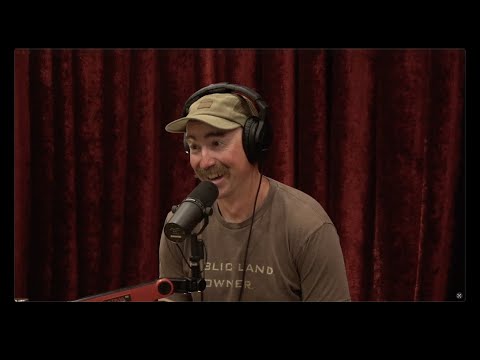
Link: https://youtu.be/D7HlnKdkz7M
Short Summary
Here's the requested information from the provided Joe Rogan podcast transcript:
Number One Most Important Action Item/Takeaway:
Stay unified and politically engaged, holding elected officials accountable for protecting public lands and waters. Don't be afraid to speak out against policies that threaten these resources.
Executive Summary:
This Joe Rogan Experience episode discusses the recent fight against the proposed public land sale in the United States, highlighting the importance of preserving these lands for their recreational, ecological, and economic value. The guests emphasize the need for ongoing vigilance and political engagement to counter threats to public lands, advocating for a unified, non-partisan approach and continued public awareness. They warn against the dangers of political polarization and the importance of holding elected officials accountable for their actions regarding public land management.
Key Quotes
Here are five quotes from the Joe Rogan podcast transcript that stand out:
-
"It's got to be dead forever. That's not It's not theirs to sell. It's very unique to the United States. It's an amazing thing that we have. And I don't think people in other countries understand this. I don't think people in America even understand how unique it is." This captures the core sentiment regarding public lands and the importance of their protection, emphasizing their unique value and the lack of understanding both domestically and internationally.
-
"...America's grasslands, we're living, we are losing two million acres a year. It's the most threatened ecosystem, not just in the US, but in the entire planet." This is a striking data point that highlights a severe environmental issue with significant consequences that are not widely known or appreciated.
-
"Like all the golf courses in the United States get lost every year in grassland. Exactly. Wow. Yeah. Wow. That's a good way to put it, right? Yeah. Yeah." This quote provides an easily understandable and shocking comparison to illustrate the scale of grassland loss, making the issue more relatable and impactful.
-
"And what Lee was doing in this reconciliation process was completely circumventing that. And as you mentioned, like nobody no citizen of the United States is going to feel any change from dumping $100 million into the federal treasury right now. And that's where the money was going." The quote exposes the deceptive practice utilized during the Lee proposal and illustrates it was going to have no overall financial effect on any citizen.
-
"...the people that I hang out with that are Mormon, it's absolutely not right. They they're like public lands that are set aside for multiple use, don't get locked up, don't get developed in certain ways are the best thing, right? Um but and this is something that just like has got to get talked about. Um Mike Lee is like very much in power. He is the chair. He's a senior senator. He is the chair of the energy and natural resources committee in the Senate." This quote is notable because it shows the individual has a lot of power and influence in the government, and is pushing his "agenda" regardless of what the public desires.
Detailed Summary
Okay, here is a detailed summary of the Joe Rogan podcast episode transcript you provided, using bullet points, and excluding sponsor announcements and other advertisements:
-
Public Land Sale Deal:
- The main topic is a recently defeated public land sale deal, which was part of a larger "big beautiful bill."
- The speakers emphasize that this victory is not permanent and the issue needs constant vigilance.
- They stress the unique and incredible resource that US public lands represent, something often underappreciated even by Americans themselves.
- Many people outside the U.S. are shocked at the idea of the US selling off these lands.
-
Importance of Public Lands:
- Public lands are not just recreational; they also provide essential resources like clean water.
- They function as intact ecosystems that work on behalf of the population, similar to natural resource extraction.
- The speakers highlight the loss of grassland ecosystems in the US, losing 2 million acres per year, the most threatened ecosystem on Earth..
- This loss impacts biodiversity, water tables, and overall ecosystem health.
-
Scale and Scope of Public Lands:
- The US has approximately 2.23 billion acres of land, with 640 million acres of public land.
- Of that 640 million acres, about 83 million are national parks, but hunting is allowed in some Alaska national parks (approx 43 million acres).
- There are over 400,000 miles of roads on Forest Service and BLM land.
- The amount of land needed to support wildlife varies greatly by region.
-
Lack of Public Awareness:
- Messaging about public lands needs to be improved; the diversity and value of these lands are often overlooked and oversimplified.
- The U.S. has a unique opportunity for hunters to support domestic economies instead of relying on export hunters.
- Too many people, especially those in urban areas, are disconnected from nature and the value of public lands.
-
The Utah Lawsuit & Mike Lee:
- The conversation traces back to an August 2024 lawsuit from the state of Utah seeking 18.5 million acres of BLM land.
- Senator Mike Lee is identified as a central figure pushing for the sale of public lands, with a long history of advocating for this idea.
- Mike Lee is leveraging his power as chair of the Energy and Natural Resources Committee to further this agenda.
- Other states and counties signed on amicus briefs in support of the lawsuit seeking public land fire sales.
-
Motivations & Ideology:
- The speakers discuss potential motivations behind Mike Lee's actions, including a Mormon church doctrine that encourages developing land for profit.
- This idea is presented as potentially driving Lee's "divine mission."
- The speakers clarify this is not representative of the entire Mormon religion.
- Mike Lee circumvented standard land sale processes, which prioritize value to the American people.
-
Corner Crossing & Public Access:
- The conversation discusses the issue of "corner crossing," where public land access is blocked by small corners of private property.
- There is a legal battle over whether crossing these corners constitutes trespassing.
- Corner crossing can allow individuals to access land that’s theirs.
- Currently, in the state of Wyoming, people can legally step across from one piece of public to the next public.
-
Future Concerns & Actions:
- The need for constant vigilance against future attempts to sell public lands is stressed.
- There is a Public Lands and Public Hands Act, led by Ryan Zinci in the House and Senator Hinrich, which would put more guard rails around land sales, but its future is uncertain.
- The lack of reading bills on the floor of government that are then passed into law with good and bad things together.
- The issue is not just about hunting and recreation; it’s also about access to resources like water and food that support American families.
-
American Prairie (Montana):
- The discussion turns to the American Prairie Reserve in Montana, a privately funded project to restore a large contiguous area of prairie.
- The goal is to allow that prairie to revert back to its natural state with natural species
- There are concerns about potential restrictions on public access as more land is acquired.
- They do have a good public access program in place.
- They are reintroducing American Buffalo into the area.
-
Yellowstone & Wildlife:
- The conversation also touches on the bison and elk populations in Yellowstone National Park.
- Bison population in Yellowstone is about 6,000 currently.
- Brucellosis is a disease transmitted by bison and elk is a concern with cattleman's associations
- They trap inside the park, and after period of brucellosis monitoring, herd given to tribes or sold.
- Hunters harvest the bison and the tribes bring game wardens in with them.
- The "zone of tolerance" around Yellowstone is discussed, where bison that leave the park can be hunted.
-
Younger Dryas Impact Theory & Alaskan Boneyard:
- Discussion on Younger Dryas impact theory.
- Small area in Alaska where John Reeves pulls ancient bones from (2.1 to 2.3 acres).
- His land has a rich layer of carbon from a burn, coinciding with the bone pile of ivory/cave bears.
- They get these bones via high pressure hoses to remove from the permafrost.
-
Arrowheads & Public Land & Agriculture:
- There are a lot of tepee rings up north in Alberta where there is cooler weather and all the tribes would go up there to hunt bison.
- American population, 97% of winter vegetables in the US that are from the US are irrigated by the Colorado River.
- Public lands have grazing leases.
-
Lab-grown Meat & Agriculture:
- There is a discussion about their mutual dislike for lab-grown meat.
- Vegetable based meat is highly processed.
- Seed oils are bad for you but needed for lab-grown meat.
- Industrial agricultural is also a problem.
-
Lesser Prairie Chicken:
- Lesser prairie chicken, charismatic little dude, dancing bird, used to be in millions but now endangered.
- Will not nest within 6 acres of vertical structure, needs a tree.
- 95% of the bird's native habitat is private ground now and used for grazing.
- Greater Prairie Chicken has feathers behind eyeballs, the ears.
-
Social Media & Political Divide:
- The speakers discuss the importance of not being trapped by political ideology and being willing to criticize actions, even from one's own party.
- They also discuss bot farms and coordinated artificial interaction on social media.
- This has artificial numbers being used to influence others.
- Police in England arrest people for social media posts.
-
Final thoughts:
- Mike Lee rewrote language of the bill to try and get it passed.
- If those in Government want something, like public lands, then praise those who do good even if they are on the other side.
- This can allow the momentum to stay unified.
- They need to be apolitical.
- Those who shout in the void (on the internet) just want to get you.
- People who are always on social media are super unhealthy.
- People united and listened and it felt good.
This summary covers the main topics, arguments, and details discussed in the provided transcript.