[@SensiblePrepper] Hurt Locker : Prepper Minuteman Set Up
![[@SensiblePrepper] Summarizer](https://summaries.pages.dev/img/logo.webp)
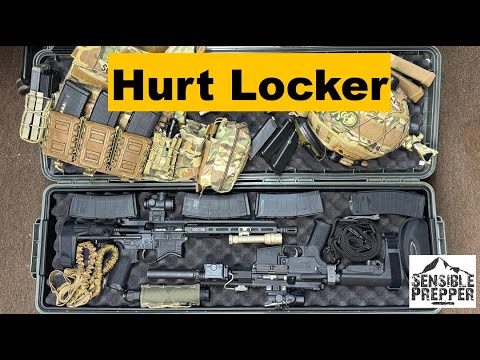
Link: https://youtu.be/5dBsKe8gJas
Short Summary
Number One Action Item/Takeaway:
Organize all your self-defense/tactical gear into a dedicated "hurt locker" or tactical box to ensure everything is readily accessible and you are prepared for potential emergencies.
Executive Summary:
The video advocates for creating a centralized "hurt locker" - a designated container for organizing all tactical gear, including rifles, battle belts, medical kits, communication devices, night vision, and protective equipment. This organized system ensures quick access and preparedness in emergency situations, enabling individuals to respond effectively as a "minute man."
Key Quotes
Here are four quotes extracted from the transcript:
- "Guys, if something is going down, which it could, you need to be ready. Having all of your items together is going to be important."
- "Really, your setup could be completely different. I like 22 because it's so quiet. And so, that really gives me a very stealth kind of setup, especially with the IR type lens...22 is just just deathly quiet."
- "One thing about thermal, it picks up heat signatures. And while night vision, you can see you can hide from night vision. With thermal, uh, it's difficult to hide."
- "Night vision has become more and more plausible. Uh, the big thing about night vision is it is a superpower. And you may not have a PBS14, and these are expensive...the one thing about this is is I can see in the dark when others can't. And so this gives me a huge advantage."
Detailed Summary
Here is a detailed summary of the YouTube video transcript, presented in bullet points:
Key Topics:
- Building a "Hurt Locker" / Tactical Locker: The main focus is on creating a centralized location for all self-defense, tactical gear, and emergency preparedness items.
- Minute Man Setup: The goal is to be rapidly ready to respond to potential threats or emergencies.
- Organization and Inventory: Emphasizes the importance of knowing what gear you have, where it is located, and how to access it quickly.
- Gear for Various Scenarios: Covers equipment for home defense, security situations, and potential grid-down scenarios.
- Personalization: Stresses that the configuration of the "Hurt Locker" should be tailored to individual needs and preferences.
Arguments and Information Discussed:
- Time Investment: Acknowledges that building a comprehensive "Hurt Locker" takes time and ongoing effort.
- Primary and Secondary Crates: Uses MTM Case-Gard Tactical Rifle Crates and Mule Gear Crates to demonstrate a primary (rifle-focused) and secondary (support gear) system.
- Primary Rifle Setup: Includes a Springfield Armory Saint pistol (5.56) and a Tippmann Arms .22 (with suppressor, IR white light laser)
- Underneath Support (Primary Crate):
- Medical Supplies: Trauma kits, first responder kit, tourniquets, shears, emphasis on redundancy.
- Battle Belt: AR & pistol magazine pouches, US Grunt Gear belt with Cobra buckles, inner Velcro belt for quick removal.
- Communications: GMRS radios, ham radio, extra radio holster.
- Navigation: GPS (Garmin), compass, laminated area maps.
- Ammunition: D60 drum magazine (with carrying case).
- Personal Protection: Tactical gloves, face coverings, Mira Safety gas mask.
- Tools: Otis cleaning kits (including rods for stuck bullets), breaching tool (pry bar), AR-15 wrench, Gerber LMF knife, SOG multi-tool.
- Lighting: Flashlights (long-range, self-defense), headlamp, signaling light.
- Battle Belt Setups:
- Drop leg holster (G-code) with retention, G19X Glock.
- AR mags, pistol mags.
- US Grunt Gear padded setup.
- Drop pouch (for magazines).
- Thinner, more camouflaged battle belt setup with Scorpion mag holders.
- Non-retention holster with light and optic, Glock model 17 (Gen 5).
- Dump pouch (MaxEdition).
- Slings are vital for rifle retention.
- Secondary Crate Setup:
- Plate Carrier: With plates, magazine setup, pistol magazines, trauma kit, flashlight.
- Night Vision: PVS-14 (expensive), Steiner laser designator, bump helmet, hearing protection, IR light. Night vision is a "superpower."
- Thermal: Burris BTS50 thermal scope (for identifying heat signatures). Fleer thermal monocular.
- Clothing: Cargo pants, green shirt, camouflage hoodie, brown hat, socks.
- Binoculars: For long-distance identification (avoid pointing a rifle).
- CamelBak (redundant water source).
- Backpack:
- Small backpack for food, water filtration, and administrative items.
- Hydration bladder.
- Gear Storage:
- Night vision and thermal gear may need to be stored in a safe to prevent theft.
Overall Message:
- The video encourages viewers to proactively organize their tactical gear to be prepared for various emergencies or self-defense situations. It emphasizes having a designated space for all gear and practicing accessing it quickly. The specific equipment and setup can be adapted to individual circumstances and preferences.