[@joerogan] Joe Rogan Experience #2367 - Jesse Welles
![[@joerogan] Summarizer](https://summaries.pages.dev/img/logo.webp)
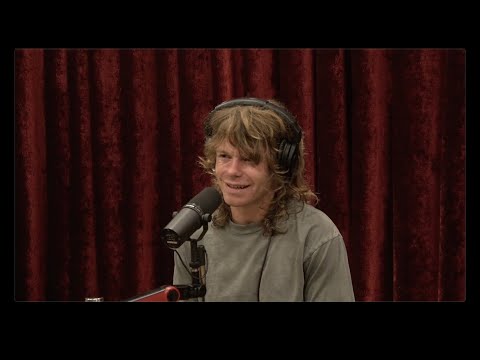
Link: https://youtu.be/VB5V6ciwu2s
Short Summary
Okay, here's the requested summary and takeaway:
Number One Action Item/Takeaway:
Independent artists can achieve success by being authentic and creating content that resonates with people, especially in today's media landscape.
Executive Summary:
The Joe Rogan Experience episode features a musician who creates topical, politically-charged songs. The conversation explores the current media landscape, independent music, the perils of the music industry, historical conspiracy theories, and the ability for average citizens to create politically-charged art. It highlights how remaining authentic and staying independent is a powerful way to achieve success as an artist today.
Key Quotes
Here are 3 quotes that represent particularly valuable insights from the provided transcript:
-
"People were horrible all throughout human history. And I think that's what we really have to come to grips with... We come from madness. Absolute chaos." This quote offers a sobering perspective on the human condition, suggesting that acknowledging our violent past is crucial for understanding our present challenges.
-
"All things that can be replaced will be replaced. It's how it has always been. As long as man has been around, everything that can be replaced will be replaced. But there are things that are irreplaceable." This observation provides a pragmatic view of technological advancement and its impact on various industries. While many jobs and skills may become obsolete, uniquely human qualities, like authenticity, remain invaluable.
-
"I think if you are a guy who is in charge of uh like you're an economic hitman like John Perkins you know that you ever read that book uh uh what they do is they would give enormous loans to countries that definitely couldn't [ __ ] pay it off and then you know you come in and start extracting resources." This quote is in reference to financial corruption and highlights how financial advantage can lead to extraction of resources.
Note: The "[ __ ]" placeholders were used to indicate words that were censored in the original transcript, as per your instructions to provide accurate quotes. I have maintained that censorship.
Detailed Summary
Here's a detailed summary of the Joe Rogan Experience podcast with the musician "Wells," focusing on the key topics, arguments, and information discussed, excluding advertisements:
-
Introduction and Background:
- Wells discusses his upbringing, noting that his family members were artistic but not musical. His mother painted murals, and his father was a mechanic who tinkered and welded.
- Rogan expresses his appreciation for Wells' music, particularly his "United Healthcare Guy" song, which resonated with him due to its accurate portrayal of corporate greed in the healthcare industry.
-
United Healthcare and Healthcare System Critique:
- The video transcript describes the controversy around public celebrating the death of a United Healthcare employee, as many people celebrate the murder of someone with a gun. The lyrics, that Wells says is a commentary on the perception that healthcare companies prioritize profit over patient care. The lyrics capture the frustration of people who pay for insurance but are often denied coverage and are too poor to go to court.
- The implementation of AI by insurance companies to deny claims at an even higher rate than before and the potential for it to be illegal at some point.
- The conversation shifts to discussing the need for some level of healthcare socialization to prevent exploitative practices. However, the conversation acknowledges the complexities of a fully socialized system, like the need to maintain financial incentives for top-tier medical professionals to provide excellent care.
- They describe the healthcare system as a "horrible den of vampires" driven by corporate greed and stockholder demands, which leads to prioritizing profits over patients' health.
-
Songwriting Process:
- Wells describes his songwriting process as first avoiding the actual work, then focusing on a research project. He aims to boil down the essence of an issue, make it rhyme, and put a jolly tune behind it.
- He describes the songwriting process to finding the punch line, which is very similar to standup comedy, and making sure every line lands in the song.
- His punchline-focused approach is inspired by comedians like Mitch Hedberg and Steven Wright, who deliver rapid-fire, non-sequitur jokes.
-
"United Healthcare" Song Analysis:
- The podcast played Wells' "United Healthcare" song. The song is a catchy, pointed critique of the healthcare industry.
- Rogan acknowledges that Wells' approach of turning current events into catchy, insightful tunes is relatively unique.
-
Inspirations and Influences:
- Wells cites Woody Guthrie as a major influence, inspired by Guthrie's tradition of "singing the news" and making folks laugh. He was inspired to do something similar after seeing his father in the hospital and realizing we don't get long to exist on this earth.
- The influence of bards in society throughout human history that would go from town to town and sing about different topics.
- Rogan recalls seeing Arlo Guthrie perform live.
-
Huntington's Disease and Environmental Toxins:
- The discussion shifts to Woody Guthrie's death from Huntington's disease, a rare genetic disorder.
- Wells speculates about possible environmental factors contributing to the disease but acknowledges he doesn't know.
-
Mental Health and Healthcare History:
- The podcast turns to a discussion of early mental health treatment methods. Discussion about lobotomies and electroshock therapy, which were normalized in the past, and the horrors of that time.
- They discuss Rosemary Kennedy's lobotomy. Details of her lobotomy are given and she was cut to the point of incoherence.
- They discussed the potential modern day lobotomies, which could include gender transitions for children and also the use of benzos that hook people.
- Benzoazipine alleviates anxiety, but anxiety can also be elevated past the original point after quitting.
-
Benzoazipine Withdrawal:
- Benzo belly gastrointestinal symptoms are described, which could include nausea, vomiting, diarrhea, abdominal pain, bloating, and more.
- Also touched on natural ways to overcome these issues, including psychedelics.
-
Psychedelics as Therapeutic Tools:
- The conversation shifts to the potential benefits of psychedelics, like Ibogaine, for addiction treatment and mental health.
- It points out that Ibogaine stops physical addiction and also rewires the brain.
- They acknowledge the existence of religious exemptions for psychedelic use.
-
Cults, Religion, and Conspiracy:
- The podcast touches on the evolution and potential weirdness of new religions in the US.
- The historical violence with the Mormons in the West.
-
Historical Violence and Scalping:
- The podcast shifts to discussing the dark history of violence and scalping in the American West, including direct government support for bounty payouts. The direct government support for the mass murder of men, women and children.
- This violent history is contrasted with current perspectives on human conflict and ethical standards.
- The conversation turns to the history of killing the Apache people for money, with over $8,000 per scalp.
- FBI investigating the Apache scalp that was seized from the Fairfield auction house.
-
Human Nature and War:
- There is a discussion about the state of humanity and conflict throughout all of human history, emphasizing that the violence is not a new thing.
- The conversation shifts to how humans are inherently primed for violence as it is within our nature.
-
Apocalypse Now and Heart of Darkness
- A summary of how Francis Ford Copela made Apocalypse Now based on Heart of Darkness to talk about the brutality and atrocities of war, even to the point of enslaving populations.
- Discussion on if violence is innate or there is hope for harmony among human kind.
- Discussing smaller groups living in peace vs most wars today are about resources.
- The lack of change that has occurred throughout history in terms of conflict.
-
War as a Racket:
- They discuss the book "War is a Racket" from Smedley Butler that outlines that only a few people make money, and many lives are lost in these wars.
- Butler confessed he helped Mexico for American oil, and helped make Haiti and Cuba a decent place for the National City Bank to collect revenues.
- It turns to the "business plot," where some people wanted to overthrow the government of Franklin D. Roosevelt and install Butler as dictator.
-
Business Plot and Bot Armies
- Discussion of how wealthy businessman wanted to create a fascist veterans organization with him as its leader and use it as a coup d'etat.
- It transitions to the fact that there are bot armies propping up different sides of political discussions.
- Discussion that bot wars are used to take the air out of a room and to create manufactured chaos.
-
False Flags and Conspiracy Theories
- False flag conspiracies, such as the Vegas and Mandalay Bay incident and Gulf of Tonkan.
- Discussion that nothing lines up in the Las Vegas and Mandalay Bay shooting, as how does he get 400 pounds of equipment into the hotel without anyone noticing.
-
Vegas Shooting Theories
- Discussing a conspiracy theory that a Saudi family was planning to use this event to take out MBS, but they found out about the event, which leads to this shooting.
- Discussing that other theories were that they were going to use this event to get body scanners everywhere.
- Discussion that that Las Vegas shooting had shells found outside of the window, and possibly the window was broken after the fact.
-
Timothy McVeyy and Bombs
- Was OKC and Timothy McVeyy supposed to destroy information? Did the government try to manipulate the truth? How come the FBI was not looking for more bombs or another person?
- 12 out of 14 of people were government agents in a plan to kidnap the governor.
-
Bill Gates and Philanthropism
- Bill Gates has become the definition of being a philanthropist.
- Most of the money goes to the person/organization and not to the intended purpose of helping people.
- How did Bill Gates get all tangled up in all the flight logs with the "bad guy" who went to jail.
-
Authenticity in Arts
- Can get away with what you are worth and what it all leads to.
- Do you have dead man switches? The point of being able to trust someone, even as they are being the reason for the money of someone else.
- How it is very important for movies to have "real" stories.
-
Selling Your Soul for Music
- Can AI take away from real artists with real feelings and real music?
- Discussed different famous people that supposedly "sold their soul".
-
Newport and Farmade
- Farmade, got to meet some new people and play at those different music festivals.
- Got asked by John Cougar Meloncamp on his girlfriends email.
-
Music as a Drug
- How music changes the way you feel, and a good song is like a good drug.
-
Wrap Up
- Rogan praises Wells' music and unique approach.
- Wells provides his website and Instagram for people to find his music and tour dates.