[@joerogan] Joe Rogan Experience #2420 - Chris Masterjohn
![[@joerogan] Summarizer](https://summaries.pages.dev/img/logo.webp)
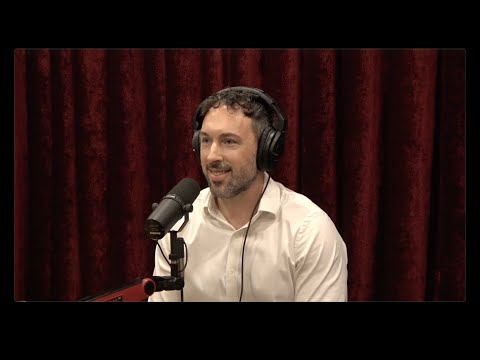
Link: https://youtu.be/QBn54YNnKD0
Short Summary
This Joe Rogan Experience podcast episode features Chris Masterjohn, PhD, discussing the critical role of mitochondrial function in overall health and longevity. They delve into the misleading tryptophan myth, the importance of sunlight, proper nutrition, and diverse exercise, while also exploring supplements like creatine, CoQ10, and methylene blue (with caution). Masterjohn emphasizes a "food first, pharma last" approach and highlights the dangers of seed oils in contributing to atherosclerosis.
Key Quotes
Okay, here are 3 insightful quotes extracted from the transcript of the Joe Rogan podcast with Chris Masterjohn:
-
"I think what we're missing in the whole discussion is thinking about how do we how do we ramp up mitochondrial energy production? How do we prevent it from declining and aging so that the body so the brain can rightly perceive that I am in a state of abundance and it is rational to turn to ramp up this metabolic rate."
-
"Seed oils make your tissues more vulnerable to damage and they don't damage your tissues."
-
"I would argue that mitochondrial dysfunction and aging are the same thing."
Detailed Summary
Here's a detailed summary of the Joe Rogan podcast featuring Chris Masterjohn, PhD, presented in bullet points:
Key Topics:
-
Debunking the Turkey/Tryptophan Thanksgiving Myth:
- Tiredness is not due to tryptophan in turkey.
- Journalists created the myth to explain post-Thanksgiving meal fatigue.
- Turkey doesn't have exceptionally high levels of tryptophan.
- Overeating on stuffing and sides is the main cause of post-meal fatigue.
- The "rest and digest" parasympathetic nervous system kicks in after a large meal.
-
Mitochondrial Function as the Root of Health and Disease:
- Mitochondrial function is the core thesis of Chris Masterjohn's 21 years of nutrition research.
- Deep sleep allows mitochondria to rest and rebuild energy reserves.
- Mitochondria produce and distribute energy throughout the body.
-
Creatine's Role in Sleep Deprivation and Cognitive Function:
- Recent studies show creatine supplementation improves cognitive performance and reduces tiredness during sleep deprivation.
- Creatine acts like a "power grid," distributing energy produced by mitochondria.
- Creatine helps heal traumatic brain injuries.
- Creatine can help move energy around the long cells like the retina.
-
Red Light Therapy and Vision Improvement:
- Red light therapy improves eyesight by helping mitochondria produce more energy.
- Red light ordering of the water structure inside the mitochondria.
- Red light treatment to the chest improved eyesight, even when eyes are covered.
- Lutein and zeaxanthin supplements also support eye health by protecting against macular degeneration.
-
Macular Support Supplements and Vitamin A Genetics:
- Macular support supplements can help eyesight.
- Beta-carotene conversion to vitamin A is dependent on genetics.
- Conversion of beta-carotene to Vitamin A is dependent on zinc, iron, and thyroid status, and reduced by seed oils.
-
Glutathione Supplementation:
- The best glutathione is that which you produce yourself from protein.
- Basic glutathione supplements are good enough instead of more expensive specialized types.
-
Vitamin D and Sunlight:
- Sunshine is necessary for Vitamin D production, as well as other health benefits.
- Tanning beds can provide some UVB light for Vitamin D production, but should be used cautiously.
- Certain tanning beds have more UVB for increased Vitamin D.
-
Methylene Blue: A Controversial Supplement:
- Methylene blue is a non-specific rewirer of mitochondrial function.
- It can act as an antidepressant at higher doses.
- It's beneficial only when mitochondrial pathways are blocked; otherwise, it can be harmful.
- Mitochondrial testing can determine if someone is a good candidate for methylene blue.
-
Mitochondrial Dysfunction and Aging:
- Mitochondrial dysfunction and aging are connected.
- Age-related mitochondrial function decline happens at about 1% per year after age 18.
- 75% of mitochondrial function is under your control.
-
Five Factors for Maintaining Mitochondrial Function:
- Creatine: Essential for energy distribution and muscle repair.
- Sunlight: Morning sunlight signals mitochondria to "wake up". Red light in the afternoon is also beneficial.
- Nutrition: Addressing nutrient deficiencies is critical. Eat nose-to-tail from diversified proteins.
- Exercise: It impacts all kinds of things with the liver stepping in to help metabolize.
- Gymnastics Gymnasts and pole vaulters have longer lifespans than cyclists. Need explosive movements and skill training.
-
Exercise Recommendations:
- Focus on skills that you are NOT good at. Gymnastics version.
- Cognitive system involved with exercise.
- You can't be elite in more than two sports.
- Balance being the skill that is often lost in older age.
-
The Importance of Considering Injury's Metabolic Toll:
- Injuries take a toll on mitochondrial function.
- Healing from injuries diverts energy away from general maintenance.
-
Brain Injuries/Concussions and Vulnerability:
- Brain injuries have a systemic cost.
- Healing a brain injury takes energy from other parts of the body.
- Creatine is useful for traumatic brain injuries.
- Mitochondrial testing is important to maximize recovery.
-
CoQ10 Supplementation:
- Found naturally in the body and food.
- Interesting effects.
- There are dozens of clinical trials.
- 100 to 200 mg day will improve glucose, insulin, and blood pressure.
- Found in heart is best. Chicken and beef. Don't know the differences.
- Overstimulation feeling and hyper sensory awareness can occur with supplements.
-
Defining Health:
- Abundant energy.
- Adaptability.
- High energy to anxiety ratio.
- Strong libido.
- Deep sleep.
-
CoQ10 Edge Cases:
- Case study where CoQ10 returned Jacqueline's menstrual period.
-
Mega Dosing of Thiamin:
- Testing of glucose ketones and lactate at home is important.
-
Thiamine, Glucose, Ketone, and Lactate Testing:
- Lactate is a stress signal when testing at home.
-
Food First, Pharma Last Approach:
- Prioritize food-based sources of nutrients before supplementation.
- Supplements should strategically compensate for deficiencies, not replace a poor diet.
-
CoQ10 vs. Methylene Blue Mechanisms:
- CoQ10: Part of the mitochondrial transport pathway.
- Methylene Blue: Creates alternative pathways, helpful when the main pathway is blocked.
-
Red Light and Mitochondrial Function:
- Red light is synergetic with CoQ10.
- Helps create more mitochondria.
-
The Problem with Seed Oils:
- Seed oils make tissues more vulnerable to damage.
- Need to look at long term results to truly understand effects.
- Take about four years to look like what you're eating.
- The "LA Veterans Administration Hospital Study" is an example.
- Long term trial should be more than 8 years.
- Total mortality diverges at the end of the study.
- Fatty Acid composition should be considered.
-
Saturated Fats and Cholesterol:
- A big issue.
- Bribed scientists.
- Time magazine said, "Hold the Eggs"
- Building block for hormones.
-
Cholesterol Recommendations:
- Higher LDL can be associated with longer lifespans.
- Need to be mindful of your activity level with Cholesterol.
- Body signals should tell that to put the cholesterol to good use.
-
Broa Barnes study on Thyroid Hormone:
- Brain communicates that you are in a state of abundance.
-
Increasing Thyroid Function:
- Enough food and good mitochondrial conversion of the food to ATP.
- Protein source is good for Thyroid hormone.
- Iodine needs to be abundant. Need seafood because low soil levels.
- Environmental bromide increases the need.
- Selenium is a mineral.
-
Arthereal Sclerosis: (More accurately, Atherosclerosis)
- Nattokinase helps.
- Plaque is from the seed oils.
- The damaged particles are from Seed Oils.
- This is based on Daniel Steinberg's perspective.
- Medicine thinks in binaries.
- Atherosclerosis is when plaque ruptures.
This detailed summary captures the main points and arguments made throughout the podcast.