[@RenaissancePeriodization] What To Eat Before, During & After Training For Maximum Muscle Growth
![[@RenaissancePeriodization] Summarizer](https://summaries.pages.dev/img/logo.webp)
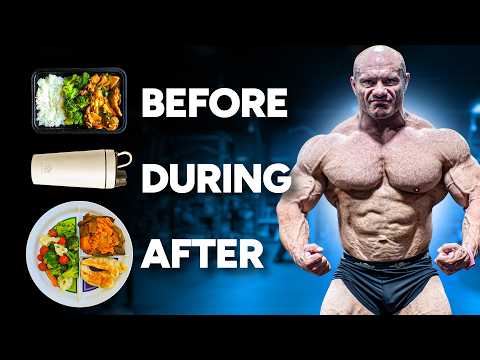
Link: https://youtu.be/K2XYEw8ytqQ
Short Summary
Executive Summary: Proper nutrition around workouts (pre, during, and post) can noticeably boost muscle growth by improving training performance and recovery, although consistent daily nutrition is still most important. Focus on pre-workout meals for fullness and energy, intra-workout nutrition for longer sessions, and post-workout meals for protein and carbs to cap catabolism and stimulate growth and recovery; the post-post workout meal is also key to keep up protein supply for your muscles.
Key Quotes
Here are 4 quotes extracted from the YouTube video transcript:
-
"When you feel empty, that feeling is actually really correlated to how hard people can train. And if I give you even caloriefree food...like I give you a bunch of broccoli...you will almost certainly perform better on average with a stomach full of broccoli. Because if you're completely empty, your nervous system is like, 'Nah, man. We can't afford to be trying this hard. We don't have any food in there.'"
-
"What really matters for results for muscle growth is that you hit the gym hard and eat a high protein and sufficient calorie diet day in and day out. Period."
-
"One of the biggest insights from nutrient timing that we've received in the last 10 years of research is there's no one meal that'll make you or break you."
-
"There are two rules for a pre-workout meal to be good. Comfort and fullness."
Detailed Summary
Okay, here's a detailed summary of the YouTube video transcript, broken down into bullet points, covering the key topics, arguments, and information presented:
I. Introduction & Overview
- The video focuses on optimizing muscle growth through workout window nutrition (pre-, during, and post-workout).
- Key message: Consistent high-protein, sufficient-calorie diet is foundational, but acute nutrition (workout window) can noticeably boost muscle growth.
- Acute nutrition impacts training intensity, muscle growth stimulus, and recovery speed.
- Black Friday/Cyber Monday sale plug for RP Strength apps at the beginning.
II. How Acute Nutrition Boosts Muscle Growth (Theory)
- A. Glycogen Loading (Day Before):
- Eating plenty of carbs before training (day or two before the workout) is beneficial for muscle glycogen storage.
- Full glycogen stores lead to:
- More reps in the tank (critical for hypertrophy).
- Bigger pumps (drive hypertrophy).
- Ability to do more sets (strong correlation with hypertrophy).
- Enhanced anabolic signaling from the workout.
- B. Pre-Workout Nutrition (Carbs and Calories):
- Carbohydrates and calories before a workout, especially by promoting fullness, increase training performance.
- Fullness signals the nervous system that the body can afford to train hard. Even a full stomach of low-calorie foods like broccoli can help.
- Pre-workout carbs provide energy for the brain and spinal cord, enabling greater training effort.
- Overall pre-workout boost is both psychological (feeling full and energized) and physiological (energy supply).
- C. Intra-Workout Nutrition (Protein & Carbs):
- Reduces unwanted muscle protein breakdown during training.
- Supplies the brain, spinal cord, and nerves with carbs for sustained performance.
- Especially crucial for longer training sessions (over 1 hour, ideally over 1.5 hours).
- Recommended mixture: Protein, carbs, fluids, and electrolytes (example: RP Strength Element packets).
- Key benefit of intra-workout nutrition comes from hydration with electrolytes, anti-catabolism from protein and carbohydrates to provide physiological support
- D. Post-Workout Nutrition (Protein & Carbs):
- The most important part of the window.
- High protein and carbs after training stops catabolism.
- Lowers stress hormones and shifts the body into a recovery-dominant state (parasympathetic).
- Facilitates growth by activating insulin-mediated and mTOR-mediated pathways.
- E. Post-Post-Workout (Following Meals):
- One great post-workout meal isn't sufficient. Steady supply of nutrients is crucial.
- Regular meals (3-6 hours) after the workout are crucial.
- Balanced nutrition: Protein (building blocks, leucine pulses), fats (hormonal support), carbs (recovery & immune function). The immune system specifically uses carbohydrates for muscle reconstruction.
- Workout window is just a part of the bigger picture, it is critical to maintain consistent nutrition.
III. Practical Guidelines (Basics)
- A. Rule 1: No Magic Bullet: A pre-workout meal can't compensate for days of poor nutrition.
- Emphasis on consistent protein intake throughout the day.
- B. Rule 2: Pre-Workout Meal – Comfort and Fullness Are Key:
- Avoid meals too big or too close to the workout (nausea) and meals that are too small or too rapidly digesting (hunger).
- Higher carbs, adequate protein, and lower fats are technically best, but how you feel (not sick/full of energy) is more critical.
- Feeling full outweighs the exact macro split. Even fats can be a better option if they promote a feeling of fullness.
- Most workout fuel comes from existing muscle glycogen. The pre-workout meal is mainly for recovery afterwards.
- C. Intra-Workout Shake is a "Bonus Point":
- Enhancer, not essential.
- If other boxes are checked, gains will be good even without it.
- Most beneficial for longer workouts (over an hour/hour and a half).
- Hydration is important.
- Recommendation: Combination of protein, carbs, water, and electrolytes.
- D. Post-Workout: Get Protein & Carbs in Quickly:
- Timing: Within 30 minutes is great, within an hour is fine.
- Leaner (lower fat) is preferred for faster gastric emptying.
- Emphasis on getting some food in over perfect macro ratios. As long as it isn't primarily fat, it is fine.
- E. Post-Post-Workout: Continue eating good meals.
- Consistent protein, carbs, and fats are crucial for optimal recovery and growth.
IV. Recommendations and Examples (Specifics)
- A. Pre-Workout Meal:
- Protein: Daily protein intake / 4-5 (for example, 40g if total is 160g).
- Carbs: Roughly the same grams as protein (healthy carbs).
- Fats: 1/3 to 1/2 of the protein/carb amount (lower-ish normal amount of fat).
- Examples:
- Chicken and rice bowl (simple, lean protein and healthy carbs).
- Greek yogurt parfait (quick, tasty carb sources like bananas).
- Shake and oatmeal combo (protein and carbs, can add almond butter for fats).
- B. Intra-Workout:
- Protein: 1/8 to 1/10 of daily intake (example, 15-16g for 160g daily).
- Carbs: Roughly the same as protein (15g), can be doubled for harder workouts.
- Fats: Ideally zero/minimal (avoid bloating).
- Examples:
- Whey shake and sports drink (lots of fluids).
- Whey hydrolysate and fancy carb powder (for sensitive stomachs/advanced).
- Budget-friendly: Whey, pinch of salt, apple juice (diluted in water).
- C. Post-Workout:
- Protein: 1/4 to 1/5 of daily intake.
- Carbs: 2-3 times the protein (depending on goals/metabolism).
- Fats: 1/3 to 1/4 of the protein/carb amount.
- Examples:
- Cereal and shake combo (whey, cereal, milk).
- Cream of rice and whey protein (easy to digest).
- Whey shake and frozen yogurt, chicken sandwich and fro yo, sushi
- D. Post-Post-Workout:
- Protein: 1/4 to 1/5 of daily intake.
- Carbs: Same as protein, up to 2x if gaining.
- Fats: 1/3 to 1/2 of the usual protein and carb amounts.
- Examples: Regular, "bodybuilding" style food.
- Salmon, potato, and veggies.
- Turkey, rice, and bean bowl.
- Greek yogurt/cottage cheese and grain snack plate.
V. Conclusion
- Don't overthink the small details; focus on the big picture.
- Prioritize daily protein intake, calories, healthy foods, sleep, and hard training.
- RP Diet Coach app available for help (Black Friday sale).
- "Nail your average daily protein, your calories, get mostly healthy foods, sleep really well, train hardest, and the size will be yours."
This summary is extensive and should provide a thorough overview of the video's content.