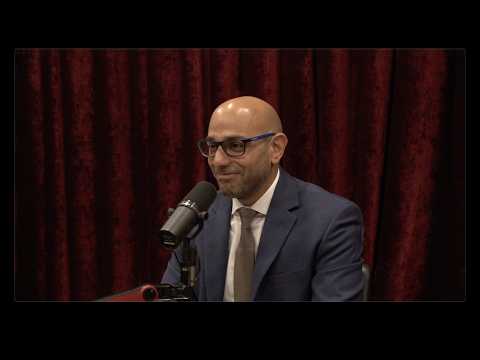
[@joerogan] Joe Rogan Experience #2462 - Aaron Siri
· 5 min read
![[@joerogan] Summarizer](https://summaries.pages.dev/img/logo.webp)
Link: https://youtu.be/vNkXIKijzcg
Duration: 0 min
Short Summary
The speaker, a long-time vaccine advocate, discusses the shift in public perception from viewing vaccines as infallible to recognizing their potential for harm and the need for scientific rigor. Unlike traditional industries, the vaccine sector operates under a unique legal framework that grants pharmaceutical companies broad immunity, often limiting liability for injuries. This perspective highlights the importance of evidence-based decision-making to protect public health while maintaining economic fairness.
Key Quotes
Key Quotes
- "And just some stuff that I just saw the pieces of paper that you folded. I was like, what's in there? That's just" (00:00:16)
- "Vaccines saved humanity. Me too. we'd all be dead without him. Um, you know, there are the uh there was the Bible given at to Moses at Sinai and then there were vaccines." (00:00:50)
- "It's a religion for secular intelligent people with a higher education. And it causes incredible cognitive dissonance for anybody out there to come to the conclusion that the CDC and the FDA and our public health authorities and what the entire medical establishment has been telling you may not be accurate about vaccines." (00:03:55)
- "So normally the interest to asssure a product is safer is aligned with the profit motive because if your product causes injury and harm then you're going to lose money. So you want to know typically you have an economic self-interest as a corporation to know not because you're altruistic, not because you're moral, not because you're ethical, just because you have that economic self-interest to asssure the product is safe before you go to market and after you go to market." (00:14:40)
- "The only product, and I mean this literally, the only product in America where you cannot sue to say had you made that product safer, my child wouldn't be dead, my child wouldn't be seriously injured, they wouldn't have a neurological disorder, they wouldn't have immunological disorder, they wouldn't have a nervous system disorder, they wouldn't have a cardiac cardiac issue. Our childhood vaccines and child vaccines used by adults, it's the only one." (00:06:30)
Detailed Summary
Vaccine Perception and Advocacy
- The speaker's journey as a vaccine advocate began a decade ago, gaining momentum during the Biden administration to address growing public concerns about vaccine safety and efficacy.
- A pivotal shift in perception occurred seven years ago when the concept of vaccine-induced harm moved from being a taboo subject to a central topic of discussion, prompting renewed scientific inquiry.
- The National Childhood Vaccine Injury Act of 1986 established a unique legal framework granting pharmaceutical companies immunity from lawsuits, contrasting with other medical products like the Ford Pinto which faced design defects.
Legal and Economic Frameworks
- The Act provided pharmaceutical companies with 40 years of unopposed market influence, fostering a religious-like view of experts where industry leaders are seen as infallible guardians of public health.
- Economic self-interest drives companies to balance revenue potential with product safety, as exemplified by the Vioxx drug which generated billions in profit despite causing approximately 50,000 deaths.
- The federal Vaccine Injury Compensation Program has paid out over $5 billion in damages, with a statutory cap of $250,000 for pain and suffering to ensure fair compensation for affected families.
Clinical Evidence and Innovation
- Comparative studies, including a 22-year prospective trial in Japan involving 100,000 individuals, demonstrated that experiencing measles and mumps led to a 20% reduction in cardiovascular disease mortality.
- Data indicates that individuals lacking measles or mumps exposure face a 66% increased risk of Hodgkin and non-Hodgkin lymphoma and a 50% reduction in ovarian cancer risk among women.
- The Pfizer COVID-19 vaccine was licensed by the FDA in just 42 days, prompting legal efforts to secure underlying data for public review and transparency.
Public Health and Community Impact
- Approximately 70% of Los Angeles restaurants closed during the pandemic, a loss attributed to regulations that prioritized visual compliance over transmission data evidence.
- The Amish community, with 160 children surveyed across three schools, demonstrated zero cases of chronic conditions like asthma and autism, highlighting the benefits of minimal vaccine exposure.
- A survey revealed that one in four people believes they know someone who died from the COVID-19 vaccine, underscoring the tangible impact of vaccine-related health outcomes on the public.
Future Directions and Recommendations
- The scientific method requires continuous debate to prevent the stagnation of beliefs, a process illustrated by the discussion of Robert F. Kennedy Jr.'s advocacy for environmental and health policies.
- New York's move to enforce vaccination mandates, potentially excluding communities like the Amish, underscores the need for flexible policies that accommodate diverse health needs.
- The precautionary principle is recommended to shift the burden of proof onto producers to demonstrate safety, particularly regarding the long-term effects of vaccines and technologies like Wi-Fi on public health.