[@Area52Investigations] UFOs Swarmed The Crash Site - Sedge Masters (Full Readthrough) | ep. 95

· 15 min read

@Area52Investigations - "UFOs Swarmed The Crash Site - Sedge Masters (Full Readthrough) | ep. 95"

Link: https://youtu.be/gNr3PbNmGyY

Duration: 141 min

Transcript: Download plain text

Short Summary

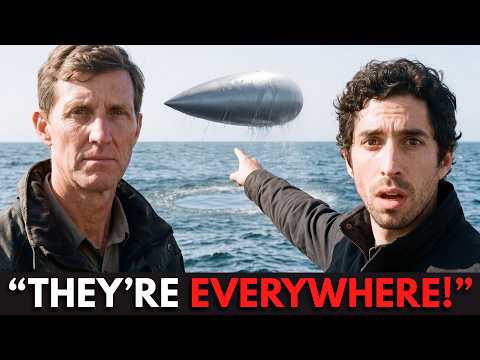
Chris Ramsey's Area 52 podcast dissects three 1998 UFO Magazine articles by the pseudonym "Greg Halifax," recounting SGE Masters's induction into a secret CIA crash-retrieval program code-named Zodiac, its origins in the 1947 Roswell recoveries, a 67-man recovery team's 1.5-hour memory gap, and a separate hypnosis investigation. Episode features hypnotist Dr. Beth Kulp, who was raised in Palos Verdes and attended Dapprey Elementary School, recounting her work with Masters investigating two LA graduate students who lost 3 hours after a red ball encounter on Dappel Grey Lane, which led them to Wright-Patterson AFB to view the recovered flying-wing "scooter" and a 50-foot Danish disc craft.

[@alux] What Happens When a CEO Is Fired

· 8 min read

@alux - "What Happens When a CEO Is Fired"

Link: https://youtu.be/2YfKrdWnmic

Duration: 12 min

Transcript: Download plain text

Short Summary

This educational episode explains how CEOs of public companies are hired, monitored, and sometimes replaced by their board of directors, with decisions typically driven by a gradual loss of board confidence rather than a single mistake. It also covers the mechanics of severance packages, including golden parachutes and real examples like Bob Chapek's $20 million-plus exit from Disney when Bob Iger returned. Departures are carefully orchestrated behind the scenes and announced simultaneously to investors, employees, customers, and journalists, often after the market closes.\n\n## Corporate Governance Structure\n- Public companies are owned by shareholders, who elect a board of directors to represent them; the board then hires the CEO and decides their compensation.\n- The CEO sits in the middle of the ownership chain, not at the top, since shareholders ultimately sit above the board.\n- Most people cannot name a single member of Apple's or Microsoft's board, even though those directors can hire, pay, and fire the CEO.\n\n## Major Investors and Influence\n- Investment firms such as Vanguard and BlackRock manage money for millions of people and together own large stakes in most of the world's biggest businesses.\n- These institutional owners sit at the other end of the scale from individual shareholders and wield significant influence over public companies.\n\n## Why CEOs Lose Their Jobs\n- Contrary to popular belief, CEOs rarely lose their jobs because of one big mistake such as a bad earnings report, failed product, or scandal.\n- More often, they lose something far more important than a good quarter: the board's confidence, which usually erodes slowly.\n- Common signs of eroding confidence include sales stagnating, competitors pulling ahead, new initiatives failing, talented executives leaving for other companies, and investors asking tougher questions on earnings calls.\n- The board also sees things most investors never see, meeting with the CEO regularly, reviewing long-term plans, discussing risks that have not yet become public, and hearing directly from other senior executives.\n\n## How Departures Actually Happen\n- By the time a CEO is told they are leaving, dozens of people have already been preparing behind the scenes, including lawyers, the communications team, the investor relations team, and the board.\n- A successor, even if only interim, has typically already been chosen, and the official announcement is often already written.\n- Announcements are released after the stock market closes or before it opens the next morning so investors, employees, customers, and journalists all receive the same information at the same time, avoiding rumors.\n\n## Companies That Continued After CEO Changes\n- Apple continued operating after Steve Jobs departed, and Microsoft continued after Steve Ballmer.\n- Starbucks, Disney, Nike, Intel, and hundreds of other companies have all changed CEOs while continuing to serve customers the next day.\n\n## Severance and Golden Parachutes\n- In some cases, the biggest check a CEO ever receives is the one they are paid after being fired, sometimes described as a $100 million goodbye.\n- A golden parachute is a severance rule in CEO employment contracts that compensates the CEO if the board decides to replace them.\n- Severance agreements are designed to align CEO incentives with shareholder interests, for example by preventing a CEO from rejecting a takeover offer that would benefit shareholders simply because it would cost the CEO their job.\n- Without a pre-existing severance agreement, firing the CEO of a business worth half a trillion dollars risks a multi-year legal fight, public disclosure of private board discussions, and reputational damage, making a large severance check potentially the cheaper option.\n\n## Real-World Examples and Caveats\n- Bob Chapek received an exit package worth more than $20 million when Disney replaced him with Bob Iger.\n- If a CEO is fired for fraud, misconduct, or violating the terms of their contract, the board can often reduce or eliminate severance payments.\n- The largest severance packages make headlines but represent the exception rather than the rule for CEO departures.\n- Severance payments are framed as protection of corporate stability rather than rewards for CEO performance, with leadership changes intended to happen quickly, clearly, and without years of lawsuits.\n\n## After a CEO Leaves\n- A departing CEO immediately loses access to confidential information, internal systems, and future strategic plans.\n- Public-company rules on sensitive information apply to CEOs the same as any other employee once they depart.

[@CityPrepping] 8 Food Items That Will Skyrocket in Price in 2026 (That You’ll Want)

· 5 min read

@CityPrepping - "8 Food Items That Will Skyrocket in Price in 2026 (That You’ll Want)"

Link: https://youtu.be/BODQyr8TpL8

Duration: 18 min

Transcript: Download plain text

Short Summary

Chris, host of the City Prepping channel, walks through eight food categories he is watching for disruption over the next year, with special attention to the US cattle herd at a ~75-year low and projected beef price increases of 10.1% in 2026. The episode emphasizes that food pressure builds upstream months before reaching stores and recommends households layer in canned, frozen, or home-preserved backups while adding depth in three weekly-used categories.

[@ChrisWillx] Why You Feel Overwhelmed All The Time (and how to fix it) - David Epstein

· 15 min read

@ChrisWillx - "Why You Feel Overwhelmed All The Time (and how to fix it) - David Epstein"

Link: https://youtu.be/nUBjlSLaHUk

Duration: 78 min

Transcript: Download plain text

Short Summary

David Epstein — author of "Range" and writer of the free newsletter "Tips from Inside the Box" (david.com) — returns to the podcast for a wide-ranging interview on how constraints fuel creativity, sharper decisions, and better design. The conversation spans Dr. Seuss's 50-word bet, maximizers vs. satisficers, the replication crisis, universal design, military body armor, AI originality, and single ordinating principles used by leaders like Elon Musk and Jeff Bezos. The episode closes with Epstein reframing Robert Frost's "The Road Not Taken" and Hamlet's "to be or not to be" as critiques of overthinking rather than celebrations of bold choice.

[@JesseMichels] I Debated UFOs With America’s Top Skeptic (It Got Ugly…)

· 21 min read

@JesseMichels - "I Debated UFOs With America’s Top Skeptic (It Got Ugly…)"

Link: https://youtu.be/8Rr_nE65KkI

Duration: 201 min

Transcript: Download plain text

Short Summary

Michael Shermer, founder of Skeptic Magazine and author of "Heavens on Earth," joins host Sean for a sweeping multi-hour interview applying Bayesian skepticism to UFO disclosure, alien abductions, the JFK assassination, Roswell, ancient civilizations, and replicable psychology findings. The conversation pits Shermer's provisional-assent framework against specific cases like the 1967 Malmstrom missile incident, the 2004 Nimitz Tic Tac, and a 1996 Virginia UFO crash with hospital-treated beings, while also exploring Shermer's own 1983 sleep-paralysis misread as alien abduction.

[@hubermanlab] The Science & Treatment of Obsessive Compulsive Disorder (OCD) | Huberman Lab Essentials

· 6 min read

@hubermanlab - "The Science & Treatment of Obsessive Compulsive Disorder (OCD) | Huberman Lab Essentials"

Link: https://youtu.be/AtU3EvMzZDY

Duration: 31 min

Transcript: Download plain text

Short Summary

This episode features Dr. Helen Blair Simpson, an MD/PhD at Columbia University School of Medicine and leading OCD expert, discussing the mechanisms and treatments of Obsessive-Compulsive Disorder. The conversation traces OCD's diagnostic categories, the cortico-striatal-thalamic circuit underlying it, and why exposure-based CBT dramatically outperforms SSRIs and placebo in clinical trials. Alternative approaches including TMS, cannabis, myo-inositol, and mindfulness meditation are also examined.

[@alux] 10 Business Moves That Never Fail

· 4 min read

@alux - "10 Business Moves That Never Fail"

Link: https://youtu.be/EZnepyDEy98

Duration: 14 min

Transcript: Download plain text

Short Summary

This Alux episode explores counterintuitive business lessons, from how Nintendo, YouTube, Slack, and Twitter pivoted from their original concepts to how subscription models, premium tiers, and switching costs drive recurring revenue. It emphasizes building systems over scaling headcount, warns that hiring often just scales broken businesses, and argues founders should aim to make themselves replaceable.

[@PeterAttiaMD] Building strength and muscle mass: optimize training & nutrition for longevity (AMA #71 rebroadcast)

· 13 min read

@PeterAttiaMD - "Building strength and muscle mass: optimize training & nutrition for longevity (AMA #71 rebroadcast)"

Link: https://youtu.be/CqNqfb37gig

Duration: 117 min

Transcript: Download plain text

Short Summary

Dr. Peter Attia, a Stanford-educated physician and longevity expert, hosts an Ask Me Anything episode of The Drive Podcast consolidating roughly 20 hours of prior content on muscle mass, strength, and longevity. Joined by guest Peter, a resistance-training expert, they review epidemiological evidence showing strength is more causally linked to mortality than mass (e.g., 5x mortality difference by VO2 max, 16% rise per 5 kg grip-strength loss in the PURE study), practical programming at 1–2 RIR with 1.6–2.4 g/kg/day protein, sex-specific guidance, and concrete assessment benchmarks. The discussion also covers creatine supplementation, beginner programming prescriptions, injury prevention strategies, and Attia's Centenarian Decathlon framework for late-life physical capability.

[@Area52Investigations] He Encountered Beings at the Nuclear Missile Facility - Mario Woods | ep. 94

· 18 min read

@Area52Investigations - "He Encountered Beings at the Nuclear Missile Facility - Mario Woods | ep. 94"

Link: https://youtu.be/ua4dNq1vK2A

Duration: 219 min

Transcript: Download plain text

Short Summary

This episode features an interview with Mario Woods, a 70-year-old former USAF Security Police officer at Ellsworth Air Force Base, who describes a close encounter on November 5, 1977, at an ICBM missile site involving a massive sun-like sphere, humanoid beings, a telepathic "do not fear" message, and over five hours of missing time. The conversation details subsequent interrogations, a signed NDA, hypnotic regression sessions, 4+ hours of congressional testimony, and a December 2017 electrical anomaly at his Georgia home tied to Georgia Power records.

[@alux] What Happens When You Buy A Stock

· 5 min read

@alux - "What Happens When You Buy A Stock"

Link: https://youtu.be/cW3j5mvutmI

Duration: 21 min

Transcript: Download plain text

Short Summary

This educational explainer walks through the mechanics of how stocks actually trade in the US market, distinguishing primary markets (where companies raise money) from secondary markets (where investors trade among themselves). It then unpacks the layered infrastructure behind every trade — market makers, payment for order flow, Cede and Co. ownership, the DTCC clearing system, and settlement cycles — using the January 2021 GameStop/Robinhood episode as a concrete stress test.