[@PeterAttiaMD] Building Good Habits in Children | Charles Duhigg
![[@PeterAttiaMD] Summarizer](https://summaries.pages.dev/img/logo.webp)
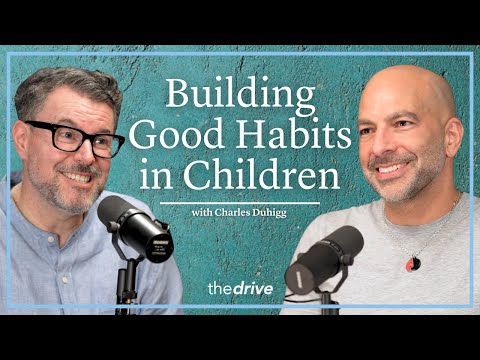
Link: https://youtu.be/ZsYv0iaRpCo
Short Summary
Number one action item/takeaway: Model and explicitly demonstrate to your children how you identify cues, routines, and rewards in your own life to change or build habits.
Executive Summary: To foster self-control and the ability to change behaviors in children, parents should explicitly model how they create and modify their own habits by showcasing the cues, routines, and rewards involved. Furthermore, framing failures as learning opportunities and rewarding effort, rather than innate ability, reinforces a child's belief in their own agency and control over their willpower.
Key Quotes
Here are five quotes extracted from the transcript, representing key insights:
- "A positive reward, positive reinforcement is going to be much more powerful at ingraining that po that habit in their life."
- "The single most powerful thing we can do is we can teach them how willpower works and to build willpower habits because a willpower habit actually doesn't tax the the metaphor of the muscle of the will willpower muscle that exists inside our head."
- "I'm teaching them think about the cues in your life. Think about the rewards in your life. If you focus on those two things, you can create almost any routine, any behavior that you want or change any behavior that you want."
- "Instead of saying, 'Oh, you're so smart,' which is something you don't have control over, to say, 'Oh, you must have worked really, really hard because that's something you do have control over. I'm reinforcing your sense of agency.'"
- "A failure is not a failure. A failure is a data point. And I'm a scientist about my own life."
Detailed Summary
Here's a detailed summary of the YouTube video transcript, focusing on the key topics and arguments discussed:
-
Positive Reinforcement vs. Punishment:
- While punishment (e.g., taking away Xbox time) might work in the short term, positive reinforcement (e.g., extra Xbox time) is significantly more effective for creating lasting behavior change and ingraining habits.
-
Teaching Kids About Willpower and Habit Formation:
- The most powerful thing parents can do is teach children how willpower works and how to build willpower habits.
- Explain and demonstrate the cue, routine, and reward cycle to kids, enabling them to analyze and modify their own habits.
-
Modeling Behavior Change for Children:
- Parents should be open about their own behavior change strategies.
- Be "ostentatious" about rewarding yourself after completing a difficult task. Show the reward and explain why it is earned.
- Explicitly explain the cues you use to trigger desired behaviors.
- By focusing on cues and rewards, routines and behaviors can be created or changed.
-
The Importance of Agency and Control:
- It's important for children to have command and control over themselves, which is a key component for being well-adjusted and happy.
- Parents should reinforce a child's sense of agency, emphasizing that they have control over their habits.
- Instead of praising innate qualities like intelligence ("You're so smart"), praise effort and the development of habits ("You must have worked really hard").
-
Handling Failures in Front of Children:
- Parents should admit their failures and share their learning experiences with their children.
- Model that failure is not a failure but a data point. Treat failures as learning opportunities.