[@PeterAttiaMD] Can Humans Become Physically Immortal? | Brian Kennedy, Ph.D.
![[@PeterAttiaMD] Summarizer](https://summaries.pages.dev/img/logo.webp)
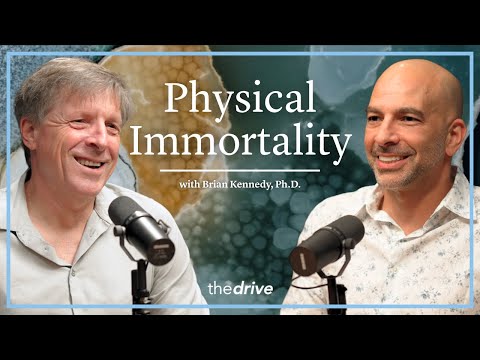
Link: https://youtu.be/bNC0dVf52QI
Short Summary
Number one action item/takeaway: Advocate for increased government and foundation funding for basic science research into aging and longevity, particularly research focused on the fundamental drivers of aging and how they relate to age-related diseases.
Executive Summary: The speakers discuss the importance of shifting focus from solely pursuing immortality to prioritizing research into improving healthspan and understanding the fundamental drivers of aging. They express concern that funding is disproportionately allocated towards disease-specific research while basic research into aging, which could address multiple age-related diseases simultaneously, is underfunded and needs greater support.
Key Quotes
Here are four quotes extracted from the transcript, representing valuable insights and opinions:
- "I think that uh we should fund um aging somewhere closer to the level we're funding cancer and answer both of those questions At the same time, I think one of them is a translational question about how do we slow aging as much as we can right now and improve the health of the population as much as possible? And the other one is a basic science question. Can we stop aging? Can we reverse aging? No one can. If anybody has the tells you they have the answers to that, they're lying to you or they're lying to themselves."
- "I've often maintained that the that the least inevitable of them is ironically the one that is the most deadly today, which is cardiovascular disease... ironically the most preventable because we have the best understanding of what causes them and we couple that with the most tools to prevent them whether it be uh tools to combat hypertension, dysipidemia, etc. And they're responsible to responsive to to lifestyle modification."
- "We've completely underestimated the role of inflammation and the immune system and those diseases as well and they may be the primary drivers."
- "You're creating a disease a mouse doesn't get genetically in a young mouse and comparing that to a natural disease in an old human. I think it you learn more about Alzheimer's. If you look at the brain neurogenic changes that happen in the mouse normally with aging the the downstream things are different but the drivers may be the very similar to the ones that are driving Alzheimer Alzheimer's and that may be a better model of Alzheimer's than trying to artificially create something that a mouse doesn't get."
Detailed Summary
Here's a detailed summary of the YouTube video transcript, focusing on the key topics, arguments, and information discussed:
- Immortality and Aging:
- The possibility of achieving physical immortality is considered very unlikely, although not completely impossible.
- "Immortality" is defined as avoiding death from aging, not necessarily avoiding accidents.
- Skepticism about achieving a state of resilience that prevents death from disease.
- Even centenarians exhibit frailty, suggesting an inevitable decline.
- A more realistic and valuable goal is extending "healthspan" in the last decade of life.
- Funding for Aging Research:
- There is a call for more funding for aging research, closer to the level of cancer research.
- Two key questions: how to slow aging now and improve health, and how to stop or reverse aging (basic science).
- Concern that private sector investment (biotech, supplements) isn't matched by academic funding for fundamental aging research.
- Emphasis on the need for government and foundation funding, which is currently threatened.
- Reallocating a small percentage of disease-specific funding to age-related research could have a significant impact.
- Preventability of Major Diseases:
- Cardiovascular disease is considered the most preventable of the major chronic diseases (cardiovascular disease, cancer, dementing diseases, and metabolic diseases).
- This is due to a better understanding of its causes and available tools for prevention (lifestyle modification, medication).
- Metabolic diseases are also considered preventable.
- Cancer vs. Dementia:
- Cancer is considered a more "inevitable" disease compared to dementing diseases, based on current understanding.
- Cancer is seen as an accumulation of mutations and a specific impact on the immune system, possibly less modifiable by general longevity interventions.
- Dementia is less understood, but potentially highly modifiable.
- The Role of the Immune System:
- The immune system plays a major role in cancer development.
- The role of inflammation and the immune system in Alzheimer's and dementia may be underestimated and could be primary drivers.
- Alzheimer's Research and Focusing Too Much on a Single Mechanism
- Frustration with Alzheimer's research for focusing on one or two disease mechanisms (e.g., plaque removal) to the exclusion of others, leading to limited progress.
- Analogy of an Alzheimer's researcher dying of Alzheimer's despite having removed plaques.
- Scientific progress can be slow due to established researchers maintaining focus on specific models.
- The drivers of aging may be similar across species, even if the downstream effects are different.
- Studying the neurogenic changes that happen normally in a mouse's brain while aging may be a better model to study Alzheimer's than artificially creating the disease in a young mouse.