[@PeterAttiaMD] Facing Your Fears: Exposure Therapy | Josh Spitalnick, Ph.D.y
![[@PeterAttiaMD] Summarizer](https://summaries.pages.dev/img/logo.webp)
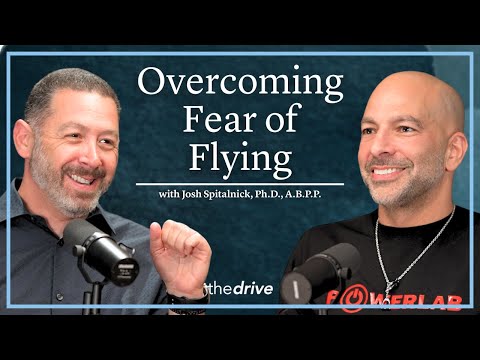
Link: https://youtu.be/hckXRo_yoRg
Short Summary
Most Important Takeaway: Exposure therapy is the leading intervention for anxiety-related disorders, and it involves purposefully facing one's fears in a safe and controlled environment while simultaneously preventing rituals and compulsions.
Executive Summary: Exposure therapy, the leading treatment for disorders like PTSD, phobias, and OCD, involves gradually and safely exposing individuals to their fears to challenge faulty cognitive interpretations and build distress tolerance. By inducing anxiety-provoking situations, preventing compulsive behaviors, and processing the experience, patients can learn to manage their anxiety without relying on avoidance or rituals.
Key Quotes
Okay, here are 4 quotes extracted from the YouTube transcript, highlighting valuable insights and strong opinions about exposure therapy:
-
"And all exposure therapy is is an intervention that helps someone approximate their fear, facing it head-on in a safe, ethical, compassionate way without putting them in any ethical, legal, or medical risk."
-
"Exposure therapy is the first line treatment for almost everything to do with OCD and health anxiety."
-
"Nothing we do in exposure therapy have they not already experienced."
-
"Exposure therapy is a combination of doing things that bring on a sense of safe, predictable, but uncomfortable emotional, physical feelings while also not doing the mental and behavioral things that bring it back down."
Detailed Summary
Here's a detailed summary of the YouTube video transcript, focusing on the key points and excluding advertisements:
-
Core Concept: Exposure Therapy:
- Exposure therapy is a leading intervention for anxiety disorders (PTSD, phobias, social anxiety, OCD, health anxiety).
- It involves approximating one's fear in a safe, ethical, and compassionate environment, facing it head-on.
-
Readiness for Change:
- Patients must be ready for exposure therapy; a process of moving from pre-contemplation to contemplation to taking action.
- For those deeply entrenched in rituals (e.g., severe contamination OCD), medication might be considered initially.
-
Types of Exposure Therapy:
- In Vivo Exposure: Real-life situations and objects are used (e.g., public speaking if afraid of it).
- Imaginal Exposure: Writing or recording a narrative about a feared situation (real or imagined trauma or future event).
- Interoceptive Exposure: Inducing physical symptoms (e.g., eye blurriness, rapid breathing, tummy aches) in a controlled setting to help patients manage panic or health anxiety.
- Media Augmented/Virtual Reality Exposure: Using audio-visual tools (e.g., 3D goggles, videos, audio clips) to simulate feared experiences.
-
The Hierarchy:
- Collaboration with the patient to create a hierarchy of feared situations, ranging from easy to difficult.
-
Beyond Habituation: Inhibitory Learning:
- Early exposure therapy focused on habituation (getting used to the fear).
- Modern approach emphasizes inhibitory learning - developing new meanings and understanding of the feared situation.
- Corrective experiences help unlearn faulty anticipations and be "colossally wrong" in a safe environment.
-
The Process:
- Induce a sense of safe, predictable, but uncomfortable emotional and physical feelings.
- Discourage engagement in rituals or compulsions that reduce anxiety.
- Maintain this state for 30-45 minutes, multiple times a week.
- Afterward, process the lessons learned from the experience.
- The goal is to build distress tolerance, resiliency, and disprove catastrophic predictions.
-
Key Components of Exposure Therapy:
- Psychophysiological arousal.
- Cognitive interpretations (often faulty).
- Preventing ritualistic behaviors.
- Staying with the discomfort.
- Processing lessons learned.