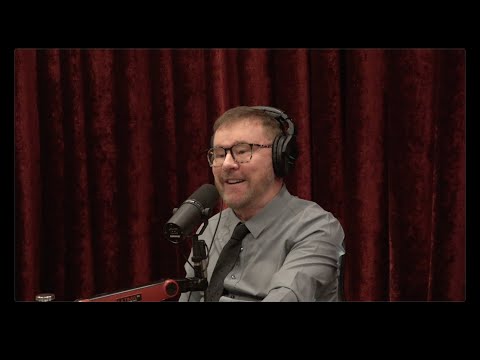
[@joerogan] Joe Rogan Experience #2372 - Garry Nolan
![[@joerogan] Summarizer](https://summaries.pages.dev/img/logo.webp)
Link: https://youtu.be/B7y3qcgSRY8
Short Summary
Number One Most Important Takeaway: Scientists should prioritize meticulous data collection and analysis using rigorous methods, while also embracing a willingness to challenge existing paradigms and explore unconventional explanations, rather than dismissing them outright.
Executive Summary: Dr. Nolan, a Stanford professor and cancer researcher, discusses his work on cancer, the potential of AI in scientific research, and his involvement in UAP investigations. He underscores the importance of meticulous data analysis, scientific open-mindedness, and a willingness to challenge established beliefs to advance knowledge in both medicine and understanding the UAP phenomenon.
Key Quotes
Here are five quotes from the Joe Rogan Experience podcast transcript featuring Dr. Garry Nolan that highlight interesting insights:
-
"So we have all kinds of I mean literally every day uh every person you'll develop five cancer like objects inside of your body but the immune system uh and your body has a way of shutting it down very quickly. But with enough time and with enough variation, tumors will eventually evolve in a way that trick the immune system not only into not recognize them, but in fact to help them and feed them in a way to create an inflammatory environment that actually then the tumor uses to propagate its own cell division and then metastasis." This is a surprising and informative point about the constant battle between the immune system and cancerous developments in the body.
-
"And so rather than we thinking of um cancer as being a forward progression in evolution, it's actually another way to think about it is that it's a devolution back to the core fire of the desire to divide. And so by breaking the contract by b by breaking the controls on the system cancer is allowed to blossom." This quote provides a different perspective on the nature of cancer, framing it as a disruption of cellular contracts rather than a simple evolutionary advancement.
-
"And so humanity has this habit of backing itself into a corner and then suddenly finding this eureka moment that gets it out. And so our Eureka moment about two years ago was artificial intelligence..." This describes AI's role in analyzing the vast amounts of data being produced in medical and biological research.
-
"I can see a time where, you know, I could maybe apply something, I don't necessarily want a surgical implant, but maybe some sort of net over my head that allows me to think through these problems and I the AI becomes a an adjunct to my thought processes, not only what it is that I think, but maybe even provides information back to me, back into my system >> directly, without having to go through the ears, so that I can much more quickly >> come to conclusions." Dr. Nolan contemplates future integration of AI with the human mind.
-
"Well, that tells you something maybe about the level of smarts that might be incorporated into these let's say dumber machines >> maybe." Reflects on the potential for UAPs to trick humans into sending signals.
Detailed Summary
Here's a detailed summary of the Joe Rogan podcast with the guest, a Stanford professor in cancer research, broken down into bullet points:
Key Topics & Arguments
- Cancer Research & Immunology:
- The professor's lab focuses on developing instruments to analyze the complex interaction between the immune system and tumors.
- Tumors evolve mechanisms to trick the immune system, preventing recognition and even enlisting the immune system's help for their own propagation.
- The immune system constantly combats cancer-like objects that develop in the body daily.
- The speaker discussed Jim Allison's work on immunotherapy, specifically his research of melanoma and cancer drugs.
- Tumor Development:
- Tumors are a byproduct of mutations that occur during cell division and DNA damage.
- Mutations can be inherited (e.g., the professor's MIDF 318K mutation leading to melanoma and kidney cancer).
- Cancer is a progression of events, from precancerous lesions to benign and then metastatic tumors.
- The immune system plays a crucial role at every stage of cancer development.
- Immune System & MHC Proteins:
- MHC proteins on cell surfaces present internal cell biology to the immune system, signaling "friend" or "foe."
- Tumors often downregulate MHC proteins, preventing the presentation of damaged cell components to the immune system.
- Organ Transplants & Immune Suppression:
- Organ transplant recipients require immune suppression to prevent rejection, increasing the risk of cancer and infections.
- The ideal scenario would be local immune suppression targeted only at the transplanted organ, but current immunosuppressants act systemically.
- Personalized Medicine:
- Cancer treatments need to be personalized due to the vast biological variability among individuals.
- Different people's cancers, even of the same type, develop through different pathways, requiring tailored medications.
- Pharmaceutical companies are increasingly trying to pair diagnostics with disease subtypes to ensure the right drug for the right patient.
- Sun Exposure & Skin Cancer:
- Irish genes of the people that lived in cloudy places for hundreds of years can lead to skin cancer upon strong sun exposure.
- The professor emphasizes his experience with melanoma due to sun exposure and tanning bed use in youth, compounded by a genetic predisposition.
- Recent narrative that claims that sun is good is dangerous for some people.
- CRISPR and Gene Therapy:
- Discussed potential for CRISPR technology to correct genetic mutations like the professor's melanoma susceptibility.
- Gene therapy for localized delivery of immunosuppressants is a future possibility.
- RNA formulations discussed as a means of delivering treatments.
- mRNA Vaccines and Adjuvants:
- Discussion of the mRNA-based COVID vaccines, and how they cause the body to locally produce the spike protein.
- Adjuvants activate the immune system, causing the body to say come hither.
- Discussion on systemic immune activation from spike proteins.
- Importance of Early Detection:
- Regular scans (MRI preferred over CT due to radiation) are crucial for early detection.
- Baseline scans are important for comparison with later changes, especially in the context of vague anomalies.
- Cancer as a Devolution:
- Cancer is viewed as a devolution, a breaking of the "social compacts" between cells. It represents a return to the core drive to divide uncontrollably.
- Each tissue type has a unique ecosystem of these cellular contracts.
- IVF & Hormonal Imbalance:
- The potential connection between IVF treatments, hormone intake, and hormone-related tumors is raised. No definitive answer is provided, but the guest states hormonal imbalance is generally bad for tumor formation.
- Diet and Cancer:
- The professor notes that he "probably shouldn't eat as much meat" as he does, highlighting the role of diet in cancer risk.
- Too much fat accumulates toxins. Charred meats contain carcinogens.
- Avoid excessive sugar.
- Artificial Intelligence in Research:
- The professor's lab has developed an "agentic AI" that acts as an immunologist-in-a-box.
- The AI can process vast amounts of scientific literature and data to generate hypotheses and suggest experiments.
- The AI has a mutually beneficial relationship with openAI. The Agentic AI trains the openAI by using it's systems to analyze the scientific data.
- Commercialization of Science:
- The professor has started and sold multiple companies to commercialize his lab's inventions.
- He believes in giving back to taxpayers through commercialization.
- He had to overcome early resistance at Stanford to commercializing basic research.
- Describes that Stanford has strict policies preventing the abuse of it's scientists.
- The SOUL Foundation
- Professor is involved in the SOUL Foundation, a think tank of academics where they openly explore UAP's.
UAP/UFO Discussion
- Personal Involvement: The professor recounts his journey into UAP research, starting with debunking the Atacama mummy, which led to contact from government and aerospace representatives.
- Havana Syndrome: Some individuals he consulted initially turned out to be early cases of Havana Syndrome, likely caused by an energy weapon.
- Jacques Vallee: Mentions Jacques Vallee who he calls his "mentor".
- Lou Elizondo: Professor met him two weeks before the first NY Times article came out about Elizondo.
- Robert Powell and Michael Swords: Two great writers that just tell the facts, don't jump to conclusions.
- Belief: Prof doesn't believe in anything, just believes in data. Is happy to be proven wrong.
- Trinity: Mentioned a one-off crash that was near the Roswell crash.
- Materials Analysis: Analysis of UAP materials from incidents like Council Bluffs (molten metal drop) and Ubatuba (silicon and magnesium).
- The Ubatuba material had silicon that was of high-purity for the date. One piece of material had an off-Earth Magnesium isotope ratio. These materials came from crashed UFO.
- He theorizes that someone exposed normal magnesium ratios to a neutron source for 900 years at the level of an atomic bomb every few seconds.
- Atacama Mummy: They did a DNA sequencing of it, which said it was human.
- UAP Atomic Imager Company: He has started a company to make an atomic imager.
- Tridactyl Mummies: He believes that they are real and worth analyzing. That they need to be sequestered and analyzed by South American scientists. Believes is can't be faked from 1700 years ago.
- Crash Retrieval: Explores crash retrieval and how the government could have implemented a research project.
- Amnesty: Government needs to disclose UAP or grant amnesty.
- Skywatcher: A group of people that use the mind to try and summon UAP's. Thinks telepathy is just measuring thoughts at a distance.
Key Arguments/Opinions about Societal Impact
- AI Benevolence vs. Apocalyptic Scenarios: Balances optimism about AI's potential with concerns about job displacement and the potential for misuse.
- Government by Engineers: Mentions that China is governed by engineers instead of lawyers.
- War is Bad: AI is better than a system of human wars.
- Bob Lazar: Says that there may be some elements of truth to Bob's story, with some disinformation.