[@PeterAttiaMD] “We Die How We Live”: The Power of Self-Forgiveness | with BJ Miller, M.D. & Bridget Sumer, L.C.S.W.
![[@PeterAttiaMD] Summarizer](https://summaries.pages.dev/img/logo.webp)
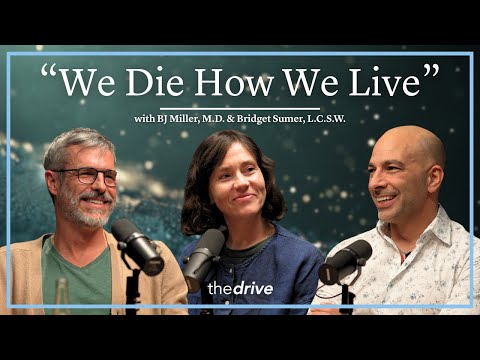
Link: https://youtu.be/9OuFfFN-Fak
Short Summary
Number One Action Item/Takeaway:
When a loved one is nearing the end of life and experiencing delirium, remember that their words and actions may not reflect their true selves due to the altered mental state.
Executive Summary:
The podcast explores the mechanics of death, focusing on the final stages of life. Key points include understanding that the body naturally shuts down, recognizing signs like decreased appetite and mental status changes (delirium), and the importance of interpreting behavior within the context of dying. It is important to not take actions or words of the dying literally because delirium alters mental state.
Key Quotes
Here are four quotes from the provided transcript that represent valuable insights:
-
"One thing to get right out of the gates here is bodies die, living things die. It's...a lot of us absorb a notion of death that it's some foreign invader...otherwise I was just fine and then not. ...included on the list of natural things that we do is die. So I...that's what a body is supposed to do. I just want to get that clear. There's nothing wrong with you for dying. This is the way it's supposed to go." This quote normalizes death as a natural process, challenging the common perception of it as an external force.
-
"A body trying to die, a GI tract that's on its way to shutting down will stop sending hunger signals...If we're forcing fluid into a body that's trying to die, that fluid will pull and cause trouble. So the judgment of call when to push the food and fluid and when not is up to really a dialogue and a sort of a song and response with the patient." This emphasizes the importance of respecting the body's natural processes during the dying process and the need for a patient-centered approach to care.
-
"Whatever they're saying you you really cannot take it literally. You really cannot take it literally." This refers to the common occurence of delirium during the dying process.
-
"Dying...can't always be, shouldn't perhaps maybe to use that hard word...be so tidy and...immaculate and clean and you know perfect. I think I want to disabuse I think we'd both like to disabuse that notion of...that that's a good good death." This challenges the notion of a perfect death, advocating for a more nuanced and compassionate understanding of the dying process.
Detailed Summary
Here's a detailed summary of the YouTube video transcript, presented in bullet points, focusing on the key information and arguments discussed, and excluding any promotional content.
-
Focus of the Discussion: The podcast episode delves into the mechanics of death, particularly the cardiopulmonary death process, moving beyond common knowledge of the causes of death like cardiovascular disease, cancer, and neurodegenerative diseases, and the discussion of the final hours.
-
Challenging Perceptions of Death:
- The speakers emphasize that death is a natural part of life, not an external force that "grabs" us. Dying is a natural function of living things.
- Bodies are designed to die, this is a normal part of their existence.
-
Final Common Pathway:
- Regardless of the initial cause of death (cancer, heart disease, neurodegeneration), the body generally undergoes a final common pathway of organ system shutdown.
- This shutdown isn't always linear or predictable. It can be sudden or gradual.
- Many people, especially in modern times, die from chronic illnesses.
-
Signs Indicating Approaching Death:
- Reduced Activity/Increased Fatigue: Spending a significant amount of time in bed/on the couch indicates that the end is approaching.
- Loss of Appetite/Thirst: The body stops sending hunger signals as the GI tract begins to shut down. Forcing food or fluids can be painful or cause complications (fluid in lungs, swelling).
- Altered Mental Status/Delirium: Confusion, disorientation, and delirium are common.
-
Delirium in Detail:
- Hyperactive vs. Hypoactive Delirium: Hyperactive delirium is easily spotted (agitation), while hypoactive delirium (quiet, tangential thinking) is often missed.
- Hypoactive delirium is more common at the end of life and can be difficult to detect.
- Impact on Relationships: Delirium can cause people to say things out of character, which can be misinterpreted by loved ones and lead to distress. It's important to remember that a delirious person is not fully "themselves."
- Delirium is not inherently always a form of suffering: Traditionally, delirium was treated with antiscychotics. It may be vital for a patient to express things. The discussion encourages a more nuanced approach, moving away from automatic medication and considering patient comfort and potential underlying needs. The aim is to move away from a "perfect", tidy death.
-
Interpretation and Meaning:
- The discussion highlights the subjective and interpersonal aspects of death and dying.
- People may project expectations or desires onto final moments, which may or may not be fulfilled.
- Deep secrets or unexpected sentiments may surface.
- The importance of holding interpretations of what happens lightly and being open to multiple perspectives.
- It's crucial to avoid imposing a fixed narrative or meaning onto these moments, as clarity may never come.
-
Redefining a "Good Death":
- The speakers challenge the notion of a "good death" as being solely quiet, clean, and immaculate.
- Expressing emotions, even negative ones, can be part of the natural dying process.
-
Importance of Communication and Care:
- Open conversations with patients and families are essential to understand their wishes regarding medication and end-of-life care.