[@RenaissancePeriodization] Bodybuilding Is Under Attack
![[@RenaissancePeriodization] Summarizer](https://summaries.pages.dev/img/logo.webp)
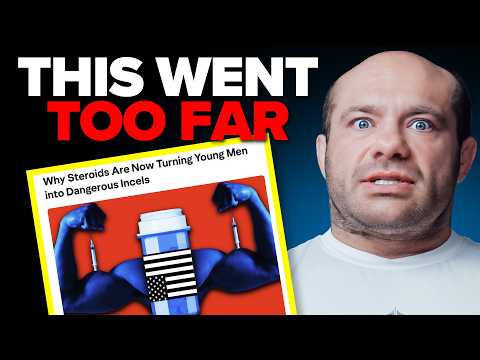
Link: https://youtu.be/EVJDzKZFRzU
Short Summary
Here's a breakdown of the provided YouTube transcript:
-
Number One Takeaway: The Daily Beast article fails to establish any clear connection between steroid use and men becoming "dangerous incels," relying instead on cherry-picked anecdotes, biased generalizations, and a lack of supporting evidence or peer-reviewed research.
-
Executive Summary: Dr. Mike critiques a Daily Beast article claiming steroids are turning young men into dangerous incels. He argues the article lacks evidence, overstates the link between lifting culture and the alt-right, and ignores the potential benefits of responsible resistance training and TRT. Ultimately, the article presents a biased and unsubstantiated narrative.
Key Quotes
Okay, here are five direct quotes extracted from the provided transcript, representing insightful points, interesting data, or strong opinions:
- "The use of anabolic steroids and other performance enhancers has long been an open secret in elite gym culture. That's for sure true. Like people don't use but people use. Everyone kind of knows everyone uses but sort of no one uses."
- "According to the most recent update of the monitoring the future study which is monitoring drug use among high school students and has been for a really long time. uh lifetime anabolic uh andrrianic steroid use is is basically uh has been hovering around 1 to 3% for 12th graders with no sustained upward surge in the last decade."
- "You can't get famous on YouTube unless people want to see your shit." (Referring to the demand-driven nature of influencer culture and why muscular influencers gain traction.)
- "Bodybuilding is the first digital radicalizer of the 21st century, said Jamie Cohen, an assistant professor of media studies at Cooney Queens College. Like I feel the vibes that that like online lifting communities can maybe radicalize some people for sure, but um the first digital radicalizer of the 21st century like you guys al Qaeda used to recruit people in the early 2000s on the internet. To say it's the at all a digital radicalizer is already a stretch. The first is just like pure total just wild not speculative just comes about as close to nonsense as you can get something without just sheerely calling it nonsense." (Dr. Mike's quote on the absurdity of the statement made by Jamie Cohen.)
- "Someone taking steroids is still likely putting in hours at the gym, eating clean, and putting in the work." (Regarding dismissing steroid use because someone is taking steroids is diminishing to the person taking the substance.)
Detailed Summary
Here is a detailed summary of the YouTube video transcript, focusing on the key topics, arguments, and information discussed:
-
Article Critique: The video is primarily a critique of an article from "The Daily Beast" titled (implicitly) about steroids turning young men into "dangerous incels."
-
Initial Claims of the Article: The article claims:
- Trenbolone (Tren) and other performance enhancers are becoming mainstream.
- This is due to gym bros sharing drug recommendations and the prominence of bodybuilding influencers.
- Extreme fitness images are highlighted and idolized online.
- Steroid use is increasingly common among young men.
- Weightlifting and bodybuilding are tied into misogynistic far-right views.
-
Counterarguments to Article Claims: Dr. Mike (RP Strength) argues against these claims:
- Tren Use: Tren use is rare and mostly a meme.
- Rising Popularity: The claim of "increasingly common" steroid use among young men is not supported by data from the "Monitoring the Future" study, which shows stable use percentages.
- Demand-Driven Trend: The rise in influencer promotion of steroids is driven by a pre-existing demand for muscular physiques.
- Lifting and Politics: Weightlifting and bodybuilding are not inherently tied to misogyny or far-right views. The connection is weak and unsubstantiated. There is no clear causal relationship.
- Lack of Evidence: The article provides no concrete examples or data to support its claims about the connection between lifting culture and the alt-right.
- 4chan and Inceldom: The article's example of someone starting bodybuilding after finding discussion on 4chan is backwards. Someone seeking bodybuilding advice on 4chan is likely already an incel, not turned into one by steroids.
- First Digital Radicalizer: The claim that bodybuilding is the "first digital radicalizer of the 21st century" is hyperbolic and ignores other historical examples of online radicalization (e.g., Al Qaeda).
-
Critique of Sources: The video criticizes the article's use of sources:
- Relying on anecdotes and personal opinions over data.
- Using sources like 4chan as representative of the bodybuilding community.
- Quoting individuals with potentially biased perspectives (e.g., someone who claims to have "clawed himself out of the right-wing internet fitness wormhole").
- Misrepresenting the influence of bodybuilding.com
- Misattribution of Jordan Peterson as involved in steroid culture.
-
Side Effects Misrepresentation: The video points out that the article uses a generic list of steroid side effects without considering individual differences (dose, duration, genetics, ancillary drugs, etc.).
-
Motivations for Lifting: The video argues that the article's portrayal of motivations for lifting is inaccurate. Many men lift for themselves, for body image reasons, or for the approval of other men, not just to attract women.
-
Reasonable Opinions: The video acknowledges a fair argument in the article. It highlights a quote that states that "Someone taking steroids is still likely putting in hours at the gym, eating clean, and putting in the work."
-
Journalistic Imbalance: The video concludes that the article exhibits poor journalism by:
- Failing to provide a balanced view of the topic.
- Not discussing the potential benefits of resistance training or clinically prescribed TRT.
- Presenting a skewed and biased portrayal of the bodybuilding community.
- Failing to make a reasonable argument connecting steroids turning men into incels.
-
Overall Assessment: The video considers the article poorly researched, relying on unsubstantiated claims, cherry-picked examples, and biased sources to support a predetermined narrative.