[@RenaissancePeriodization] All Protein Is Not Created Equal
![[@RenaissancePeriodization] Summarizer](https://summaries.pages.dev/img/logo.webp)
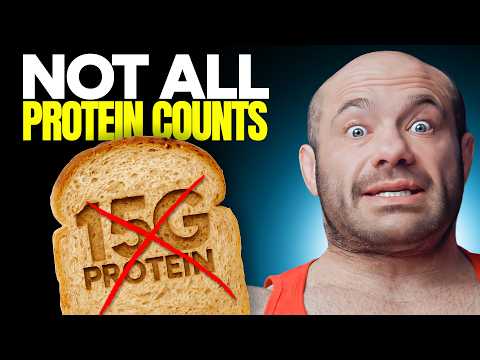
Link: https://youtu.be/coRih_UvFQQ
Short Summary
Okay, here's the breakdown of the YouTube video transcript:
-
Number One Action Item/Takeaway: Build every meal around a core of high-quality protein sources (meat, eggs, dairy, soy, quinoa, high-quality vegan blends) to ensure optimal muscle growth and retention.
-
Executive Summary: Aim for a daily protein intake of approximately one gram per pound of body weight, but prioritize protein quality. Ensure that roughly 75% of your daily protein intake comes from high-quality sources, and build each meal around a protein core.
Key Quotes
Here are five direct quotes from the YouTube video transcript that represent valuable insights:
- "Aim for roughly a gram per pound per day of protein... with less or more depending on some circumstances."
- "If you eat a few too many grams of protein, worst case, they just get burned up for fuel. They're not toxic, not bad for your kidneys. Worst case on the other hand is if you undereat protein, you just don't gain as much muscle or you lose more muscle than you're supposed to."
- "Functionally, your body receives only 20 gram of high quality muscle building protein from a 50 g protein meal."
- "For optimal muscle growth and muscle retention, it seems like getting about 75% of your daily protein from high quality sources... is a really good best practice."
- "Whenever I'm making a meal or whenever I watch someone, I watch people all the time... what I'm looking for to just green check mark ability to say this is a good meal for muscle growth is I start building every meal around a core of high quality protein."
Detailed Summary
Here's a detailed summary of the YouTube video transcript, focusing on the key topics, arguments, and information discussed:
-
Introduction:
- The video discusses protein quality and its importance for muscle growth, health, and fitness.
- It addresses the question of whether the type of protein matters, and if people are consuming the right kind to achieve their goals.
-
Protein Quantity Recommendations:
- General recommendation: Aim for approximately 1 gram of protein per pound of body weight per day.
- Nuance is key: Adjust based on individual circumstances.
- Lower End (e.g., 0.7-0.8 grams per pound): Suitable for individuals lifting weights a few times a week, maintaining body weight, and eating at maintenance calories.
- Higher End (e.g., 1.25-1.3 grams per pound): May be beneficial for individuals training intensely (5-6 times per week), engaging in high-volume hypertrophy training, and/or in a caloric deficit for fat loss.
- Eating slightly more protein is generally safer than undereating it, as excess protein is burned for fuel.
-
Addressing Protein Tracking Apps & the Question of Quality
- Apps like MyFitnessPal count protein from all sources, even those with low-quality protein (e.g., bread, rice, beans).
- It questions whether protein from sources like meat, milk, and eggs is superior for muscle growth.
-
Defining Protein Quality:
- The video advocates for the Protein Digestibility Corrected Amino Acid Score (PDCAAS) as the preferred method for assessing protein quality.
-
Two Key Aspects of PDCAAS:
- Amino Acid Distribution: Protein is made of amino acids. The body needs a sufficient amount of each amino acid to build its own proteins. A good protein source has a similar distribution of amino acids to what the body needs. A deficiency in certain amino acids can limit protein synthesis.
- Digestibility and Absorption: Some protein sources are not easily digested or absorbed, limiting their actual utility to the body. It's important to consider how much of the protein is actually digested and absorbed.
-
PDCAAS Scoring System:
- Ranges from 0 to 1 (can be thought of as 0% to 100%).
- A score of 0 means the protein source provides virtually no usable protein to the body.
- A score of 1 means the protein source is almost completely utilized by the body.
- Scores of 0.9 and above are considered high quality.
- Scores below 0.9 are considered lower quality.
-
The Importance of Leucine:
- Leucine is a specific amino acid that triggers muscle growth. Sufficient leucine intake is crucial for maximizing muscle protein synthesis. High-quality protein sources typically contain adequate leucine.
-
PDCAAS Scores of Sample Foods:
- Gelatin: 8% (very low)
- Wheat Protein (Gluten): 25%
- Rice: 47%
- Corn: 54%
- Oats: 57%
- Lentils: 58%
- Kidney Beans: 60%
- Chickpeas: 65%
- Peanut Butter: 70% (too low for a primary source)
- Soy Protein Isolate: 90% (high quality)
- Quinoa: 92% (high quality, rare for plant-based)
- Tofu: 93% (high quality)
- Salmon: 95% (high quality)
- Chicken Breast: 95% (high quality)
- Beef: 96% (high quality)
- Pork: 97% (high quality)
- Casein Protein Powder/Eggs: 100% (gold standard)
- Whey Protein: Above 100% (very high quality)
-
Ideal Protein Intake Ratio:
- Aim for approximately 75% of daily protein intake from high-quality sources (PDCAAS 0.9 or above).
- The remaining 25% can come from lower-quality sources.
-
Meal-by-Meal Considerations:
- The body treats protein on a daily basis but is more fine-tuned on a meal-by-meal basis.
- The best practice is to aim for the 75/25 ratio in each meal.
-
Practical Recommendation: The "Protein Core":
- Build each meal around a core of high-quality protein.
- Aim for at least 35 grams of high-quality protein (meat, eggs, dairy, soy, quinoa, vegan blends) in each meal, especially if your total meal target is 40g of protein.
-
Avoid Misleading Information:
- Peanut butter alone is not a good primary protein source due to its lower quality.
-
Conclusion:
- Prioritize high-quality protein sources in each meal to maximize muscle growth and overall health.
- The video ends with a humorous comment about snubbing people who don't order protein-rich meals.