[@PeterAttiaMD] Advance Directives: Why You Shouldn't Wait | with BJ Miller, M.D. & Bridget Sumer, L.C.S.W.
![[@PeterAttiaMD] Summarizer](https://summaries.pages.dev/img/logo.webp)
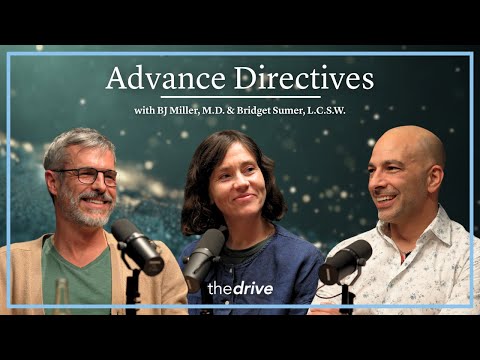
Link: https://youtu.be/oC61hLsXSqo
Short Summary
Here's a summary of the video transcript, focusing on the core message:
-
Most Important Takeaway: Complete an advance directive, focusing on selecting a trusted proxy decision-maker and engaging in ongoing conversations about values and preferences for end-of-life care.
-
Executive Summary: The video emphasizes the importance of advance directives, highlighting that everyone over 18 should have one. The key component is choosing a healthcare proxy and having comprehensive, ongoing conversations about what matters most in life, rather than just focusing on what medical interventions to avoid.
Key Quotes
Here are five direct quotes from the transcript that represent valuable insights or strong opinions:
-
"So one sort of public service announcement here is advanced directives is very important. You can download a form online like this is a free but you don't need a lawyer to do this." - This highlights the accessibility and importance of advanced directives.
-
"Like I didn't want that for them. I didn't I didn't you know if I was at all sentient I definitely didn't want to hear it but I I didn't want them in throws of totally unexpected grief to be trying to negotiate that relationally." - This quote encapsulates the emotional burden placed on loved ones when end-of-life wishes are not clearly defined.
-
"The advanced directive the the conceit is problematic right out of the shoots. You're asking someone to prom putting themselves in this future oriented position where they're in a situation that they can't imagine where they can't speak and so what will they want then? So it's a problem." - This highlights the inherent challenges and limitations of advance directives.
-
"But we can really but it is easier for people to choose like the scene that we're going towards that they can square against how they knew their person." - This suggests focusing on positive goals and meaningful experiences, rather than solely on avoiding specific medical interventions.
-
"I like this framing better of okay like what are the minimum set of requirements you need to have to be really to to still hold some delight in life and you know what do we need to get you there that those are the those are the steps we'll take." - This offers a more positive and proactive approach to end-of-life care discussions.
Detailed Summary
Here's a detailed summary of the provided YouTube video transcript, focusing on the key topics and arguments presented:
-
Timing of Medical Decision-Making Discussions:
- The video opens by questioning when to initiate discussions about medical decision-making, power of attorney, and advanced care planning within a relationship.
- These discussions can be difficult because they require accepting the potential loss of capacity to make decisions.
-
Individual Differences:
- The difficulty of these discussions varies significantly depending on the individual's past experience with making decisions independently versus collaboratively.
- In the neurologic illness space, a caregiver or family member is often already involved in medical visits, making the transition to these conversations somewhat more natural.
-
Importance of Advanced Directives:
- Emphasizes that everyone over 18 should have an advanced directive.
- There's a disconnect between recognizing the importance of advanced directives and actually creating one.
- Advanced directives are accessible and free to obtain online.
-
Key Element of Advanced Directives: The Proxy:
- The most crucial aspect of an advanced directive is designating a health care proxy or surrogate decision-maker.
- This person will make decisions on your behalf if you are unable to communicate your wishes.
-
Thinking About Advanced Directives as a Young, Healthy Person:
- Discusses the importance of creating an advanced directive even when young and healthy, to avoid burdening loved ones with difficult decisions in the event of an unexpected event.
- It's crucial to consider the potential impact on family members and partners when they have to make life-altering decisions on your behalf.
-
Responsibilities of Being a Proxy:
- Being a medical decision-maker is an honor and a significant responsibility.
- It requires in-depth conversations to understand the individual's values, wishes, and preferences.
- The role of the proxy is to honor the person's wishes, not to impose their own will.
-
Ongoing Conversations:
- Advanced directives are not one-time events; they require repeated conversations and updates as circumstances change.
- Individuals' preferences and what they consider acceptable to live with can evolve over time, particularly with illness or disability.
-
Limitations of Advanced Directives:
- Acknowledges the problematic nature of advanced directives: Asking someone to anticipate a future situation where they are unable to speak for themselves is inherently difficult.
- People's perception of what they can or are willing to live with can change over time.
-
Focusing on Values and Meaningful Experiences:
- Instead of solely focusing on medical interventions to avoid (DNR, DNI), focus on defining the experiences and values that make life meaningful for the individual.
- It's more helpful to understand what is important to the person and what contributes to a good quality of life, and how to get them there.
-
Shifting the Language: "Allow Natural Death"
- Highlights the movement to reframe "Do Not Resuscitate" (DNR) orders as "Allow Natural Death," emphasizing what is being allowed to happen rather than what is being withheld.