[@SensiblePrepper] Be Organized! Different Kits with Your Gear Ready To Go!
![[@SensiblePrepper] Summarizer](https://summaries.pages.dev/img/logo.webp)
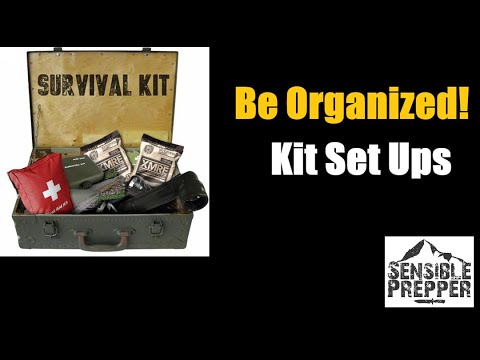
Link: https://youtu.be/o9Xq-R_xz58
Short Summary
Okay, here's the requested information:
-
Most Important Action Item/Takeaway: Prioritize organization by assembling various kits (fire, water, food, medical, shelter, etc.) containing necessary supplies for different emergency scenarios to avoid frantic searching during a crisis.
-
Executive Summary: The video emphasizes the importance of preparedness through organization, specifically by creating comprehensive kits tailored to various survival needs. These kits, such as fire, water, food, medical, and storm kits, streamline access to essential supplies, improve efficiency, and enhance resilience in crisis situations.
Key Quotes
Here are five quotes that I found particularly insightful from the transcript:
- "The one thing is guys is if there is a crisis situation, the last thing you want to do is to run around and try to find items."
- "You can't choose the time that something goes wrong. You You just can't choose the time. Things happen at the most surprising times when you think everything is great."
- "Having fire is essential. It's primal. I mean, that's part of survival. It's one of the most important elements of survival."
- "We have personal SHTFs way more than we have a crisis on a national or regional level... having your EDC is your groundwork. It is your bare minimum. This gets me through."
- "The closer you can get to the primary is the less you're close to the stone age. But when if a long-term grid down situation were to happen, then the the primitive is going to be vastly important to know those things. What about water? Yeah, I have my water filters. What about when that runs out? What am I going to do? So building a natural water filter, you still need to boil it, but going through the sand, the charcoal, the grass, having that gravity-fed filter..."
Detailed Summary
Okay, here is a detailed summary of the YouTube video transcript, presented in bullet points:
Key Topics:
- Organization of prepping supplies through kits. Emphasizing the importance of readily accessible and organized resources, especially during crisis situations.
- Specific kits: Discussing various essential kits for prepping and survival.
- EDC (Everyday Carry) and Off-Body Carry: Covering the importance of EDC and the alternative option of off-body carry.
- Prioritizing Preparedness: Highlighting the need to be prepared for personal emergencies, as they are more frequent than large-scale disasters.
- Primitive skills Mentioning the importance of learning primitive survival skills in case of a complete breakdown of the current system.
Arguments and Information:
- Need for Organization: During a crisis, the time spent searching for supplies is detrimental. Being organized allows for quick access to necessary items.
- EDC: An EDC is crucial for daily preparedness, including items like a knife, flashlight, and concealed carry (where legal).
- Off-Body Carry: Useful for situations where on-body carry is impractical (e.g., swimming, at the gym). Fanny packs/waist packs are suggested.
- Personal vs. Large-Scale Disasters: Personal emergencies happen more often. EDC provides a baseline level of preparedness.
- Fire Kit: Essential for boiling water, cooking, warmth, light, and morale. Contains a ferro rod, matches, and tinder.
- Water Kit: Crucial for survival as one can only live three days without water. Should include filter straws, purification tablets, and a metal container for boiling water.
- Food Kit: Includes non-perishable food like Mountain House meals, energy bars, or MREs, and utensils for preparation and consumption.
- Storm Kit: Contains emergency power sources (lanterns, solar panels, generators), extension cords, and a fire extinguisher. All items kept in one designated place.
- Iron Rations: An "extra" supply of comforting items like candy bars, batteries, and candles, for morale boosting in long-term crises.
- Medical Kits: Two types: a basic first-aid kit (band-aids, wraps) and a trauma kit (tourniquets, chest seals, hemostatic gauze) for serious injuries. Essential for both personal carry and vehicle storage.
- Hygiene Kit: Contains essential hygiene items like toothpaste, toothbrush, soap, comb, and a small mirror for maintaining cleanliness and morale.
- Hurt Locker (Self-Defense Kit): Contains self-defense gear like magazines, load-bearing equipment (plate carrier, battle belt), tactical gloves, eye protection, hearing protection, cleaning equipment, and ammunition.
- Repair Kits: For vehicles (flares, orange vest, mat for changing tires) and for general repairs (zip ties, safety pins, needle and thread, duct tape, glue, knife).
- Shelter Kit: Includes a blanket, tarp, hammock, tent stakes, paracord, emergency space blankets/bivies, and heavy-duty trash bags.
- Learning primitive skills It's important to know primitive survival skills in case of a complete breakdown of the current system, with pre-packaged items running out, and traditional supplies becoming unavailable.
- Avoid robbing from get home bag It's best to duplicate the tools in the get home bag instead of taking them from the bag itself, and failing to put them back.
Questions & Answers from the Live Chat
- Sleeper Cells: The presenter acknowledges the possibility of sleeper cells activating and mentions recent reports of DHS/ICE looking for undocumented individuals. He encourages preparedness, regardless of whether an event occurs.
- Hearing-Safe Home Defense Caliber: 300 Blackout is recommended due to its effectiveness and ability to be suppressed.
- Current Prep Focus: The presenter is currently focusing on water procurement and primitive survival skills, such as natural water filtration and fire starting.