[@TheDiaryOfACEO] Vitamin D Expert: The Fastest Way To Dementia & The Dangerous Lie You've Been Told About Sunlight!
![[@TheDiaryofaCEO] Summarizer](https://summaries.pages.dev/img/logo.webp)
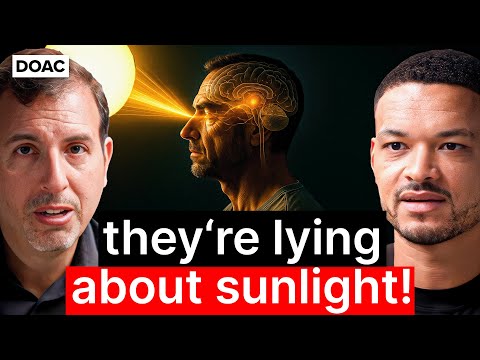
Link: https://youtu.be/wQJlGHVmdrA
Short Summary
Here's the key takeaway and executive summary based on the transcript:
-
Number one takeaway: Prioritize daily sunlight exposure (around 15 minutes) due to its impact on mitochondrial function, overall health, and potential benefits beyond just Vitamin D production. Even on cloudy days, spending time outdoors is beneficial.
-
Executive Summary: Dr. Seahol highlights eight pillars for optimal health, with a strong emphasis on the often-overlooked importance of sunlight for improving mitochondrial function and overall well-being. Regular sunlight exposure, even on cloudy days, can stimulate melatonin production, reduce oxidative stress, and improve energy output at the cellular level, contributing to better health outcomes.
Key Quotes
Okay, here are 5 direct quotes from the YouTube video transcript that I found particularly insightful:
-
"After the first day, his white count starts to come down. That's like a measure of the infection that's going on in the lung...By the time he gets to day five, okay, we're already past 2 days. He's off the BPAP. He's on regular just nasal canula oxygen that you see people wearing on their nose. The doctors are scratching their head." - This quote highlights the powerful and surprising impact of sunlight exposure on a patient with a severe infection, challenging conventional medical expectations.
-
"There was a study in 2011 in Sweden...The magnitude difference between those two was so much that they were able to show that women who in Sweden who spent the most amount of time outside and smoked had the same mortality as those women that did not spend as much time outside and did not smoke. They were equal." - This quote emphasizes the significant health benefits of sunlight exposure and its potential to offset some of the negative effects of smoking, which demonstrates just how powerful sunlight can be.
-
"The scurvy of the 21st century is the lack of sunlight. Everything is inside. Uh we we avoid the outside. We avoid discomfort. We avoid high temperatures. We avoid low temperatures. We are we used to go out and play sports. We now are are playing virtual sports on on pads." - This quote presents a compelling analogy, suggesting that modern lifestyles characterized by indoor confinement and avoidance of natural elements are leading to a widespread health deficiency, similar to how lack of vitamin C caused scurvy.
-
"This is the reason why whenever they have to whenever they show you deaths in the year, they always have to seasonally adjust it. And the length of the day is a proxy for the amount of sunlight." - This quote underscores a connection between seasonal variations in sunlight and mortality rates, suggesting that sunlight plays a significant role in population health.
-
"Every single endpoint that they looked at was statistically significant. And what does that mean? It means that the differences between these two groups could not have been from chance. There was a real difference...For those that had the jacket turned on, it was 8 days. That was 4 day difference. That's tremendous when you realize that it costs thousands of dollars to hospitalize patients. It's it's a huge amount." - This quote emphasizes the statistically significant reduction in hospitalization length achieved through infrared light therapy, highlighting not only the potential health benefits but also the cost-effectiveness of this intervention.
Detailed Summary
Here's a detailed summary of the YouTube video transcript, focusing on the key topics, arguments, and information discussed:
-
Introduction and Personal Story:
- A 15-year-old boy with leukemia developed a flesh-eating lung infection and was given two days to live. His only wish was to go outside.
- After two days of being outside in sunlight, his infection significantly decreased.
-
Dr. Roger Seheult's Background and Aim:
- Board-certified critical care physician.
- Aims to explain easily graspable tools to improve health and well-being.
- Deals with lung issues and critical care in the ICU.
-
The Eight Pillars of Health (NEW START):
- Nutrition: What we eat dramatically impacts well-being.
- Exercise: Has "side benefits" - reduces stroke, improves well-being, reduces depression.
- Water: External use of water, including hot and cold therapy (saunas, cold plunges), can affect the immune system.
- Sunlight:
- More than just vitamin D; it has many benefits.
- Sunlight (particularly infrared light) penetrates deep into the body (up to 8cm) and interacts with the mitochondria.
- Mitochondria makes its own cooling system: Melatonin
- COVID-19 link: The virus interacts with the ACE2 receptor, which mitigates oxidative stress (the cell's cooling system for the mitochondria)
- People with higher Vitamin D levels did better during COVID, BUT that's likely because they were out in the sun more, and infrared radiation from the sun is causing an effect at the mitochondrial level in terms of oxidative stress. Vitamin D was just the marker.
- Temperance: Moderation, avoiding toxins like smoking, excessive alcohol, and amphetamines.
- Air: Not just pure air, but air with a beneficial microflora. Outside air is best.
- Rest: Not just sleep, but daily and weekly rest, taking time away from phones and emails.
- Trust: Faith and trust in a higher power (God) is associated with better ability to deal with stress, depression, and anxiety.
- NEW START University: Weimore University puts these together in this pattern, and calls it New Start. They actually have a New Start Program.
-
Sunlight Deep Dive:
- The speaker highlights sunlight as the "lowest hanging fruit" and a key area of focus.
- COVID-19 highlighted that people with chronic diseases (obesity, heart disease, diabetes, dementia) were most vulnerable. This points to mitochondrial dysfunction.
- Mitochondria: "the powerhouse of the cell," but output decreases by 70% with age. This causes metabolic slowing, fatty liver, heart congestion, dementia.
- The paper by Russell Writer and Scott Zimmerman: Sunlight has various wavelengths.
- Infrared light (long wavelength) penetrates deeply and interacts with mitochondria.
- Mitochondria generates oxidative stress, which leads to the destruction of mitochondria and leads to disease.
- Infrared light stimulates and upregulates melatonin production in mitochondria, a powerful antioxidant to prevent oxidative stress.
- Hospital anecdote: 15-year-old boy with flesh-eating lung infection dramatically improved after going outside in the sun.
-
Sunlight's Impact and Implications:
- The story of Amy Hanmeer's son who went from being two days from dying to complete recovery after being outside getting sunlight.
- Sunlight's positive impact lead the speaker to actively work at 3 different hospitals to get patients outside.
- Historic context: Old hospitals had verandas to allow patients to get sunlight.
- Proximity to windows and sunlight is associated with faster hospital discharge times and better patient surveys.
-
Red Light Therapy:
- Red light (visible) doesn't penetrate as deeply as infrared but still reaches the skin and activates mitochondria in fibroblasts to produce collagen.
- Red light reduces blood sugar spikes by metabolizing glucose faster.
- Glenn Jeffrey's research: Red light (670 nanometers) improves mitochondrial efficiency, eyesight, and glucose management in a 15-minute period.
- Systemic effects: The lights that are put on one part of the body can have a systemic response.
-
COVID-19, Vitamin D, and Sunlight Connection:
- Higher vitamin D levels correlated with better COVID-19 outcomes. However, vitamin D supplementation didn't always work.
- Vitamin D levels were just a marker of sunlight exposure. The infrared radiation from the sun likely had the primary benefit.
- Brazilian study: COVID-19 patients using an infrared jacket for 15 minutes daily had improved oxygen saturation and a shorter hospital stay.
-
Seasonal Patterns and Sunlight:
- COVID-19 surges correlated with latitude and decreasing sunlight.
- Mortality in the US and England was lower in areas with more sunlight (independent of vitamin D).
- Swedish and UK studies show lower mortality from cancer and cardiovascular disease in people who spend more time outside. No statistical increased risk of melanoma.
-
Actionable Steps for Sunlight Exposure:
- Aim for 15 minutes of sunlight daily.
- For individuals who live in high latitudes: Vitamin D supplements. Also, to use a SAD lamp for 20 minutes a day to address metal health issues.
- Get sunlight early in the morning or late in the evening to get the most amount of benefits.
-
Indoor Lighting:
- Modern LED bulbs emit a narrow spectrum of light (primarily blue), unlike the full spectrum of sunlight.
- Switching to incandescent bulbs indoors improves color differentiation.
-
Darkness and Sleep Hygiene:
- Important to have dark nights and avoid light exposure before bed.
- Screens emit blue light, which shuts down melatonin production and confuses the circadian rhythm.
- Use blue light blockers or shift screens to a red spectrum, but the best solution is to turn off the lights.
- Sleep masks can help block light.
- Avoid nightlights or LED displays in the bedroom.
-
Vitamin D Supplementation:
- Vitamin D supplements do work and can reduce the risk of autoimmune conditions and acute chest syndrome.
- Get vitamin D levels checked and be careful not to take too much (fat-soluble vitamin).
- People with darker skin at high latitudes need more sun exposure.
- Vitamin D affects calcium metabolism, the immune system, and gene transcription.
- Vitamin D can be found in mushrooms and certain fish.
-
Water and the Immune System:
- Not drinking enough water is common.
- External use of water (hot and cold therapy) can impact the immune system.
- Innate immune system (first line of defense) vs. adaptive immune system (antibodies).
- Interferon is crucial to the innate immune system and prevents viral infections. Viruses can fight against Interferon.
- Interferon production increases with temperature.
- Treating fevers can cut the legs out from your immune system.
- Water has a very high specific heat.
- Water treatment can induce artificial fevers, which improves the Interferon response.
- Four to seven Sauna visits can prevent death.
-
Air Quality:
- Not just the lack of toxins, but also the benefits of fresh air.
- Phytoncides (aromatic compounds from plants) can elevate the immune system and make you more relaxed.
- Benefits last for about 7 days.
- Good for carbon dioxide to escape the house.
-
Trust and Faith:
- Faith in a higher power (God) can provide a way of dealing with stress and anxiety.
- Healthy relationships with church and God are associated with less disease.
- Belief in God that is looking out for you, which is associated with a reduction in depression and anxiety.
- Randomized Control Trials: injecting faith into your cognitive behavior therapy is more effective.
-
End of Life and Personal Miracle:
-
Patients at the end of their life choose to die rather than interventions to sustain them.
-
Young man who survived anoxic brain injury after operation
-
Loving and believing in people will have impact to save lives
-
Melatonin Supplementation:
- Beneficial for falling asleep, shifting circadian rhythm, and jet lag (small doses: no more than 5 mg).
- High doses can cause irritability (mood disorder).
- Potential concerns of shutting down melatonin secretion from the pineal gland, but no current evidence.
-
Closing Thoughts:
- Strengthen all the links (organ systems) for longevity, not just focusing on the weakest link with medication.
- The area of focus that the Doctor is most dying to talk about, which he is almost never asked about is evidence for science in the Bible.
This bullet-point summary encapsulates the essential information and arguments presented in the video transcript.