[@alux] Why The Rich Play a Different Status Game
· 5 min read
![[@alux] Summarizer](https://summaries.pages.dev/img/logo.webp)
Link: https://youtu.be/lHGF3D99MUM
Duration: 19 min
Transcript: Download plain text
Short Summary
Status in human societies is fundamentally driven by scarcity—things gain value when few can access them, and this scarcity is constantly eroded by imitation and widespread adoption. As traditional status symbols like luxury goods and information become increasingly accessible, the new currency of status has shifted toward autonomy, networks, and control over one's own time. Understanding how status works helps people avoid chasing hollow signals and instead focus on what truly holds lasting value: the freedom to direct their own time and live according to their own priorities.
Key Quotes
- "Status comes from scarcity. People place a higher value on things that are difficult to get because difficulty creates meaning." (00:00:33)
- "The moment something becomes widely available, its ability to signal distinction begins to fade." (00:00:54)
- "Success attracts attention. Attention attracts imitation. Imitation destroys scarcity." (00:00:24)
- "Time remains one of the rarest resources on Earth because every person receives the exact same amount of it every day. No amount of money creates more hours in the day." (00:00:10)
- "The visible object is often standing in for a deeper human need." (00:00:15)
Detailed Summary
Status and Scarcity
- Status comes from scarcity: people place higher value on things that are difficult to obtain because difficulty creates meaning, and when something requires effort, skill, sacrifice, talent, money, patience, or access, it carries a different message
- A degree becomes valuable when few people can earn it; a difficult exam becomes respected because many try and only some succeed; a championship trophy carries weight because countless competitors want it and only one person or team takes it home
- Status symbols always change because of a repeating cycle: success attracts attention, attention attracts imitation, and imitation destroys scarcity—the moment something becomes widely available, its ability to signal distinction begins to fade
The Cycle of Status
- A rare thing becomes desirable, people chase it, more people obtain it, the signal weakens, a new signal emerges, and the process repeats
- In fashion, trends start with a small group, spread to mainstream audiences, and early adopters move on when the original signal no longer separates them from the crowd
- Luxury brands built reputation on exclusivity, but global demand expanded production and access, making symbols less rare and weakening their status value
- Traditional status symbols have become crowded—someone with a luxury watch or car could be a billionaire, a successful professional, or someone carrying significant debt
Status is Relative
- People evaluate status in comparison to everyone around them, not in isolation
- Even identical objects can lose or gain status based on how many others have access
- Human beings constantly gather information about careers, accomplishments, skills, possessions, friendships, and reputations to build a picture of someone's position in the world
The Evolution of Status in the Modern Era
- As information became available to everyone through the internet, information itself lost much of its status value and the advantage shifted to interpretation, judgment, relationships, and access
- Wealthy people often play a completely different status game than what most people can see, quietly moving toward new forms of distinction hidden from public view
Scarcity Shift: From Ownership to Access
- Private clubs with limited membership, restricted events, and personal relationships with influential people became more valuable signals
- At higher levels of wealth, networks become more important than access alone—opportunities arrive through people rather than possessions
- Trusted introductions create invisible opportunities that are invisible to outsiders
Autonomy: The Highest Form of Status
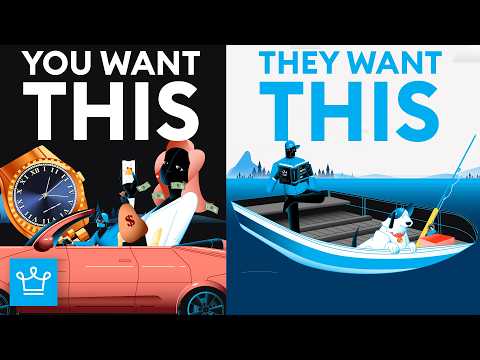
- Autonomy (control over one's own time, ability to decide how time is spent, ability to say no without fear) is the highest form of status because it remains scarce regardless of how wealthy a society becomes
- Time is one of the rarest resources because every person receives the exact same amount every day; no amount of money creates more hours
- Millions of people can own luxury products, fly business class, and wear expensive clothes, but very few have complete control over their time
- Successful people eventually become less interested in collecting things and more interested in protecting their freedom, organizing around flexibility, optionality, and independence
What Status Symbols Really Represent
- The car represents freedom, the title represents respect, the house represents stability, the money represents options
- Many people spend their lives chasing signals of success while overlooking what those signals were meant to represent—freedom to decide what matters, direct your own time, and build your own path
- Status begins as measuring position within a group but in its highest form becomes the ability to live according to your own priorities
Practical Insights
- Understanding how status works makes a person less vulnerable to trends, less dependent on external approval, and more focused on building a life aligned with their own values
- Status has existed since before cities, banks, companies, and written language—people in small groups depended on each other, and those who earned trust and respect found themselves in stronger positions with deeper relationships and more ability to shape outcomes
- The form of status changes as society changes but the underlying mechanism remains stable: land, education, wealth, influence, beauty, athletic ability, artistic talent, or technical skill have all served as status markers at different times