[@ChrisWillx] Neitzsche’s Advice For Finding Joy In Suffering
![[@ChrisWillx] Summarizer](https://summaries.pages.dev/img/logo.webp)
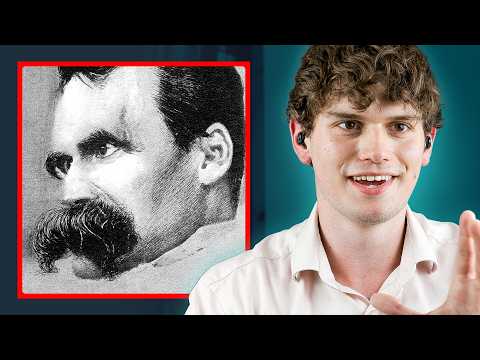
Link: https://youtu.be/XV1CYf-A87w
Short Summary
Number One Takeaway: Embrace resistance and challenges as opportunities for growth and self-discovery, rather than seeking a life devoid of struggle.
Executive Summary: Nietzsche believed that overcoming resistance is essential for human potential and fulfillment. He argued that avoiding challenges leads to nihilism and prevents individuals from realizing their unique capabilities. Therefore, one should embrace struggles as opportunities to become stronger and more self-aware.
Key Quotes
Here are four quotes that capture particularly valuable insights from the provided transcript:
-
"So his the kind of culmination of um of his philosophical project is the idea of loving literally everything that happens to you and not merely kind of being content or or kind of accepting it but but truly loving it." This quote distills Nietzsche's concept of amor fati and its significance in his philosophy.
-
"If resistance isn't there, he's worried that humanity will just kind of decay into this like sludge that doesn't do anything. Um he's, you know, he's worried that all we'll do is kind of we'll sit around on our sofas um pursuing comfort, avoiding pain, and as a result, we will also never feel for him the kind of joys of actually ending up overcoming resistance." This highlights Nietzsche's concern about the potential for human stagnation and the importance of challenge and struggle for achieving fulfillment.
-
"he sort of thinks that that weakness breeds dishonesty... but secondly he thinks that uh in his view a kind of unwillingness to overcome resistance which is broadly how he defines weakness kind of an unwillingness or an inability to overcome resistance is going to eventually lead this person to kind of become a nihilist." This quote explains Nietzsche's negative view of "weakness" and his belief that it leads to dishonesty and nihilism.
-
"That's his one of his broad critiques of of compassion which is sort of very difficult to get your head around is that he thinks compassion is is bad for the for the person that is the person that one is being compassionate towards he thinks that you were in some way holding them back." This highlights a controversial aspect of Nietzsche's philosophy: his critique of compassion and its potentially debilitating effect on the recipient.
Detailed Summary
Okay, here's a summary of the YouTube video transcript, focusing on the key topics and arguments related to Nietzsche's philosophy, presented in bullet points:
-
Nietzsche's Amor Fati:
- Nietzsche's ultimate philosophical goal is Amor Fati, the love of fate.
- It's not merely acceptance of everything that happens, but active love of it.
- Nietzsche struggled to achieve this himself, often expressing unhappiness in his letters.
-
Overcoming Resistance:
- Nietzsche viewed pain and suffering as resistance to be overcome.
- He channeled his own physical pain (e.g., headaches) into his writing, using it to focus his mind.
- He believed that a fundamental aspect of the "will" is to overcome resistance, thus willing resistance itself.
-
The "Last Man" and the Danger of Contentment:
- Nietzsche feared the decline of humanity into a passive, content state, represented by the "Last Man."
- He opposed contentment (avoiding challenge and resistance) because it prevents humans from achieving their potential.
- Without resistance, Nietzsche worried that humanity would stagnate, seeking only comfort and avoiding pain, thereby missing the joys of overcoming challenges.
-
Struggle and Fulfillment:
- Nietzsche believed that struggle is essential for experiencing fulfillment and achievement.
- A life without struggle would be devoid of the satisfaction that comes from overcoming obstacles.
-
Nietzsche's Contempt for "Weakness":
- Nietzsche was critical of those he perceived as weak (defined by an unwillingness or inability to overcome resistance).
- This has caused controversy due to Nietzsche's apparent admiration by the Nazis
- Weakness, in Nietzsche's view, breeds dishonesty and ultimately leads to nihilism.
- Nietzsche himself was perceived as weak in many ways.
- Fluffy Bunny Nietzsche is where you imbue Nietzsche with whatever you personally think is a really good thing and pretend that he said it.
-
Reinterpreting Nietzsche's Condemnation of Weakness:
- Some interpreters argue that Nietzsche's harshness towards the "weak" is a "tough dad" approach, driven by a belief that everyone is capable of overcoming resistance and achieving their unique potential.
- Extending pity would therefore be condescending, as it undermines their potential.
-
Critique of Compassion:
- Nietzsche viewed compassion as detrimental to the recipient, hindering their growth and independence.
- Compassion is seen as holding people back, rather than encouraging them to overcome their own challenges.