[@jackneel] "He Cheated With An AI Girlfriend!" Caleb Hammer Exposes The Purchases Destroying Gen Z
![[@jackneel] Summarizer](https://summaries.pages.dev/img/logo.webp)
Link: https://youtu.be/NK3yzChl-dA
Duration: 116 min
Short Summary
Caleb Hammer, a financial auditor and content creator who built a quarter-million-dollar net worth and became a millionaire before his YouTube career, explains why Gen Z is described as the poorest and most in-debt generation in American history, carrying approximately $94,000 in debt per person while averaging only $400 in emergency savings. The episode explores how high-income guests earning $400,000+ often exhibit worse financial outcomes than lower-income guests due to lifestyle inflation and increased access to debt. The discussion covers psychological spending triggers like dopamine chasing and loneliness-driven delivery purchases, while offering practical strategies including 30% spending cuts, prioritizing debt above 7% interest, and building a 6-month emergency fund.
Key Quotes
- "It is not hard to have sex before any notoriety or money. It is not hard, but there's a lot of social pressure. They're locked inside." (00:45:26)
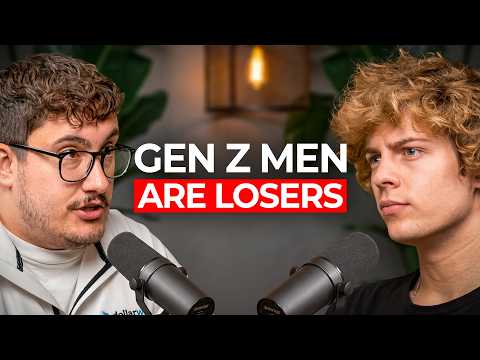
- "Gen Z men are losers. Dating rates are record low. Virginity rates are record high. They're losers paying for Only Fans. It kind of sucks cuz it's also just not hard to have sex."
- "The average Genzy person has about $400 in emergency savings is $94,000 in debt. Statistics show it's the poorest most in debt generation in American history."
- "So the biggest lie is go to any institution, borrow whatever it takes to get any degree you want. We need to be much more intentional with our students."
- "College. Art degree or double jaw surgery? Flip a coin."
Detailed Summary
Financial Audit Episode: Caleb Hammer on the Gen Z Financial Crisis
Introduction: Caleb Hammer's Background and Journey
Caleb Hammer is a financial auditor and content creator who critiques people's spending habits and financial behaviors on his show Financial Audit, approaching its fourth anniversary while receiving hundreds of applications per day. He grew up poor and lower middle class with foreclosure notices, with a father who worked as a gas station attendant and a mother who worked at an eye doctor's front desk. He went $70,000 in debt from a music degree in Michigan, with his first debt being a credit card maxed at age 18 to buy a piano. He accumulated a quarter-million-dollar net worth before ever making a YouTube video and became a millionaire before starting his Financial Audit channel, yet he says his level of happiness did not change when he became wealthy. He competed with the Kill Tony podcast on charts after a friend pointed out his subscriber lead at an afterparty, which fueled his competitive drive in content creation.
The Gen Z Financial Crisis
The episode presents Gen Z as the poorest and most in-debt generation in American history, carrying approximately $94,000 in debt per person while holding only $400 in emergency savings on average. Three major cost burdens facing younger generations are housing, education, and healthcare, with costs continuing to rise each generation. The job market is described as one of the worst in a long time, citing AI impact and companies holding hiring due to economic uncertainty and steady interest rates. Gen Z doesn't actually have $400 in savings on average, making them particularly vulnerable to financial shocks. The youngest guest on the show was 18 years old, though Caleb's show generally requires guests to be at least 21. Guests under 21 typically only have student loans and around $250 in credit card debt because they have not had enough time to accumulate significant debt.
- Gen Z carries approximately $94,000 in debt per person on average
- Average emergency savings for Gen Z is only $400
- Three major cost burdens: housing, education, and healthcare
- Job market cited as one of the worst in a long time due to AI impact
- Companies holding hiring due to economic uncertainty and steady interest rates
High-Income vs Low-Income Guest Disparities
Guests earning $400,000 or more annually often have zero savings due to thousands in monthly expenses on unaffordable houses, eating out for every meal, and two car loans on $60,000-$70,000 vehicles. Higher-income guests end up in worse financial situations than lower-income guests because they have access to more debt, requiring an extra $100,000 a year to escape their situations. In contrast, lower-income guests need only a 5% pay increase to recover financially. The maximum debt seen on the show was "hundreds of thousands," approaching a million, since million-dollar debt cases typically go elsewhere. The show has revealed that guests making $40,000/year frequently spend $1,500/month on dining and food delivery alone. Approximately 95% of Financial Audit guests spend more per month than they make, funding overspending with personal loans, credit cards, or 401k withdrawals.
- Guests earning $400k+ often have zero savings
- High-income spending includes unaffordable houses, eating out every meal, two $60-70k car loans
- High-income guests need $100k extra annually to escape their situations
- Lower-income guests need only 5% pay increase to recover
- Maximum show debt reached "hundreds of thousands," approaching $1 million
- $40k/year guests spending $1,500/month on food and dining
- 95% of guests spend more than they earn monthly
College and Education System Critique
Caleb argues that the cost of college keeps rising while anyone can borrow unlimited amounts for any degree at any institution with no questions asked. Federal student loans are distinct from personal loans because the government can garnish wages and borrowers cannot escape them through bankruptcy or time limits. Student loan disclosure sites should show expected monthly payments, career salary trajectories for chosen majors, and total borrowing amounts before students commit. Psychology, history, and arts degrees are oversaturated in the job market—important fields but supply exceeds demand. Only about 10 to 30 sports programs nationwide actually generate return on investment; most college athletic programs lose money. He specifically cites Full Sail University as an example of an expensive school where spending $100k on a camera-operating degree offers poor return on investment.
- Unlimited borrowing available for any degree at any institution
- Federal student loans differ from personal loans: wages can be garnished, cannot escape through bankruptcy
- Loan disclosures should show monthly payments, salary trajectories, and total borrowing before commitment
- Psychology, history, and arts degrees are oversaturated in job market
- Only 10-30 sports programs nationwide generate ROI
- Full Sail University example: $100k camera degree with poor ROI
Psychological Drivers of Overspending
"Girl math" is described as a coping mechanism where people want immediate joy rather than sacrifice, with TikTok reinforcing this behavior. Gen Z and millennials exhibit a psychological phenomenon where they believe they will never own a home or retire, leading them to spend all their money immediately. Loneliness drives spending on delivery services like Uber Eats and DoorDash, as well as video games, as coping mechanisms for emotional pain or boredom. Spending is motivated by both positive emotions (wanting to look good, show off on social media) and negative emotions (coping with depression, trauma, or emotional voids), with the reward being dopamine release rather than lasting satisfaction. Microtransactions like game skins provide happiness for only seconds to minutes. A Ramsey Show guest was secretly paying $25/month for an AI girlfriend behind his wife/fiancée's back; she discovered it during filming and it caused a relationship breakdown. Top micro spending categories for men on the Ramsey Show include gooning (OnlyFans), energy drinks, AI girlfriends, and meme coins.
- "Girl math" represents immediate joy over sacrifice, reinforced by TikTok
- "I'll never own a home" mentality leads to immediate spending
- Loneliness drives delivery services (Uber Eats, DoorDash) and video games
- Spending driven by both positive emotions (showing off on social media) and negative emotions (depression, trauma)
- Microtransactions provide happiness for seconds to minutes only
- Ramsey Show guest paid $25/month for AI girlfriend secretly; relationship broke down during filming
Consumer Spending Patterns and BNPL
BNPL services enable bad purchasing behavior by making expensive items appear affordable through small payments. Gen Z micro-purchases (Uber Eats, DoorDash, TikTok Shop) accumulate significantly but are often underestimated. Social media platforms amplify lifestyle jealousy and instant gratification spending among young adults. Food delivery services shifted from being a rare treat to an expectation for younger generations. Birthday months are criticized as a trend that encourages overspending. One guest spent thousands buying percentage shares of French bulldog breeding rights, receiving 10% of puppy sale profits but ultimately made zero dollars and was losing money. Fad collectibles (Lab Bois, Beanie Babies, PopMart) rise and fall too quickly for genuine investment and are not like 90s/2000s collectibles that held value.
- BNPL makes expensive items appear affordable through small payments
- Gen Z micro-purchases significantly underestimated
- Social media amplifies lifestyle jealousy and instant gratification
- Food delivery from rare treat to expectation
- Birthday months criticized as overspending trend
- Guest lost money on French bulldog breeding rights scheme
- Fad collectibles (Lab Bois, PopMart) too volatile for investment
Career Recommendations and AI-Resistant Fields
Nursing is recommended as an AI-resistant career with advocacy for more men to enter the field. Women should consider trades and men should consider social work to diversify away from oversaturated degree paths. The coding/engineering job market is now hyper competitive compared to 5 years ago when companies hired anyone with any background. One person working with AI now produces what three people did a few years ago in software engineering. Cyber security was traditionally safe but AI tools are now exposing vulnerabilities, creating uncertainty about future demand. Kevin O'Leary believes AI will create more jobs, while Mark Cuban believes AI will destroy all jobs. Caleb positions himself in AI-resistant career fields like trades and finance (due to regulations), healthcare, and teaching, where human trust factors matter.
- Nursing recommended as AI-resistant career with need for more men in field
- Women should consider trades; men should consider social work
- Coding/engineering market hyper competitive compared to 5 years ago
- One AI worker now produces what three engineers did a few years ago
- Cyber security facing uncertainty as AI exposes vulnerabilities
- Kevin O'Leary vs Mark Cuban split on AI job impact
- AI-resistant fields: trades, finance (regulation-driven), healthcare, teaching
Content Creation and Creative Career Realities
Content creation and arts are not recommended as primary careers for average people—only a small minority succeed and success often requires sacrificing everything. Creative passions should be pursued on the side while maintaining stable income, not pursued through expensive degree programs. The speaker spent $30,000 on emergency surgery for a Great Pyrenees dog that developed sepsis after swallowing objects like candy wrappers and furniture stoppers. Guests frequently use CareCredit cards to cover expensive pet surgeries and vet emergencies. Good $50/month pet insurance prevents bankruptcy but becomes another unaffordable minimum payment when not handled carefully.
- Content creation and arts only work for small minority of people
- Success requires sacrificing everything
- Creative passions should be pursued on the side with stable income, not through expensive degree programs
- Caleb spent $30,000 on emergency dog surgery for Great Pyrenees with sepsis
- CareCredit frequently used for pet emergencies
- $50/month pet insurance prevents bankruptcy but can become unaffordable minimum payment
Dating, Relationships, and Spending
Gen Z dating rates and marriage rates are at record lows; virginity rates are at record highs among young men. OkCupid analysis reportedly shows top 80% of women engage primarily with top 20% of men on the platform. One guest spent approximately $25,000 on a visa process to bring a woman from her African village overseas to marry him. Cold approach (in-person flirting with strangers) is recommended as an effective dating method over dating apps. The gender wage gap is often cited as 70 cents per dollar, but controlling for same degree and same job, it drops to only 2 cents. More women are going to college now while men are increasingly going to trade schools or remaining unemployed, widening the gender wealth divide.
- Gen Z dating and marriage rates at record lows
- Virginity rates at record highs among young men
- OkCupid: top 80% of women engage with top 20% of men
- One guest spent ~$25,000 on visa to bring woman from African village
- Cold approach (in-person flirting) recommended over dating apps
- Gender wage gap 70 cents when uncontrolled; only 2 cents with same job/degree
- More women in college while men in trades or unemployed, widening wealth divide
Financial Philosophy and Investment Strategy
Caleb lists legitimate investments as stock market, crypto, life insurance, car/home/pet insurance, and real estate (which barely beats the market). Going into 30% interest debt to fund happiness does not yield a 30% return; at best it might provide a small 2-5% return over a lifetime. He recommends making as much money as possible now to invest and compound at approximately 10% average market returns over decades. The host claims the stock market will make more money than real estate long-term and recommends renting over buying, citing freedom to move, job flexibility, and no maintenance costs. Building a fully funded emergency fund should come before spending on health, fitness, or luxury purchases. Buying boats and pools before building an emergency fund are strongly discouraged as these are toys to purchase after becoming a millionaire, not before.
- Legitimate investments: stock market, crypto, insurance, real estate (barely beats market)
- 30% interest debt for happiness does not yield 30% return
- Goal: earn as much as possible to compound at ~10% average market returns
- Stock market recommended over real estate long-term
- Renting preferred over buying for flexibility and no maintenance costs
- Build emergency fund before health, fitness, or luxury purchases
Spending Reduction and Debt Payoff Strategies
To reduce spending by 30%, Caleb recommends starting with a budgeting app to automatically track where money is going, then categorizing expenses as needs, wants, or investing, and cutting wants that don't provide actual joy. The 50/30/20 rule recommends allocating 50% to needs, 30% to wants, and 20% to investing/saving. People should rank purchases by joy level to identify wants that provide the least happiness and are easiest to cut first. Pay off debt with interest rates above 7% as quickly as possible since nothing else competes with that return on investment. The best financial advice is building a 6-month emergency fund (12 months if self-employed or contractor), which changes your life and allows you to take more calculated risks. The average guest in the Hammer Elite membership pays off over $20,000 of bad debt in 12 months.
- 30% spending reduction: use budgeting app, categorize expenses, cut joyless wants
- 50/30/20 rule: 50% needs, 30% wants, 20% investing/saving
- Rank purchases by joy level to identify easiest cuts
- Pay off debt above 7% interest as fast as possible
- 6-month emergency fund (12 months if self-employed) changes your life
- Average Hammer Elite member pays off $20k+ of bad debt in 12 months
Cars, Transportation, and Predatory Lending
Used cars that cost approximately $2,000 at the show's start now cost around $10,000. America has car-dependent infrastructure that creates a catch-22 cycle: individuals need a car to get a job, but need a job to afford a car, often leading to predatory loans or unreliable vehicles. Predatory car loans trap buyers in cycles where income from jobs goes toward loan payments and vehicle maintenance rather than building wealth. Using Uber in LA can be as expensive as a car payment. Cars are treated as an accessory in culture, not merely transportation. The speaker proposes banning politicians from individual stock trading and restricting them to US index funds only, while increasing their base salaries to reduce corruption incentives.
- Used cars rose from ~$2,000 to ~$10,000
- Car-dependent infrastructure creates catch-22: need car for job, need job for car
- Predatory loans trap buyers in cycles funding loan payments over wealth building
- Uber in LA as expensive as car payment
- Cars treated as accessory in culture, not transportation
Hammer Elite Membership and Show Statistics
Hammer Elite membership includes 2 follow-up episodes per week, 3 premium shows daily, 6 days a week. Sam and Rosa achieved the highest debt payoff on the show and became completely debt-free during "Fat Stack Week," representing guests with some of the highest debt levels. The show has been operating for about four years and receives hundreds of applications per day. The Dollarize budgeting app has tens of thousands of monthly users and is recommended for tracking spending by percentage, category, and individual purchases.
- Hammer Elite: 2 follow-up episodes/week, 3 premium shows daily, 6 days/week
- Sam and Rosa: highest debt payoff, became debt-free during "Fat Stack Week"
- Show operating ~4 years with hundreds of daily applications
- Dollarize app recommended with tens of thousands of monthly users
Tithing, Community, and Social Services
Religious tithing (typically 10% of income) can financially harm people already in precarious financial situations, especially when forced during hardship. Tithing/church donations are identity-based for some people who believe they will "die" without it, making it difficult to advise otherwise. Religious institutions provide one of the few remaining third places for community, particularly for men experiencing epidemic levels of loneliness. Social services are identified as the most chronically underpaid job category relative to the value of work provided. 911 dispatchers in lower cost-of-living areas earn approximately $20/hour, with difficulty retaining staff in high-cost areas like Los Angeles where response times are affected.
- Tithing (10% income) harmful to those in precarious financial situations
- Religious donations identity-based and difficult to advise against
- Religious institutions provide remaining third places for community
- Social services most chronically underpaid job category
- 911 dispatchers earn ~$20/hour, difficult to retain in high-cost areas
Final Thoughts and Core Philosophy
The speaker's financial philosophy centers on the idea that "there's only one way out to get better and that is sacrificing for the first time in your life." He acknowledges he holds AI stocks because top-performing indices have significant AI exposure. AI represents an unknown future that could either boost productivity enormously or eliminate jobs entirely, making it particularly scary for Gen Z and Generation Alpha. Despite his financial success, Caleb emphasizes that happiness did not change when he became wealthy, underscoring that financial security alone does not determine life satisfaction.
- Core philosophy: "only one way out to get better is sacrificing for the first time in your life"
- Holds AI stocks despite discussing AI risks because top indices have significant AI exposure
- AI could boost productivity enormously or eliminate jobs, scary for Gen Z and Gen Alpha
- Happiness did not change when he became wealthy
Full Transcript
Show transcript
Today's guest is the most feared man in
personal finance.
>> Dude, Gen Z men are losers. Dating rates
are record low. Virginity rates are
record high. They're losers paying for
Only Fans. It kind of sucks cuz it's
also just not hard to have sex.
>> A music kid from Michigan who went
$70,000 in debt chasing a dream. His
life turned around when he became
obsessed with financial education.
>> I turned 18. I wanted a piano. My
parents said, "Oh, well, go max out a
credit card to get a piano." That was my
first debt. And that [ __ ] me for years
to come. Now he's built one of the most
controversial shows on the internet,
auditing people's spending and calling
out the habits keeping them broke.
>> Uh he was paying for an AI girlfriend
behind her back. He was all up in that
chat. He was like, "Come for me, baby."
It wasn't like finance breaking, but it
was kind of relationship breaking.
>> In this episode, we'll expose the
purchases quietly destroying Gen Z.
Explore why this generation feels like
financial freedom is impossible and
investigate whether the system is
genuinely rigged or the problem is the
person staring back in the mirror. So
the biggest lie is go to any
institution, borrow whatever it takes to
get any degree you want. We need to be
much more intentional with our students.
>> So college or double jaw surgery?
>> College. Art degree or double jaw
surgery? Flip a coin.
>> Caleb Hammer, welcome to the Jack Noil
podcast.
>> That was a That was a good little intro.
That was exciting. What is that accent?
I've never heard this.
>> The accent.
>> What are you?
>> I'm from uh Kentucky originally.
>> No, you're [ __ ] not. That is some
European ass [ __ ]
I get this all the time.
>> Probably isn't. You got
>> Where does it sound like I'm from in
Europe?
>> I don't know. That's why I'm asking.
>> People ask me if I'm like Australian, if
I'm like British or something. But
>> what's wrong with you? What is it?
>> I think I'm just I don't know, man.
Guys, comment down below.
>> Are you a hill boy?
>> A hill boy?
>> Hill boy. Like the Kentucky Hills.
>> Oh, like the hillbillies.
>> No, no, no. Like the hills. Cuz they got
like Appalachian Mountains. Is that
right?
>> Oh, yeah. Yeah. Yeah. No. I mean, my
parents do sound like that, like they're
straight up country. But
>> nice to meet you. I really thought you
were European, but thanks for having me,
man. I appreciate it.
>> Caleb, uh, I want to ask you, you've sat
down at this table across from hundreds
of people, many of which are in their
20s, looking at their income, debt,
spending, and the financial decisions
they're making every day. When you look
at Gen Z as a whole compared to other
generations, how broke is Gen Z?
>> It's pretty bad. Listen, I mean, a lot
of the analytics that we're getting
around Gen Z are pretty brutal. Uh
especially with the rise of buy now pay
later. Like credit cards, that's already
[ __ ] when it comes to millennials. But
with Gen Z's just as inclined with the
credit cards, but now they're adding the
buy now pay later. their student loans
are even worse because the cost of
college keeps going up and we let anyone
borrow as much as they want for whatever
degree at any institution they want to
go to, no questions asked. Um, so
student loans are brutal. Uh, cost of
living is brutal. It's it seems to be
getting worse every generation from the
boomers to now in three main categories.
And of course, debt being added on top
of those, but that being housing,
school or education, and healthcare.
healthcare. They're not having to super
deal with yet on the overall
generational level. Of course, they have
to u make their monthly payments and
whatnot, but in terms of they're
obviously not a sick generation at this
point, but housing, school, the other
big ones, they're facing that facing
that big burden where it just keeps
going up and not stopping. It's not
going to stop. Not in the with with the
way that the systems are currently set
up. So, it's pretty brutal. They're
brutal right now. Now they're entering
one of the worst job markets we've had
in a long time. I know like old
millennials, they entered the job market
in the great recession. As a young
millennial by like a year, I'm lucky
that I didn't enter the job market in
the great recession. But I I know the
old millennials are young Gen Xers like
they I mean I wouldn't want to enter
that job market. That's brutal. But
>> Gen Z with the rise of AI right now,
brutal job market. companies just kind
of holding hiring right now because they
don't know what the economy is going to
look like over the next year or two and
interest rates are still holding steady.
Not the best time to be graduating
college. So, I feel bad for them.
>> I mean, the average Genzy person has
about $400 in emergency savings is
$94,000 in debt.
Statistics show it's the poorest most in
debt generation in American history.
>> Yep. Do you think Jinzy is incapable of
saving money and being financially
responsible or do you think it's
something else?
>> Not necessarily. I mean, millennials
didn't do well either until until they
were in their 30s, getting towards the
height of their career for older
millennials. I mean, the oldest Gen Z's
are still like a few years into their
career. We shouldn't expect that
generation to be anywhere like super
successful right now. But, I mean,
you're right on the debt scale. like
student loans, the cost of college just
keeps going up. So, that is brutal. But
the cost of college isn't them not being
able to save. Them having these student
loans now that they have to deal with,
but I mean, if if you see anyone in
their from 18 to where what's the oldest
Gen Z like 29 now? That's usually not
when people have savings. They should,
don't get me wrong. I advocate for it. I
will help them get there, but 20s are
often the times for [ __ ] up. And we
accept that as a society, maybe we
shouldn't, but we do. It's It's not
surprising. I don't think anyone's
surprised. If we're just being real
about it, doesn't mean we should excuse
it. I'm not trying to enable it or
excuse it by any means, but I don't
think we should all be like, "Oh, wow.
This is crazy. I've never heard of
this." I mean, it's it's every
generation at 20 to 30. And it's worse
now because of those three categories
that we talked about. But even still,
it's also worth recognizing that the
cost of food as a percentage of income
in terms of groceries or the cost of
entertainment, anything else beyond
those three categories that I mentioned
as a percentage of income is actually
lower now than at pretty much any point
of human history. So, Gen Z is very
lucky when it comes to that. But Jenz's
exiting college right now in a bad job
market, meaning it's hard to get a good
income right now while you're also
having to finally start paying on these
student loans that are higher now than
other generations. So that's just a bad
double thing you're having to deal with
at the exact same time. So it doesn't
really matter if grocery spending is a
lower percentage of your income than
previous generations when you have to
deal with like some of the two biggest
things plus cost of housing on top of it
at the exact same time.
>> Right. So those are some of the more
like systemic uncontrollables. Uh, but
when it comes to like the personal
responsibility degree portion, like is
there anything specific about I guess
Jin's mindset, their psychology that you
see that they're worse at just this
whole money thing?
>> The paying for certainly is enabling a
lot of bad purchases, making it look
like you can afford something that you
can't going to Coachella this year. You
can get it for some smaller payments
instead of onetime payment. So, it's
definitely enabled some pretty bad
behavior.
>> You can do Afterpay on Coachella.
>> I'm sure you can. you can do it on
everything. So going out getting your
Uber Eats or Door Dash, doing it on CLA,
>> you know, it's it's a way to make it
easier. And they they grew up on those
apps now, too. So food delivery is much
more of an expectation and considered
reasonable now than it would have been
even when I was young. You know, getting
Jimmy John's delivered was a treat, but
I couldn't just go and get uh Shake
Shack or Texas Roadhouse delivered. But
now it's it's considered more of an
expectation. And there is a
responsibility part of whether how you
do college.
But at the same time, there's a lot of
parents impact there when you first go
to college, where you're choosing what
degree you're picking, and how you're
borrowing to pay for it or how you pay
for it at all. But still, I mean, once
you're like halfway through, if you're
20, you you're having conversations with
professors, advisors, you're making more
friends. you should if you're tweaking
your major or choosing where you're
transferring or figuring out what you're
spending, how you're living in college,
then you have a bit more personal
responsibility. So, I would advocate
there is personal responsibility in
school. Maybe not right at 18, you know,
like there is a little, but I know you
have a lot of heavy influence from your
adviserss in high school and your
teachers in high school or everything in
our culture over the past few decades.
It's like rur college no matter what.
And college is great, do not get me
wrong, but people go and get the
[ __ ] degrees. And if you're at 20
and you're still getting the [ __ ]
degree at a private institution or even
a public out of state institution,
whatever it is, and you're borrowing
anything to get that [ __ ] degree,
the art, even psychology, honestly, just
so many degrees that right now, um, when
you actually kind of look into the
wealth divide between even genders,
right, that 70 cents per on the dollar
thing, a lot of it comes down to even
just the degrees. when accounting for
the same degree for the same job, it's
actually a two-cent divide, which is
kind of curious. So, with more women
going to college now, uh, and men are
just not men are going into trade
schools or they're being unemployed
losers as well, there's, uh, a big issue
where
people are just still getting a lot of
[ __ ] degrees. And unfortunately, it
is women. I I do feel bad for that.
>> What would you say are the five most
[ __ ] college degrees?
>> Five most [ __ ] Well, the arts
thrive and I love arts. I I mean, like
your intro said, I went to school for
music composition. I was making money
off of it because I had a business
brain.
I mean, this is pulling out of my ass,
right? Because I don't have statistics
on the actual what [ __ ] degrees, but
certainly like psychology is a classic
one. Uh, history, things that it's not
that they're not important or that we
shouldn't have them in our society, but
way too many people are going to them
that the market demands. Like we need
history researchers and whatnot. We do,
but more people want to do it than is
currently available in the marketplace.
>> Certainly the same can be said for art
and psychology as well. Now, if you go
and you get your masters, you do all
this, you do therapy, you do social
work, sure that's different, but even
social work doesn't necessarily have the
best return on investment. So
unfortunately a lot of those people that
go to college and again the vast
majority of people going to college
right now are women and men are kind of
falling behind and that's a whole
different conversation. Uh but a lot of
the people that are going to college in
that larger percentage are getting
[ __ ] degrees and it leads to worse
wages and you do not want to have a
[ __ ] degree and a bad job market
when cost of housing and cost of getting
that [ __ ] degree are higher. If you
were picking like a degree to get now or
like a skill to develop or how would you
determine that? Would you be looking at
I guess going on LinkedIn and seeing
what companies are hiring and what the
requirements are? Like how would you go
about it?
>> Maybe I have a little bit more of an
anxious brain. So AI is in the big
conversation right now. No one really
knows what it's going to look like and I
don't listen to anyone who says they
know what it's going to look like. Like
I don't know. But if I am a little
nervous, I want to be a little more AI
resistant. Nursing is incredible. We got
to get dudes in nursing. It's not gay to
be a nurse. And there's nothing wrong
with being gay, Jack. Okay, but still,
go get go get a nursing degree. Like,
what what are we doing? Why aren't guys
getting into that? Um, and then women
into the trades would be awesome as
well. We need we need more of that. And
we need more men in social work. Uh, I I
want to see people getting into those
degrees that are more AI resistant at
least cuz I don't think they're taking
over the trades anytime soon. They still
might. I mean, you're going to get
plumbers and electrician robots
probably, but it's not going to be doing
a code base. Right.
>> Right.
>> Or which is what AI is doing now, which
is a lot easier. Nursing, I don't think
people are going to want a nurse robot.
Even if it is better, in the end, I
think you still want that human touch in
that field. banking, finance, yeah,
you're gonna have AI integrated, but
there's such a heavy regulatory
environment that it might be more
resistant to AI soon. So, that's more
protective.
It was all engineering, engineering, get
into coding, everything like that. And I
think that it's still a good place to
go, but
>> hyper competitive.
>> The competitive landscape is it's
completely different than it was 5 years
ago. 5 years ago, they would hire anyone
with any background to work in any kind
of coding or whatever because they just
needed that labor and they were chasing
that labor. But now where you can have
one person working with AI takes up what
three people would have done a few years
ago, you have to be the best of the best
now. Can't be the junior guy. Can't be
the junior engineer. So, I'd only go
into that now if you know you're ready
to fight for it. And if you fight for it
and win, you make a lot of money, don't
get me wrong. But it's not that perfect,
easy solution to get an incredible job
and career as it was even 5 years ago.
In security, we'll see with cyber
security. Cyber security has always been
a safe one. We need cyber security. But
now with mythos right now, it's poking
holes in cyber security, but I think
they're meant to be using it as
eventually defense in cyber security.
And we'll see how humans get involved on
that. Maybe that's the next industry to
go. So,
>> would you recommend content creation
>> for the average person? I mean, just
kind of like music, right? Um, for the
average person, no. I think music,
content creation, the arts, anything
like that, acting, it's going to be the
small minority that make it
>> and often times it's the people who are
willing to sacrifice everything. Um, but
yes, I I suggest everyone if they have a
passion in it to do it on the side. I
did this on the side. Do it on the side
and give your all to it on the side. And
if it starts to take off, then go to it
full-time. But if you're going to like
Fullale University and spending $100,000
on that or whatever it is, I know that
place is expensive to get a degree in
how to man a camera, it's it's not the
best return on investment. I want people
to We need the arts. We need the arts. I
want people to be in the arts. I want
people to be in media, but more people
want to do it than the market demands.
So, you have to be the best. You have to
be a killer. You have to be dedicated
and willing to do anything. And a lot of
time people just have a trouble even
starting and or if they start, they
don't maintain. They don't learn. Um,
but started on the side. You know, I
still write music on the side, but I
don't pursue any commercial avenues with
that. And that was just for fun. And
maybe someday if I ever wanted to get
music performed again in the concert
band world, I could start pursuing that
on the side, but I wouldn't just all of
a sudden quit this and do that cuz that
just wouldn't make any sense.
>> Would you say that's more of your
passion than what you do now?
>> No, I wouldn't say so. But it's still
fun. I have a a good time doing it. It's
It's rare to do it. It's like a couple
hours a weekend or something.
>> Yeah. It's just it's interesting to me
because I think people assume that like
content creators or anyone that works in
a creative field loves what they do all
the time, but it's like at the end of
the day this can turn into like a 9 to5
to an extent because you have to
maintain a certain set of actions and a
certain set of consistency. Um, and
there's like you're not going to love
all parts of the job. So, it's not
always as sexy as people think it is.
You know,
>> I don't think anyone I don't think you
can love all parts of the job. Like,
every
crazy politician with unlimited ambition
wants to become president. I don't think
it's considered like a job with no
stress, though, or bad moments. Like,
this job's incredible. It's the best job
in the world. I wouldn't give it up for
anything. Doesn't mean there's bad
moments. you know, people you all of a
sudden become this weird thing online
where people try to create [ __ ] or stir
[ __ ] up and or you know, toxic
communities and a lot like there's bad
things and I have to completely hide my
girlfriend's identity because there's
crazy people out there and you have to
be afraid of doxing or swatting things
like this. Um, so there's negatives and
um, but overall it's still the best job
in the world for me. Might not be for
someone else. someone else's perfect job
might not be my perfect job. Um, but
yeah, even with even with the downsides
and I've certainly turned it more to a
nineto-ive business, we've grown here,
but it's still pretty damn great, right?
>> Very, very blessed. Very blessed to be
clear.
>> I do want to touch on uh
the actual expenses of some of the
guests on your show. So
>> most of the guests are millennials, Gen
Z, sometimes older, but when you look at
their bank statements as far as the
micro purchases, like how is Gen Z
spending money differently? Like what
are the traps keeping them broke?
>> What I've seen in some of our older
guests is that they worked for 10 years,
15 years, and now they're like, "Okay,
I've I I I've put in the work I deserve
going on vacation." We're getting people
who've gotten their first job outside of
college, have $70,000 of student loan
debt, just got their first car loan, and
they're like, "Okay, I got my first job.
First thing I could do is go on
vacation." So, they go on vacations
immediately and they go on two a year,
they have to go to Europe, they have to
go to Japan, they have to do all these
things. They're not even going to
California or whatever. They're going
overseas. They're doing these big trips
just because they hit the first job
milestone and they finance it as always.
They put it all on a credit card or
paying for as much as they can. Um,
there is the college piece that we
talked about. People have an enormous
student loan burden, but with the
repayment assistance program,
you can get a if you don't have a great
job right out of college. First of all,
there are deferrals, but even besides
that, you can get it as low as 1% of
your income. So, but people don't know
about the options out there. So, people
start getting hammered with the student
loans. People get a job, they think it's
going to be a lot more money, it
stretches a lot further. they have to
have their first place on their own or
even with roommates, you know, maybe
it's their first time moving out of
their parents house. It's a lot of that
adult [ __ ] hitting for the first time in
their life and that income doesn't
stretch as far as a lot of them think it
is and yet they need to go get a
vacation as well. Like I want people to
be able to experience the world and do
the things they want to. There is an
importance of just getting your [ __ ]
together first. Having an emergency fund
so you're not [ __ ] when your car
breaks down or when you get fired and
you still need to pay your rent. That's
they they rush they rush beyond that
point. But again, I think every
generation does when they are in that
20s to 30s. This is everyone uses the
excuse on the show and I hate it. It was
like no one taught me about money. No
one teaches anyone about money. I didn't
get I didn't learn anything about money.
You have to teach yourself. You have to
figure it out. But also, it is the
standard thing right outside of college.
You finally make money with your job.
You want to do something. And now with
the Instagram and the Tik Tok and the
YouTube communities, everyone posting
their lifestyles, there's more of that
jealousy and wanting to mimic it and get
the new clothes, get the new car, go on
the trip. So, lots of that instant
gratification that Gen Z views as
adulthood that you can just do the
moment you get your job. And maybe
people have waited a little longer.
>> I guess when you think of like your last
50 people you've had on, like is there
always consistent transactions that are
like new within the last 10 years that
like it's it's the Uber Eats, it's the
Coachella, like what are some of the
other things?
>> Food delivery is a huge one, right? Food
delivery is a huge one. I mean,
honestly,
you know, the show's turning four here
soon. Even at the beginning, I was
getting less of it.
>> Like, I know Uber Eats and Door Dash was
ramping up around that time, but I was
still getting a lot less.
>> Getting a lot more Tik Tok shop now as
well.
>> Really
>> tons of Tik Tok shop. It's so easy cuz
every other Tik Tok you see is an ad for
something and people just click and it's
it's to their door in a few days. So, a
lot of Tik Tok shop. It's those it's
those small purchases that they don't
think amount to anything, but they do a
couple of them a day or a lot of them a
week and it adds up to a lot. Hey, quick
question. Have you ever used Bitcoin or
Ethereum to purchase anything in real
life? Like, sure, you might have it
sitting in a wallet. You trade it
sometimes or send it to friends, but
you're not able to actually buy anything
in real life. That's I was pretty
excited that I found out about EtherFi.
They have this cash card that you can
spend directly from your crypto balance
like a regular debit card. There's zero
converting, no sending it to five
different platforms. You simply swipe
the card or tap it with Apple Pay and it
works. But the best part to me is you
don't have to sell your crypto to spend
money on the card. So, you get your 3.5
to 7% staking rewards and you get the
cashback rewards that the card offers.
And if you want a free meal right now,
they're running a daily challenge where
you post the weirdest thing you've eaten
on X or Instagram. Tag EtherFi. Use
#dine different and they'll pick a
winner every single day where they
reimburse you up to $50 for your meal.
So, if you're already in crypto and not
actually using it, this is probably the
easiest way to start. Click the link in
the description and check out EtherFi.
Grab the cash card and take advantage of
the dine different campaign while it's
live. Spend like you normally would,
just get rewarded for it. But anyway,
guys, back to the podcast. Do you think
cars are a big problem with Jinzy? It's
a big problem for any American
generation. We're a car dependent
infrastructure nation. It's [ __ ] I
mean, it [ __ ] sucks if I'm being
completely honest. And cars are brutally
expensive now more than ever, especially
after the pandemic. During the pandemic,
it just got brutal and it really never
came back down. You can still get a used
car, but even still, the what used to be
a $2,000 car when I started the show is
a $10,000 car now. So, you're not
getting a clunker that breaks down
immediately. And even with that, you
still need to get it checked out by
multiple mechanics. But it it's a big
issue because it's a weird cycle. We are
unless you're blessed to live in a rare
few communities where you can walk,
bike, or even maybe take public
transportation to a job. You need a car
to have a job, but you need a job to
have a car because cars are expensive.
And that's that weird cycle where it's
like, what do you do first? And either
people get into a predatory loan to have
a usable car so they can get a job to
pay off the predatory loan, or they get
a [ __ ] car that always breaks down to
get a job, but then they're using all
their income from their job to pay for
all the repairs and crap and maintenance
on their [ __ ] car just so they can get
to their job. And it's it's brutal. The
car situation in this country is brutal.
And it is such a trap. And people feel
like I swear the amount of
justifications I get on my show for I
need the new car, the 2027 model, the
safety. I care about my safety. Safety,
the kids, the dogs, the wife, the
whatever. I'm confused. Were we making
cars that literally just like whipped
out a gun and shot you in the face 10
years ago? Were we making cars that
the moment you got into any troublesome
situation blew up? We were not making
hardcore dangerous cars. I'm not saying
go get a 90s car or even 2000's car, but
getting a 2019 car isn't the worst thing
in the world, 18,1 17, whatever it is.
So, I mean, there's a lot of cope around
cars having to get the more expensive
new car, the safety ratings and [ __ ]
that they pay for anyway, allegedly. But
with that crap, I mean, it's such a it's
a great marketing gimmick and people
fall for it. People fall for it. It's
brutal. Well, people don't understand
loans and interest and all that stuff
when they're getting their first car. I
definitely did it when I got my first
car loan. And that was one of my big
brutal loans I had to pay off when I
finally started to wake up to personal
finances was my car. And people will
borrow their down payment, too, cuz
they'll do whatever it takes to get the
car that they justify with their cope to
get that they need a brand new car for.
>> Do you think it's the middle class
trying to project their wealth by
getting a new car? Like what's the
mindset? Part of it is. And is it the
middle class mainly that like does this
phenomenon of getting like cars way out
of their price range?
>> Have you been to a poor community?
>> With those uh dude, go to a white trash
community, you'll see all these lifted
$100,000 trucks.
>> Really?
>> A poor a white trash trailer.
Absolutely. Go to uh the opposite side
of it. go to like a poor uh black
community or something, you'll get lots
of muscle cars and [ __ ] that are
completely decked out. Go to like a poor
Mexican community. I I went through uh
one of the neighborhoods uh recently
that is like a classic like definitely
down on its luck more Hispanic community
here and everyone had these sexy cars
that are bouncing with these spikes off
their uh I don't know what they're
called, but they're like spikes off the
>> the wheels.
>> Yeah. Off the wheels, but I don't know
what those are called, but that shit's
expensive, man. So, no. I uh it's very
American at least or American Canadian
Australian where it's like that big
suburban sprawl car infrastructure type
countries and societies we live in. But
no, I mean yeah the middle class do it
but everyone does it to flex. Such car
culture. So many people I know in my own
life would prefer having a nice car over
a nice house. I don't know what it is.
Luckily I don't give a [ __ ] I guess I'm
lucky on that. But if I did, in the
position I'm lucky enough to find myself
in, I'd probably be a [ __ ] [ __ ]
Just getting like a Lamborghini,
whatever. I don't even know. I don't
know what's nice. I don't know. I know
Lamborghini is a nice brand, but I'd get
something stupid cuz just Americans love
that. And it's such a status symbol, and
people care what the person next to you
at the stoplight thinks about you when
they look over. It's such a weird thing.
So, from the poorest communities, the
middle class to even the wealthiest
communities. And we were talking about
Togei before filming. That dude's a
dumbass with his cars. I love him.
Honestly, super nice dude, but he's a
[ __ ] dumbass with his cars. What is
he doing Rolls-Royce and all this stuff,
losing cars and coin flips? This is This
is
>> He lost his house in a coin flip as
well.
>> I know. It's ridiculous. This is just
what people do in our culture. Cars are
such a thing. Such an accessory.
>> I've never got it. I can't even speak to
it because like I I haven't owned a car
since I was like 15 years old. I I've
Uber.
>> Do you live in LA?
>> Yeah. I Uber everywhere.
>> Oh, okay. It's expensive. I mean, that's
just as bad as a car payment, if not
worse sometimes.
>> You think so?
>> Well, it definitely is.
>> My justification for it, and this is
going to sound like cope, is I work in
the Uber.
>> Well, your justification is you can
probably afford it. It's fine if you can
afford it.
>> That's fair. But like I I don't care
what anyone does if they can afford it
and it's legal.
>> Do you see a lot of people spending on
Ubers or is that
>> Oh yeah. No, it's huge. It's huge. Even
when they have their own car, but
honestly, a lot of it is usually in that
vacation trip or when it's certainly
justified. Even if you can't afford it,
if you know they're drinking, you got to
Uber home. And very fair. I will never
yell at them for that.
>> Another issue too, I guess, would be
just like lack of car pooling. You know,
like people could save so much money
just by having a friend that has a car
and they go to the same place.
>> Sit in traffic. Look at the car next to
you. It's one person in it. It's brutal
and takes up so much space for just one
person.
>> It's [ __ ]
>> What can you tell about someone's
finances by what kind of car they drive?
>> Honestly, I just assume even with like
nice clothes, the nicer people have, I
assume the worse they're off. I really
do. It's just it's a thing in our
culture. I mean, look at all the the
wealthiest people in Silicon Valley and
wealthiest people in Austin in these
kind of cultures. It also it certainly
depends on what city you live in, right?
Because I know like Miami or LA, it's
more flashy, but um the most successful
people here in Silicon Valley and other
places, they're just dress like
wherever. Like I mean, I do very well. I
don't own this is the nicest thing I've
ever purchased that isn't a car just
because cars are naturally expensive.
Yeah. It's a couple thousand bucks
>> and I did it cuz my girlfriend said I
had to. So like it's I don't know. I
swear it is it is a cope. It is a psych
it is a psychology. People see it on
Instagram and Tik Tok and they want that
nice thing and they will do whatever it
takes unaffordable to get that nice
thing.
But look at the people who are doing
well off unless they are that weird
flashy [ __ ] like trying to jerk off
around everyone. They're around in town.
It's just
>> Is it a bigger issue with girls or guys
or is it same across the board? The car
thing.
>> H cars, dudes for sure, right? I'd say
cars. Dudes for sure. And clothing and
accessories probably women a bit more.
But I mean, it still falls in both
categories. You know, you get your girly
pop SUV, but it's still a Lamborghini or
a Porsche. Uh, and you can get your
bling as a guy,
designer clothes, all that crap. Dude, I
think I'm wearing Teimu shorts right
now. Like I'm
>> like I think I don't know. It's just
some crap.
>> How much does this fit cost?
>> I don't know what this is. This was for
branding cuz like the best budgeting app
there is other dollar-wise. So, I'm
wearing it for that. It's making me
money. Then I got Teeu and uh I don't
know, some white shirt under.
>> Have you ever bought anything off Teeu?
I just
>> No, I mean it's not actually Teeu, but
it's like that quality. It's that cheap.
It's It's nothing.
>> Um, actually, no, no, no, no. These are
like nicer shoes that What is it? O,
whatever that brand is.
>> Super comfy, though.
>> I always see a bunch of like really
wealthy guys that I have on my podcast
wearing these just like shoes that you
can tell are really comfortable, but
they're not like flashy, you know? It's
just like utility based.
>> No, I mean, my entire intent literally I
dress to go on like a three mile walk
after this. That's what I dressed for.
That was my I'm just going to take this
off and go on a walk.
>> Perfect. Awesome.
>> Um, what's the most money you've seen
someone waste on food delivery apps?
>> Delivery apps. Oo. Oh, we usually tally
as just going out to eat in general.
Like I I've had it's very standard to
see someone making $40,000 a year spend
1,500 bucks and in their single previous
month going out to eat. Many of that
being food deliveries or also just going
out to eat. But it's that is not
considered unreasonable on the show. So
it's like half their income essentially.
>> Oh yeah. Half, a third, even more than
that because people almost every single
guest, 95% of the guests that come on
financial audit spend more per month
than they make.
>> So it doesn't even matter if it's half
their income cuz it's not half their
spending still because they just put it
on debt. They're funding with a personal
loan or credit cards or even pulling
from their 401k. Just really bad things.
So that is not an odd or a rare thing to
see. on financial audit.
>> Would you say that your show like the
guest on your show's expenses are an
accurate representation of the average
person? Because I mean obviously you're
a content creator. You could have um
siphon out people who have like more
interesting stories, but would you guess
that if we took random person off the
street right now just outside uh at a
coffee shop or something like would they
be in a similar situation? Would you
guess? Well, statistically from like
what you said, it actually lines up in
terms of like how much they have in
savings, like a couple hundred bucks.
Like a Gen Z person on the show. Uh the
amount of debt in student loans, it's
actually very normal. So, we actually
have a disproportionate amount of people
on the show who have a mortgage, like a
higher percentage
>> of people than do in the real world. So,
it's kind of weird where sometimes we'll
get more pe people with more money in
their retirement, but they're still
blowing insane amount of money. So, we
we look for you have to financially
qualify to be on the show, right? You
need to have a place to improve on. So,
we definitely have the like you could
pick someone off the street and have
very similar finances, but then we make
sure we're picking interesting stories
in unique situations. I mean, they're
everywhere. These are your neighbors.
These are
>> getting hundreds of applications a day.
These are your neighbors, your
co-workers, your family members. It's a
taboo topic, right?
>> Personal finances. No one really knows
what's going on in most people's lives.
We don't talk about income, debt,
spending in this country. We just show
vacations on Instagram.
>> Yeah. It seemed, this might have just
been unique to my situation growing up.
I just never knew like how much money my
parents made or like how much they had.
Like would you say that's fairly typical
for people?
>> Yeah, I didn't really know. I mean, I
asked questions when we were receiving
like foreclosure notices. Like I learned
a little more there, but no, not really.
And the things that I got to do, which
were I had a very blessed childhood, but
it was all in debt, right? I got to do
cool things, but it was all on debt. So,
but I didn't know that. I didn't know
that until I was older and we had those
conversations when I was in college or
whatever. So, no, I didn't have those
conversations and I really don't think
we do in this country. Actually, the
parents on the show specifically say
they don't want their kids to know,
right?
>> It's embarrassing.
That makes sense. Is there any one
purchase you've seen recently that you
actively think about after you leave the
show? Like you kind of tell everyone
about it and like you're like, I I
actually can't believe that this person
bought this thing.
>> Yes. A guy with a girl with a wife. Wife
or girlfriend? Fiance. One of those
situations. They definitely been
together for a while. Uh he was paying
for an AI girlfriend behind her back.
>> Wasn't great. Shouldn't do that. And he
was gooning to her, too. He was all up
in that chat goon and he was like, "Come
for me, baby. Make no mistakes." You
know, it's like,
"Why are we doing that when she's right
there?" And then she found that on the
show and it was awkward moment. And that
still sits with me even two or three
weeks after filming,
>> right?
>> What are we doing? Then he tried to hide
it from her. It was just Oh, it was so
crazy. I got him to log in. I went
through the messages.
>> He showed you the messages.
>> Oh, yeah. It wasn't on his no list.
People get to say what they do not want
included in the conversations before
they film. That wasn't one of them.
>> How much had he spent on his AI
girlfriend?
>> Uh, it was like like 25 bucks a month.
>> It wasn't like like
finance breaking, but it was kind of
relationship breaking and it was also
just stupid money. What pointless
there's a woman right there. There's a
woman of be don't remember if she was
beautiful, but beautiful to some one
woman right there. And why couldn't they
just do things together? I don't know.
>> Would you say that's common? Like the uh
I I guess expenses for men specifically.
Uh
>> oh, we got OAF like crazy, my guy. We
got OF like crazy on these men's
accounts. And like I said, people can
say what not to talk about. You can you
can assume if I have a single guy on the
show and we're going through his
statements and I don't bring up OAF, OAF
is there and he said not to talk about
it. So, we didn't. But you can assume
most guys have OF these days. It's kind
of crazy.
>> So, OAF, would you say sports betting is
another one?
>> I actually don't get a lot of that
surprising. Like, we we do get betters.
And when we do get betters, they go, you
know, they bet a lot, but it's it's
actually a small minority still of
guests on the show, but when they do,
they go crazy. when they're into any
kind of gambling, whether that's even
just ripping Pokemon packs or
whatever it is, if they get into any
kind of gambling, it becomes hundreds to
thousands of dollars, but it's still I
think people know to avoid it overall,
but man, when you're in it, you're in it
and it's bad.
>> I And I I I played with Khi. I had some
fun. I had some fun. And honestly, I'm
not against those programs. I like Cali
and Poly Market. It's hard for me to be
against them, too, because they seem a
little bit more predictable at the
least. You know what I mean?
>> I think I think anything like that with
a drink or smoking weed or anything. I'm
good with it if you can control it. If
you know you can't, you need to selfban,
>> right?
>> So,
I actually like them. I mean, they were
more accurate in the last election than
the polling.
So, I like them. They're very fun to
play around with. I had fun with the
Super Bowl, but all of a sudden, I'm not
on them for every game. I had fun with
the Super Bowl. That was it. I know how
to control myself. So like I would I
would even I wouldn't even be opposed to
them as like even working with them on a
project. Like I wouldn't because same
with their credit card. I love credit
cards. I love debt. I love
a lot of these things that we rail
against on the show because it's not for
the for the person on the show.
>> It's not for the person. There are still
good things out there. If you can
self-modderate and you can have fun with
it, then I'm not against it. People
think I'm against all these things. I
had someone compare. They said, "Kailed
hammer's the new avocado toast for Gen
Z." I'm like, "No, get your [ __ ]
avocado toast. Get your Door Dash. Get
your Uber. I don't care if you can
afford it and you have a fully funded
emergency fund and you don't have this
horrendous 30% debt o hanging over your
life that is controlling every decision
and every aspect of your future. If you
don't, then do whatever. Gamble, have
fun in moderation. There's nothing wrong
with that." Have you ever thought about
how many different software
subscriptions you're using to run your
business or social media channels?
Because if you're like me, you're
probably doing email marketing on one
platform, you're running your website on
another platform, customer support/CRM
somewhere else, and you're spending
thousands of dollars a month on all
these tools, and you barely can keep
track of all of it. That's why I was so
glad our team started using Highle. It's
basically the operating system for our
entire business all in one place. But
the craziest part is their AI studio.
Anything you want to add to your
business, new website, better funnel,
automations, it builds it out instantly
simply by typing in a prompt. Now, be
honest with me. Are you currently paying
more than $97 a month to keep track of
your leads in a CRM, send automated
emails and text messages, build landing
pages, and process payments? If you said
yes, you're probably going to want to
switch to High Level. So seriously, if
you want to stop paying for eight
different software subscriptions to run
your business, just go to
jackneil.com/highlevel
or scan the QR code on screen. Again,
that is jackneil.com/highle
if you want to run your entire business
with one platform. But anyway, guys,
back to the podcast. I guess when you
think about those micro expenses of men,
uh like what would you say are the top
five ones that are new to like this
genie?
>> Gooning for sure. It's a big one.
Definitely. Gooning. Um,
micro purchases. Did you say
specifically micro? Okay. Because I
wanted to throw cars in there, but um
Oh, gooning for sure. So, lots of
collections and they don't just stick to
one platform. I I know, but there's
there's I'm blanking on the other ones.
As a professional gooner, I'm a little
disappointed that I'm forgetting the
other uh platforms, but you you'll see
all of them. If you see one, you'll see
the other ones. Um, man, micro purchase.
I mean, everyone goes out to eat. That's
not really a gender thing, though. The
>> Is that one? No,
>> I I would actually say uh less on that,
but vaping is a crossgenerational thing.
I don't see a lot of
uh I mean, that's one reason we
partnered with Gamer Subs was because
men do love to go into the gas station
and get energy drinks on the way to
work. That's a very common thing. Women
love to go to the Starbies. Men love to
get the Celsius or Monster or whatever.
Yeah. See, I mean, which is good. I
mean, it's fine. It's fine, but people
can't afford it. And just either buying
like a bulk pack,
>> right?
>> So, going inside and getting some
[ __ ] is what we call it when people
go to the gas station. So, men love to
do that. Most things are honestly
crossgender. Um, but men are much more
susceptible on our show to stopping in
the gas station. Definitely gooning
>> meme coins. That's also just kind of
more rare than you'd think. Like yes, we
get it, but even when we get it, it's so
small. So small.
>> Do you see a lot of Poly Market?
>> No, we really don't. Surprising.
>> Gooning and energy drinks.
>> Yes, that is like every guy
>> or of energy drinks and AI girlfriends.
Is AI girlfriends common?
>> No, no, no, not at all. That was the
first thing that's ever happened. Like
we'll get 20% who do like poly market
and stuff, but even when they do it, I
mean it's bad for them even if they're
not addicted to it because they have bad
debt if they're on the show, right?
>> But even still, that's a it is still
small. But I know it disproportionately
impacts men as a whole. Like that's for
sure as a gendered percentage, but as a
percentage of people on my show or
overall society, it's still lower. But
it's again definitely more men.
>> Are you seeing them spend money on women
in general?
other than watching him naked. You mean
in person women? That's hard for Jenzie.
>> I struggle with that. Um uh but yeah, I
mean you'll see people go on Yeah,
you'll see a date here and there, but
it's not it's not crazy. Not a lot of
big gift buying, not a lot of going out
to dates. Even in relationships, you'll
see them spend just as much as a couple
as a single person does on getting
McDonald's for themselves every day. Hm.
>> It's pretty It's pretty crazy.
>> Interesting. And then just to close the
loop on the O of, would you say that's
like a reason they're going broke or
would you say it's like not?
>> It all stacks up, but it's one of those
reoccurrings, right? Where it's like
the vast majority of men are doing it
right now. And it's I know $10 won't
make a break, but if you do $10 a few
times a month and then you go out to eat
every other day and stop for an energy
drink every day to work, all this stuff
really starts to stack up. Especially if
you're starting to put it on a credit
card where you're only making minimum
monthly payments or not putting as much
on it as you spent on it in the previous
month. It just really starts to stack
and then it just you hit that breaking
point where all of a sudden you cannot
afford it anymore.
>> How about courses?
No, that's uh again that kind of falls
in that smaller pool, but when they do,
they go hard, which really sucks because
they it's fair that courses have a bad
reputation. Like we do courses, we have
educational programs and but they're
good. Same with Ramsay's is good. I know
like you you're friends with Graham
Graham as well and he has a good
program. There's there's good programs
out there. Yet the programs I see these
people do, it's like a $10,000 day
trading program. I'm not like what are
you doing? Like these people are [ __ ]
morons. Why aren't they buying the $200,
you know, learn how to budget and invest
properly program that like we do?
>> Get rich with day trading.
>> Yeah. It's the get-rich quick. That's
what people want to do. So when we do s
see it, they go crazy and they usually
finance like a 10,000 hour program
really
>> which is life destroying. It's so
stupid. Makes no sense. And then it
encourages them to do day trading. And I
don't know. Do you do you day trade? Are
you day trader?
>> No. Did you see the new rules that went
out last week?
>> No. What happened?
>> You used to have to have $25,000 in your
account to do more than three day trades
a week. I think it was three. They got
rid of that rule. Now you can have any
amount of money. You could have $5 in
there and you can do as many day trades
as you want throughout the week.
>> Sounds like our audience is going to be
really rich.
>> Yes. And really quick.
>> It's ridiculous. Um,
yeah. I was kind of thinking about the
stuff men uh was spending money on in
general, like between energy drinks, o
meme coins.
>> It's those reoccurrings, man. That's
where the the guys [ __ ] it up. Where
it's just like, yes, I've subscribed to
a couple before and it's always, you
know, you click in and you cancel
immediately so it doesn't re reoccur.
But it's these guys, they have multiple
reoccurrings and they're like chatting
with them and they're paying to chat and
it's just some Indian dude like order
you look really cute today guy. Don't
cancel me. But like it's just some dude
that's like you know [ __ ] just
chatting with you telling you you look
hot and you're paying for it.
>> It's interesting. I I'm curious from
your view. Do you think a lot of the
reason men go broke is because they're
simps?
>> Oh yeah, dude. Gen Z men are losers.
[ __ ] losers. The gender divide, the
gender war right now, dating rates are
record low, marriage rates are record
low, virginity rates are record high.
It's insane. They're losers. And
honestly, both genders have
responsibility to play. Cancel culture
went absolutely insane. Like there was a
correction that needed to be made and
then it overcorrected. And like guys
will send one embarrassing text and
they'll get blasted all over online. Or
you'll go up to a woman and her like
morbidly obese friend will say, "He's
not interested." And it's just like all
these embarrassing moments that are
impossible to deal with. And then guys
are also just sitting inside [ __ ]
gooning to extremists online or like um
or just watching porn, not manning up to
go cold approach and having horrible
conversations. And it's it's brutal. And
then dating apps came into picture and
it's it is true. Okaycid did their own
analysis. It is true that the top 80% of
women only go for the top 20% of guys.
Um, and women have their own issues on
the dating apps. They're getting
flooded, flooded, flooded. I would not
want to deal with that. But then men are
getting almost no matches, no
engagement, and it's we have so many
things that are stacking against them
right now. And they are [ __ ] losers
right now. A lot of them, they're
virgins. It's not hard to [ __ ] It is
not hard to [ __ ] I have never been a 10
out of 10. Never been a seven out of 10.
I think I've been a solid I've been to a
seven. I think I think I've gone down to
a five out of 10. It is not hard to have
sex before any notoriety or money. It is
not hard, but there's a lot of social
pressure. They're locked inside. They're
in weird communities and there's a big
gender war going on right now, even
politically, right? And um it's it's
it's it's brutal and just I think people
hear the dating app statistic too that
it's like bottom what is it? Uh top 10%
of guys get the bottom or get the 90% of
women, whatever. But I just my view on
this and this might not be statistically
accurate. I just don't really think
women seriously use dating apps.
>> Probably not. Who would?
>> Like I think they just kind of go
outside and talk to guys, you know, and
guys assume that like oh dating apps are
like where people are supposed to meet
and it's just and it's just kind of cope
from them actually going outside and
>> it's like a video game swiping, right?
And yeah, men are staying inside.
They're not going out. Drinking has
dramatically fallen among Jenzi. That's
overall good health.
>> But it's actually it is like pretty much
like every like men's advocate and not
like a weird extremist way because you
know there's like the crazy [ __ ] I
don't know [ __ ] But just like in terms
of like just getting out there and just
like being a normal person like a part
of that drinking statistics is actually
kind of bad cuz you need that social
lubricant to kind of go out there and
cold approach and get a little more
social. I'm not saying get plastered and
[ __ ] up your liver all this stuff or
blow all your money on drinking but you
need to go out. You need a cold
approach. You know, my ex before my
current girlfriend was a cold approach.
>> It works. She didn't know who I was. She
only learned afterwards. And um you have
to be able to do it. But guys are not
willing to do it right now. And some of
it is fair. You get plastered online.
You get put in the tea app or in weird
Facebook groups. You know, it's like
there are real things that have led to
the fear, but there's probably too much
fear, overblown fear. Now they're losers
paying for Only Fans. And it kind of
sucks cuz it's also just not hard to
have sex. Go out to the bar, have sex.
Pretty easy. Everyone's trying to [ __ ]
It's crazy how that happens. How that
works.
>> Do you think having a girlfriend makes
you spend more money or less money?
Mine hasn't changed that much. I mean,
I've gotten a couple like nice gifts for
like Christmas and birthday.
I mean, I've spent more money on myself
because I've been forced to. This isn't
even like anything special, but um
no, my I mean just my cost per going out
to eat, but she's making me eat at home
anyway more to lose weight. So, it's
like no, I think my spending's gone up.
I'm sure for most people, yes, it is. It
is up though. M the one thing I am a
little out of touch on is like I've
never like been I I there was like a
six-month phase in LA where I would just
[ __ ] get like ramen noodles and [ __ ]
and just save money and cook for myself.
But just do you recommend that everyone
should be cooking for themselves if
they're making 50k a year?
>> Yeah. Well, okay. Well, caveats depends
your financial situation. If there's no
emergency fund, if there's high
APR debt, then yes, absolutely. Meal
prep, meal prep, meal prep. Cheap, $300
a month per person budget. LA, that's a
little harder, but in most places you
can do that and we prove it with our
local grocery store, HB like once a
quarter. We do the math. Uh, it'll
probably have to go up to 350 soon.
We'll see. But even still, yes, most
people should be doing that. But if
you're making 50
and you have a fully funded six-month
emergency fund and you don't have any
high interest debt, that's where you go
to the 50 3020 rule, which is 50% on
needs, 30% on fun, which can be going
out to eat, and 20% on saving. If you're
hitting that 20% on saving, then I do
not care. As long as you're living a
halfway decent life, you're not
overspending on your necessities or
underpending. We don't want you to [ __ ]
you know, live in like a cave as well.
Um, you're living an actually decent
life. We want people to go out to eat.
50,000 LA harder. Your bills stretch a
lot a lot thinner there. But yeah. Yeah.
Absolutely. We want people to go out to
eat. It just it really depends on where
they are in life. What's the most money
you've seen a guy spend on women?
>> Yeah. I have had people I had someone
throw I think it was like $25,000 for
Dari. I'm I'm not in that world. It was
like my first time actually kind of
hearing about it. Everyone around me
knew what it was, but I didn't know it.
But it was like her African village
parents so that she could bring he could
bring her overseas and marry her. He had
to like pay like a
down payment almost. Um uh we've had a
few 90-day fiance type relationships on
the show. They've had to spend a lot of
money. So we've had tens of thousands of
dollars go to that for sure.
>> So what are they purchasing?
>> Well, the visa process is a little
expensive. the lawyers um flights back
and forth to see each other throughout
that process.
>> How did they meet? Just Instagram or
something?
>> Oh, weird apps. You know, the 90-day
fiance type apps,
>> right?
>> Yeah.
>> Huh.
>> So, we've had two people from Africa and
then we had one guy, she wasn't there,
but one, she was from Southeast Asia
somewhere as well, and he spent a lot of
money on that. And then the guy I
remember you talking about it was years
ago now so I'm a little fuzzy on the
details but yeah he was spending a [ __ ]
ton of money on like oh we I mean we've
had guys spend a [ __ ] ton of money on
strippers and stuff. Uh so that's kind
of I don't think that qualifies the same
as your question though when it comes to
spending on girlfriends but
yeah people blow tens of thousands to
get their get their love. I think when
when usually once people on the show
already have the love of their life or
they're already dating someone, they're
not going like tens of thousands into it
though. But a lot of people have spent
tens of thousands to acquire that on the
show.
>> Do you think a good relationship
generally saves men from a lot of poor
spending habits?
>> It definitely can because if you're the
[ __ ] if you the guy are a [ __ ] and
maybe she's smart, she budgets, it
definitely can. But I I've seen it where
like the guy was doing well financially
and then she came in and she was like a
crazy spender, didn't care about debt or
budgeting and she tanked it. So it it
can go both ways. Obviously it depends
on who has what knowledge base or
discipline going into it.
>> Before I ask about this, who do you
think has been the most financially
responsible guest on your show?
>> Amth
if that counts.
>> Really?
>> Oh yeah. She owns gas stations and I
think she was worth like 25 million at
the time of filming two years ago. So
absolutely
what's interesting is
no actually she did spend a lot of money
um to
probably not but even still he
technically I think in the end once we
discovered more things at the end even
though he's being really dumb with his
money he probably had a higher net worth
just because he's accidentally put
things into assets like cars and stuff
and luckily for him hasn't really gone
into debt he just throws away pay his
money, but he doesn't like go into debt.
>> So, he has some assets that he could
liquidate if necessary, like his house
and some crazy cars. So, technically not
financially responsible, but he has a
higher net worth than most people on the
show.
>> Yeah, I think Togei said something like,
uh, you can't lose if you don't quit
when it comes to gambling. What do you
think of that advice?
>> [ __ ] I mean, that's what that
doesn't make sense. That doesn't make
sense. I don't understand.
>> Just joking. But um I wanted to ask you
about looks maxing. There's
>> Oh, sure.
>> a growing trend online where young men
spend heavily on their appearance to
become more attractive. Do you think
looks maxing is a good financial
investment?
>> Uh I guess it could be uh to
I think statistically, right? I don't
have this data at my fingertip, but
good-looking people tend to get, you
know, in terms of in-person job
interviews, higher success rates. uh
obviously helps you in the dating pool,
might help you get a partner. Um
interview processes. I mean, it helps
people throughout life being more
attractive. Uh has the looks maxing
stuff statistically proven to actually
increase people's attractiveness? I
haven't not a looks max expert
personally.
>> There's something about every inch of
height you have, you make another like
$10,000 a year or something, but I don't
know if
>> And it helps on the dating apps as well.
like a worthy investment for money.
Maybe a little, but I think it's
probably a decent investment for
actually successful in dating because
dating is very superficial. It's even
more superficial right now. And people
people's expectations are insane. You'll
have the ugliest [ __ ] in the
world having the expectation that they
can only get tens out of tens. It's kind
of crazy. Like I I don't know where
people have valued themselves is all the
way up here. I try to be reasonable with
my value. Um I don't know. So it could
be good. But does look maxing actually
work? Does it actually work in terms of
like getting people more attractive?
Because that's my question because you
can't and get higher.
>> There's two parts of looks maxing
basically. Like there there's soft
maxing and hard maxing. So one is
plastic surgery and then one is doing
stuff like working out
>> and I don't know like doing your hair
better, that kind of stuff.
>> Well, I mean self-confidence in general,
you do better when you're more
self-confident. You do better at your
job. If you're working out, you're
likely to do better in most things
because one, you're disciplined enough
to work out, so you're disciplined
enough to budget and a lot of other
things and diet and whatnot. If you're
working out, you will have more energy
and be will be able to produce higher
results across the board. You'll be able
to work longer and harder than other
people.
>> Um, so working out, working out leads to
less depression, less mental health
issues, which leads to better results in
life. So I think working out in general,
looks maxing or not, is going to lead to
a positive return on investment. Clav
says that you should take out your
student loans and spend the money on
plastic surgery instead of school
because
>> don't think they allow that.
>> He says you won't get in trouble and
you'll mog.
>> You might get in trouble and you will
mog, but while in trouble.
>> Do you think that's a better investment
than college? Random question really
quick. Have you ever looked up if the
shampoo you're using can disrupt your
hormones? cuz if you're like me, you
probably didn't know that over 70% of
men's grooming products have chemicals
that can disrupt your endocrine system
or your testosterone levels. Now, I care
a lot about my health, but I didn't
really think any healthy products could
make my hair look good. So, that's why I
was so glad I met the guys at Based.
They gave me their shower duo shampoo
conditioner, and it's made with
plant-based ingredients like peppermint
or argan oil. So, there's no sulfates,
no hormone disruptors, nothing that's
going to mess with your body. And after
using it for a while now, genuinely, my
hair does feel way healthier, like clean
and hydrated as opposed to dry and dull.
And honestly, I think it looks better,
too. So, if you've been using the same
products forever without thinking twice
about what's actually in them, make sure
to check out Base Body Works. It's a
plant-based all-natural men's grooming
brand that actually performs. So, if you
want to try it out for yourself, just
use code jackneal at bassbodyworks.com
for 20% off your first order. Plus,
you'll get a free toiletry bag when you
buy your first set. So, again, that is
bassbodyworks.com
code Jack Neil. But anyway, guys, back
to the podcast. Do you think that's a
better investment than college?
>> Well, seeing how I don't think you're
allowed to. I will need to fact check
that, but I really don't think you're
allowed to do that. He's talked about it
a lot. I think it's a thing.
>> Okay. Is he a valid source of student
loan borrowing?
>> He went to uh Boston College. He went to
pretty good school. Pretty smart kid.
>> Does that mean he's good at knowing the
laws and legals around student loan
borrowing? I don't know.
>> He's talking about it.
>> Good.
>> Let's assume it's true. Do you think
it's a good investment
>> instead of doing it towards school?
>> So, college or double jaw surgery?
>> College.
art degree or double jaw surgery.
Flip a coin.
And yeah, equal return on investment
there.
>> Do you think student loans should be
illegal?
>> Illegal? No.
>> It's like the concept.
>> No, but we definitely [ __ ] it up. Like
again, like many social programs, I
think it came with good intent where
it's like, oh, college is a little
expensive. We want people more people to
be able to go to college. Disadvantage
people to go to college. Sure. But you
can view it pretty much per year. Every
time you increase what people are
allowed to borrow, schools increase just
as much if not maybe a little less. Um
what they will charge for it because why
would they not charge the max that
people can borrow. It helps invest in
administrators building out better
uh facilities to attract more foreign
students which pay in cash and at higher
rates which is even better for the
school. So, um, I mean, the the cost of
college immediately just went to the
moon the moment the we allowed people to
borrow as much as they wanted. So, it
it's it's it's pretty clear. It's all in
the data. It's not surprising to anyone.
So, in order to reverse that, it would
be brutal. Colleges would close. People
wouldn't be able to go to college now
for a while if we just completely
stopped the federal student loan system.
But, so, I don't think we could rip the
band-aid off like that. But, we also
can't continue on this trend. We can't
because it's the federal government.
They'll garnish your wages. This isn't
like a personal loan that can go to
collections and fall off after seven
years. You're not getting out of these
student loans. So, it's really bad. I
don't know if they should be illegal.
>> Do you think they should be forgiven
student loans?
>> Not without changing the system. I'm not
inherently opposed to like, "Oops, we
[ __ ] up. Let's reset." But if you do
not actually fix what got us here in the
first place, which is the infinite
borrowing for any degree at any
institution, and they can raise the
prices as much as they want for
administrators and football programs or
whatever, cuz only like 10 or 20 or 30
football or sports programs actually
make a return on their own investment.
The rest of them are [ __ ] You know,
I went to Western Michigan University
like, "Woo, we got the national
championship in hockey last year. That's
good. But we still probably spent more
than we made." Like, yay, I we get to
win that. I'm happy. But is it does it
actually make sense for that school to
have all those D1 programs? No. But
that's okay. Focus on the education.
Focus on the education. Um [ __ ] What
was your question?
>> If they should be forgiven.
>> Oh, not without changing the system.
>> Imagine you were to break this down for
me like exactly why like why are student
loans predatory? What is the key cause
of them? like
>> I don't know if they're necessarily
predatory.
>> I mean, some private ones might be, but
federal not predatory.
No, I think I think it's more the lack
of education from parents and student
counselors. Again, the the mission over
the past few decades, which has not been
an unfair mission, is to send people to
college no matter what cuz statistically
it has improved the lives.
>> So, why did they raise the borrowing
amount? Well, they will always raise the
borrowing amount because one, inflation
and cost of college goes up, but cost of
college goes up with the borrowing
amount. And it's also just it's a moral
question of making sure everyone has
access, no matter where you come from,
whatnot.
Um,
but again, I think we've we've really
messed it up in terms of we've allowed
every college in the world to have a
music program where
I'm sorry if you're going to um
I can't think think of a think of a
random town. Where are you from?
>> Artstown, Kentucky.
>> Artstown. Think if you're going to town
college for trombone performance, are
you going to be the one who makes it
versus the one who goes to Jiuliard?
Probably not. Does that college need to
have that? Should we be encouraging
someone to borrow $100,000 a year to go
do that just because it's their passion?
No. So, we need to have a different
conversation about what people are doing
when they head to college and borrow
that money,
>> right?
>> Really do. I wish I wish every kid that
is or [ __ ] I mean, well, yeah, some
of them are kids when they're getting
their student loans, but every 17, 18
year old before they were finishing,
they have to be the one to click. And I
wish on that site it was like, okay, you
will be paying this much. This will be
your expected minimum monthly payment if
you do this trajectory from this
institution after college. Oh, and by
the way, the major you picked your most
likely first year out of college pay is
going to be this and you're borrowing
this much for it. We should just lay
that out, educate them as much as
possible because right now the only
education they'll get is their student
counselor and their parents and parents
don't know what the [ __ ] they're doing.
They don't. But I don't blame them for
it either. I blame more the student
counselors.
>> Yeah. Student counselors are just
responsible for getting the most amount
of kids in. They're not responsible for
like what happens to you after.
>> Yeah.
>> So, the incentives are kind of messed
up. Um,
>> actually on that, I would just say as a
final note, my student counselor in high
school, I think I saw her four times.
She's the one that like guides you
throughout.
>> One time was like, "Oh, what classes do
you want to take next year?" The other
three times were making sure I'd go to
college.
>> So, what like it was like she was
supposed to be helping me my entire time
there. No, it was just conversations
about college. That's the whole thing.
Let's bro.
>> I have a segment I think you'll find
fun. We'll call it smart or crash out
where I give you a purchase and you tell
me whether or not it's a good purchase
or a bad purchase. And let's just assume
the person makes 50k a year. Um
50k a year where? Let's qualify it
further.
>> Texas.
>> Okay.
>> Okay.
>> Where's their uh debt in retirement
situation and fully funded emergency
fund?
>> Zero.
>> Zero on all. Yeah, let's do zero.
>> No, no debt.
>> No debt,
>> but no emergency fund.
>> No emergency fund.
>> Okay, cool. Let's do it.
>> Yeah. Um maybe like $1,000 in the bank.
>> Okay.
>> Yeah. A Costco membership.
>> Yeah, that's fine. If you're actually
using and doing most of your grocery
shopping there, that's fine.
>> An MBA masters in business. Yeah.
>> Yeah. Great. Absolutely. Depends how
much it cost to get and what how much
you borrowed for it, but yeah.
>> Lasic eye surgery.
>> Yeah, that's good. I mean, um, is it all
cash or do they have decent eye
insurance? Like, depends how much is
covered. But hey, if you can do it, I'm
okay with it. I'd get the six-month
emergency fund before doing that, but
I'm not going to freak out about it
afterwards if you put it into your wants
category.
>> Bitcoin,
>> you can include it in a reasonably
balanced portfolio. Wouldn't do even
half or even a quarter of my portfolio
in it. Personally, I have a very small
percentage in crypto, but yeah, I mean,
Ethereum, Bitcoin has a small
percentage. Yeah, sure.
>> A pelaton.
>> Yeah, personal health is good. Um,
again, without an emergency fund, I
would rather you go to the gym. And I
put gym and health and wellness into
everyone's budget no matter where they
are. So, that's good. But maybe after
your fully funed emergency fund is that
if that's going to keep you active even
more than having a gym membership or
going on walks, then yeah, all about it.
>> An Equinox gym membership.
>> Sure, I'm good with it.
>> Really?
>> How much is it?
>> I think they're like 300 a month.
>> It's brutal. if you're actually using
it. If you're actually using it, I'm
okay. Again, I would I would advocate,
hey, maybe let's start with like LA
Fitness, see if you like it. If you want
the more dedicated classes and stuff
with like Equinox, Equinox, cool, do it.
But I'm okay with it. Again, preferably
get the emergency fund first. Health and
fitness is everything, though. If you're
not, you know, I'm saying this, but if
you're not
going to live for a while, what is the
point of the sacrifice that is required
to do get all your finances in a good
place anyway? What's the point if you're
not going to be around to do it? So,
take care of health and fitness. Botox.
>> No, not yet. Fully fun emergency fund,
then take care of the wrinkles.
>> A boat? [ __ ] no. Absolutely not. In that
situation, no. become become a
millionaire first, please. Boats are
horrible investments. It's not an
investment. It needs to be a toy.
>> A pool in your backyard.
>> Definitely. Probably. Also not.
Definitely a toy later. If you know, if
you're getting a pool before a fully
funed emergency fund, I'm burning your
house down. This This thing's [ __ ]
stupid.
>> A designer dog from a breeder.
>> No. Adopt anyway. Regardless, just
adopt.
>> A trip to Disney? No,
no. I mean, what what even you're gonna
spend thousands on there. You're
probably morbidly obese because you go
into Disney anyway. And so, you should
probably go to Equinox. Equinox, not
Disney.
>> A 20K engagement ring financed at 24%
APR.
>> Oh, if they're making 50, no. Well,
first of all, that the the interest
rate, [ __ ] no. Um, but if they're making
50,000, no. As well,
>> a wedding over $30,000.
>> Okay. Are you paying all 30 or the
parents chipping in?
yourself.
>> [ __ ] And is this U50? She's not
working. Damn. Brutal modern marriage.
Um, okay.
I wouldn't I wouldn't I'm almost more
okay. [ __ ] No, cuz they're going to
finance it. No. No. Try to cap it at 15
even. It's still kind of brutal, but
yeah.
>> A brand new Tesla on a 72-month loan.
>> What Tesla?
>> Newest model.
>> Model Y.
>> Model Y.
>> Okay.
base model.
>> Yeah.
>> What interest rate is 72?
>> What's the most common? I
>> think you can get them for like one
>> as low as one, right? At like special
promos. If you're doing that, I'm not
thrilled about the 72, but I'm I would
be I would accept
>> a Ford F-150.
>> Definitely not cuz you're spending a
[ __ ] ton of money. The gas is going to
be brutal for you at 50, especially if
we keep [ __ ] with the trader moves.
Um,
this is not not very good cuz you're
also probably not getting a great
interest rate with it either.
>> It depends on the overall uh what kind
of loan and what I can get with it, but
probably not. Those are expensive.
>> A motorcycle?
>> No, cuz that is that going to be your
daily driver? Do you live in San Diego?
If not, no.
>> A used Toyota Camry and cash?
>> Sure. Yeah, sure. That's fine.
>> Perfect. Can you tell someone's bad with
money simply by looking at them?
>> The nice clothes and nice car thing is
actually kind of indict indicative. I
really feel like it is. When I see
someone that looks like all like blinged
out or designer or nice car, especially
if it's like a stereotypical
type of car. Um, I assume the finances
are pretty bad. That's a That's a pretty
easy tell. Is there any like physical
signs that someone's bad with money?
Like do you think girls with septums are
bad with money?
>> Okay, I see where you're going. Uh, I
mean, maybe. I don't know. They might be
more annoying. I don't know about bad
with money. That's hard to tell. I feel
like seems like every woman I uh meet
these days have sess piercing. Um, which
I know it's fun to make fun of, but
actually, you know, I find a edgy girl
pretty attractive, so doesn't actually
bother me. But man, I don't know. I
don't know cuz even like the biggest
slob ever could be is like a doing
digital security making $250,000. Like
it that's really hard today. Really is.
I don't know. Even like racial
stereotypes or something if you want to
get into that. Like even that's harder
to tell. It's like it's like no maybe
where someone lives
>> but you don't know where someone's
living unless you're like following them
home. Are you following them home?
>> Is there any like uh one thing that like
stands out to you that you're like oh
another one with a septum like another
one like anything like that? No. Well, I
mean, sure, sometimes if they're like,
"Roo, rent control, like one of the most
clear failed policies in the history of
all of humanity that has never worked in
one city it's been put in. Just
permitting gets cut in half the next day
and rent goes up for everyone except for
the few selected few that get the
positive results of it." I mean, yeah,
usually like, you know, get a little
piercing there. They're like, "Woo, rent
control is great." And I'm like, just
cuz it sounds good and feels moral
doesn't mean it's ever worked in
practice. So yeah, usually they're kind
of like things like that.
>> What can you tell about a person's
childhood by their spinning habits?
>> Um,
we've definitely had a lot of people on
the show that are
Yeah. One thing that really lines up is
the going out to eat and also health
style. Um,
so people that have like really
unhealthy parents that go out to eat a
lot or have really bad food, they also
tend to be the more large people on the
show. Um, fat people that just spend so
much money going to McDonald's and
they're the same thing was happening
with their parents that they're just
used to that lifestyle. It's an easier
lifestyle. Well, it is an endlessly
dopamine fueling lifestyle, getting that
food and it is delicious for what it's
worth. Um, but
that that that really that really does
fall generational trends. It really
does.
>> What's the most irresponsible purchase
you've made in 2026? Just the ring,
>> probably.
>> Anything else?
>> We bought new furniture for the office.
You didn't see it yet. It's not here,
but we're making we're sprucing up the
office. We wrote a quarter million
dollar check for that.
>> That's brutal. That makes me want to put
a gun in my mouth. That's brutal. But
we're doing it nice. It's good for
recruitment. It's good for people that
are here. So, there's like lounge space,
co-working space, uh private spaces, you
know, call booths, all these different
things. Like, did we need to do that?
No. The business is doing fine. We've
recruited pretty well. But it is nice
for the employees. I want the if they
have to be at work, I want the place
that they're at work to be halfway
decent. So, that was stupid. Wasn't
necessary, but maybe we'll see a return
on investment with that and we can take
it wherever we go or liquidate it if we
go out of business, which, you know,
hopefully not, but
um like that was pretty bad. I'm
renovating my new house, but it's also
not a crazy how for my income situation.
Again, I've been very blessed. It's
dramatically under what I think most
normal people would do, but the
renovation for the um for the purchase
of the house, it's it's a little more up
there.
>> Do you like buying things?
>> I I love new tech.
>> I love new tech. Like I have a maxed out
MacBook Pro. I don't I don't edit videos
anymore. I did when I first started
this, but obviously I that's not where
my time is best spent now. So that was
stupid. That was so unnecessary. I could
do everything I do on a MacBook Air. No
reason for that. So, that was stupid to
spend a few thousand bucks on that. That
was also last year. Um, but I do I love
to buy new tech like the new Apple Watch
or the new iPhone or the new whatever,
the new smart speaker. It's like I don't
always use it. So, yes, I do like to buy
that. I do like to go out to eat. I
actually am doing it quite a lesson now.
And it's more just cuz I'm like, "Hey,
where do you want to go to eat?" and
she's like, "Uh, you're sitting right in
that [ __ ] chair and we're going to
make some healthy fit." And I'm like,
"Okay." Um, so that's the less of my
choice.
I don't know. I don't know. I did get I
did get my Plaid Model X. I did get my
Plaid Model X before they discontinued
the Model X. So, I guess I got lucky on
that. I I don't remember if that was
this year or the end of last year. That
was stupid because I already had a Model
X a few years old, but I wanted the
updated chip and I was I didn't get
plaid last time and I'm like, "Damn it."
So, I got planned, but I traded in. It
was like half off. So, um, that worked,
but it was stupid. I didn't need it, but
it was also wasn't financially
irresponsible for me.
>> What thing do you see people waste money
on that you personally don't judge them
for?
>> Ooh. That I don't judge them for. Waste
money on
I judge everyone on everything.
>> I mean, I was judging you on your accent
at the beginning. This is This is kind
of what I do. I'm a judging person. Is
there one that like other people might
judge them for and you're just like it's
probably fine. I I don't blame them.
>> [ __ ] man.
>> Um h that's that that's a difficult one
for me. Listen, uh maybe if it's like
taking care of a sick relative, but
other people wouldn't judge them on
that.
>> The gym thing, we already talked about
the gym thing. Maybe some people would
judge, but I think health and fitness
is, you know, take care of that. That's
number one.
>> Um
>> how about giving like family money or
something like Yeah, but I'm against
that usually, unless again, it's like
taking care of a sick relative and it's
not enabling. If it's enabling, I'm
against it, right? A gift. I'm not
against a gift, but I'm against giving
gifts for Christmas if you're [ __ ]
broke and have bad debt. Um
uh I I don't freak out if
I guess like a one time OF purchase and
like I guess some people are like
hardcore like no no if you even watch
porn you'll die. So
maybe something like that. Um,
>> what if someone buys something and it's
like their birthday?
>> Can they afford it or not? If they can't
afford it, if it's stupid for their
financial position, no.
>> But it's their birthday.
>> I don't give a [ __ ] Everyone has a
birthday. Someone every everyone
watching this video has a birthday this
year. It's not very unique. I don't give
a [ __ ] about a birthday. [ __ ] your
birthday.
>> Do you think people should work on their
birthday?
>> Uh, they can if they want to, or they
can take it off. off. And if they can't
take it off, I don't have any sympathy.
Like, I don't care. I worked on mine
this year, but then I took off my
girlfriend's birthday.
>> I don't know. It doesn't matter. If you
can take it off and you want to do it,
but if you have to work on your
birthday, I have zero sympathy. I don't
care. What? What? This isn't sweet 16.
What are we doing? You're an adult.
>> What do you think of birthday months?
>> That Yeah, that's the most That's the
dumbest [ __ ] I've ever heard in my life.
Birthday months. What a stupid trend.
What a stupid trend. What are we doing?
Why do you get there's 12 a year and
you're going to allow yourself to [ __ ]
up the other 11 by living to the max for
a just one of them because it's your
birthday falls in that month? You were
born. You're not unique.
Congratulations. Every human being's
been born.
>> Okay. No one's going to give a [ __ ] when
you're dead either. Same with me. Who
gives a [ __ ] We don't need to
celebrate. Like we'll be sad for a
second when we die. Well, other people
will. We won't know cuz we're dead. But
okay, who gives a birthday month is so
[ __ ] stupid. I don't understand. Why
destroy the rest of your year for one
month? Have fun on your birthday. Sure,
if you can afford it. Same with
Christmas. Same with anything. If you
have made bad mistakes or you come from
a place of disadvantage that still
sucks, but reality is reality is reality
in the end. And there's only one way out
to get better and that is sacrificing
for the first time in your [ __ ] life.
So sometimes you just have to say no and
be an adult and say no. It's not bad to
say no.
>> It's hard.
>> Have you seen people spend a lot of
money on like funerals?
>> H no. I think funeral came up once in
our conversation, but that's something I
didn't knock either.
>> Sometimes it's a little out of their
control. You know, there's family
dynamics at play. You don't get to fully
have say in it. And I mean,
like, I mean, the death of someone you
love, that's I mean, that's hard to [ __ ]
with. That's hard. Uh, another one of
those where it's like it's hard to say
no to is tithing. It's like it's so
embedded into their entire moral fabric
where if you're like, "Okay, it's a
little stupid for you to do this. It
doesn't make sense." When it's some when
it's something that's it's not ideology
or political or even just it's a literal
part of their identity. They think
they're going to die if they don't do
it. It's like it's not going to
McDonald's. It's hard to tell people no.
I tell them no, but it's hard for me to
fight against that hardcore. But I do
try to make the logical reality. It's
like I want you to tithe if you want to
tithe. I want you to donate if you want
to donate. Uh if you want to tithe to a
church or donate to NPR, I don't give a
[ __ ] You can do more of that. If you
sacrifice temporarily by not improving
your life, figuring out how to get a
better job, having more savings, and all
this, you will contribute more more over
your entire lifetime than doing just
little bits right now.
So, I I try, but it is hard to be like
tell people they can't when it's
seriously embedded in their identity and
full world beliefs.
>> Do a lot of guests on your show use girl
math to justify their spending?
>> They certainly try to. I mean, I think
every gender has their own stupid math.
Men with ripping Pokemon cards and
buying upgrading their PC and [ __ ] like
that. Yeah, you can you can cope the
[ __ ] out of that till you're dead. And
then, yeah, girls be like, "It's girl
math. They think they're cute." And I'm
sure they get cheered on with their um
Tik Tok cheers them on cuz they got put
in their little ecosystem where it's
just like, "Woo woo, you can do no
wrong." But no, of course it's like
that's a cope.
>> Is it a real thing? I can't tell if it's
a joke or not. I think it's it's half
joke, half not, half cope. It's just
like I it's like a new version of I
deserve it or like thinking you're
entitled or just like brushing it off,
putting your head in the sand, facing
the consequences later. It's a cope.
It's a cope and it's a silly way of
coping. Um, so maybe a little Tik Tok
Instagram trend on it for sure, but
there's no actual girl math. It doesn't
make sense. It's not a real thing. It's
a cope and they just want to do it and
they want to have joy of what they're
getting right now instead of actually
just sacrificing for a second and saying
no.
>> Do you think pets are keeping people
broke?
>> It can. It can. And if you do pets
wrong, it absolutely can. If you don't
There's a couple things. You can get a
dog and then something goes wrong with
the dog and you don't have pet insurance
and you're [ __ ] And then you're not
going to you took the responsibility of
the dog. You don't want the dog to die.
You love the dog. It puts you in a lot
of debt and then you have to pay out the
debt. That's bad. You can get a dog. You
can get shitty pet insurance. Some cheap
ass pet insurance because you're told to
get pet insurance. So, you just get
whatever. You don't look into it. Oh,
doesn't cover anything. Then you're a
lot of debt. It's [ __ ] You can get a
dog and you get $50 a month pet
insurance. Oo, that's a minimum payment.
That's hard. At least it makes sure you
don't go broke if something would happen
with the dog cuz it's actually good pet
insurance, but now it's a new minimum
monthly payment. You can't afford
minimum monthly payments. That's brutal.
Now you got to get a special dog food
cuz they're allergic to chicken or
whatever. It it can be for some people.
Yes, it it certainly can be. What's the
most amount of money you've seen someone
spend on their dog?
>> Oh, tens of thousands. I've personally
spent tens of thousands. My my my uh
Great Pyrenees at home, I've probably
spent more than anyone I know on my dog.
She's a lot.
>> What are you buying?
>> She surgery cuz she won't stop eating
things that'll kill her. So, it's like
we're she's monitored 24/7 at all times
and she has a muzzle when we can't see
her. Not cuz she's vicious or anything.
She's the sweetest little thing, but she
wants to kill herself. So, she's had
multiple life-saving surgeries to get
something a blockage out of her
intestine.
>> Um, what is she eating?
>> Anything. One was some wrappers because
she found some candy. One was like a
little thing that goes under furniture
that stops it from sliding. That was her
first one. Um, she she's had three. I
don't remember what the other one is,
but the one where she had uh is it
sepsis? Septsus, whatever. Where like,
you know, everything sepsis. Yeah. Uh,
it was really bad. She almost died. That
was $30,000 I spent.
>> Jeez.
>> About pet insurance. It helps. It helps.
But you still got to pay for it up front
then get reimbured later.
>> How about other people? Have you seen
this?
>> Still tens of thousands. They'll put it
on like a care credit card usually is
what it's called. Uh it's usually what
people get with for the vets. And
it's usually it's a surgery like that.
It's a life-saving surgery. Something
really bad happened with the dog or the
dog goes through chemo or something.
Absolutely. in term uh I did have a guy
that was spending thousands not tens of
thousands but thousands on getting
owning a percentage of
breeding dogs for French bulldogs owning
a percentage of the nut so that he got
you know every time that dog nut and
they sold the puppy he got like 10% of
the profits from the puppy and yeah he
made zero dollars he he was losing money
no [ __ ] but either way he was spending
tens of thousands trying to buy shares
of dogs.
>> That sounds like it could be good.
>> Could be. Wasn't.
Obviously, people make money breeding
dogs or else people wouldn't do it.
>> I think he's just a [ __ ]
>> I wonder how much money's in that.
>> Well, definitely a lot of money. Puppy.
>> What's the most seen someone spend on a
dog?
>> It's going to be
a designer dog, like a French bulldog.
Thousands. Thousands of dollars. Yeah. A
few thousand.
>> What do you see people waste money on
and convince themselves it's investing?
Oh, convince themselves it's investing
trinkets. [ __ ] Lab boooos. Lab
boooos. They always they're like, "Oh,
but I can resell it. It's good." But now
the fads and the trends, their rise and
falls are so quick. It's not Beanie
Babies where it's like at the top the
top of the field and value and
collecting them forever. You know, in
the '9s, 2000s, now these fats come and
go so quick. So, you're buying something
on the way up, it's already on the way
down before it gets delivered. So people
really convince themselves with the
trinkets and [ __ ] like that that
it's a good investment and it's it I
mean it never is. The little boo boos
weren't a good investment. The none of
that [ __ ] I don't know. Who knows what
they're on with PopMart now, but they're
on something. They got some new fad
going on. I'm sure we'll see it on the
show. It always happens. So they think
that's a good investment. I mean, people
cope the [ __ ] out of uh vacations.
They're like, "Oh, I can make more money
because I'm happy." It's like, "Well,
yeah, but now you're in debt." It's just
like people cope the [ __ ] out of
everything.
>> Do you think that's true?
>> What? No.
>> Not like just the concept of you have to
spend money to make money. Like spend
money on your happiness to make more
money.
>> No, not necessarily. But again, if you
can afford it, it makes sense and maybe
you are happy and it makes you work
harder. Sure. But if you're just going
further and further into 30% debt to do
it. No, you're not getting a 30% return
on it. You might get like a small 5% 2%
return. That might have longevity over
the course of your life, but not if
you're going into 30% debt for it. So
now where are the investments? Obviously
overall stock market, maybe a little
crypto, some life insuranceances, car
insuranceances, home insuranceances, pet
insuranceances. So insuranceances, um
potential real estate, but even that
it's like barely beats the market
anyway. And personal residences. Um and
then personal health, education, good
education. There's [ __ ] education,
there's [ __ ] health, there's
[ __ ] everything. So,
>> what's the richest guest you've had on
that uh was living paycheck to paycheck?
>> Yeah, we had a couple that was making
upwards of $400,000 a year, but no, it
was all gone. Thousands of dollars a
month on [ __ ] A house they couldn't
afford. Going out to eat every meal,
multiple meals a day, stopping at the
gas station, two car loans on like 60,
$70,000 cars. Um,
they just lifestyle inflate themselves.
Honestly, the people that are worse off
on the show are the people that make the
most amount of money cuz they have
access to more and more debt. The lower
income people on the show typically are
in easier to get out of positions cuz
they need like a a job that just pays an
extra 5% more and they can get out of a
situation because they weren't able to
get into a bad enough situation where
the people making hundreds of thousands
have gotten into so much bad debt where
the increase they need to get out of it
is literally like an extra $100,000 a
year. Like
>> what's the most debt you've seen someone
I don't know the actual number, but it
was hundreds of thousands for sure. Um,
I don't I don't know if we ever got up
to a million. We've gotten pretty damn
close, but usually that becomes
mortgages and really large car loans and
student loans.
>> Who's the youngest person who's ever
come on your show and how bad were their
finances?
>> 18, but not that bad because they didn't
really have time to and it was earlier.
And that's why we don't really allow
people that are like under 21. It has to
be a rare situation. It's just cuz they
don't really have time to [ __ ] it up
that bad. And if you do, it's usually
just student loans at that point. Maybe
like a $250 credit card. Uh, so it just
really wasn't that bad cuz they haven't
had the opportunity to [ __ ] up yet.
Which there should probably be a show
for that, but I would be bored out of my
mind. But there should probably be a
show where it's like, "Hey, you might
[ __ ] up soon. Don't do it so you don't
mess it up." That'd be good for people
to learn, but it ain't going to be me.
>> We've covered this a bit, but I kind of
want to expand on it a little more. like
what crisis do you think Gen Z will face
in the next decade?
>> The AI is a hill that we don't know what
the other side looks like and it is
scary. It could boost productivity in a
way that's incredible for everyone's
job. It could take everyone out of job
and we have no solution. It could take
everyone out of job and we have an
incredible UBI. It could destroy the
world. It could who knows? AI is so
uncertain and it's scary for Gen Z,
especially generation alpha. Um, yeah, I
feel really bad for them with that
because it's hard to position what
degree to get right now. It's hard to
position what career field to start
investing your time and energy into to
try to move up on. This is very
difficult choices to make. Uh, so that
is one of the hardest things. We are
certainly headed for some kind of
student loan catastrophe at some point
because no one's changing it. No one's
changing it. And that that's
I don't know again they can get on the
repayment assistance program and do 1%
of their income but even that their
balances are never going to go down. It
skews their debt to income ratios. It
just looks bad across everything. Makes
it harder to qualify for different types
of loans.
>> Um getting cars. Cars are getting more
and more expensive. So that is becoming
a category that's very difficult to deal
with.
>> Do you think we're in like a private
credit bubble?
probably. But I mean, you don't really
know when you're in a bubble, right?
Like, we've been in this tech bubble for
the last 10 years. It's never burst.
Maybe it will, maybe it won't. Maybe
it's not a bubble. Are we in an AI
bubble? I don't know. Who knows? I You
can't It's hard to say something's a
bubble when you're in a bubble, right?
>> Do you think there's something you see
about AI and jobs or just AI in general
that most people aren't thinking about?
>> No. I just think more people are
confident than they should be on what's
the outcome. I don't know. It could be
good. It could create more jobs. It
could create less. Kevin Olirri says
it's going to create more. Uh I think
his counterpart Mark Cuban says it's
going to destroy all. I could be wrong
on that. I think that's what he says.
But
>> what does your gut tell you though?
>> No. [ __ ] my gut. What do you want to
know about my gut? My gut means nothing.
It doesn't matter. I My Who cares? Like
I'm not even going to listen to my gut.
I don't give a [ __ ] Like I don't know.
And I shouldn't position myself as
someone that thinks I know.
>> What do your actions reflect more so?
Well, like I said, I'm a little more
anxious person, so I just try to
position myself in what's going to last
the longest before AI could take it.
Trades, maybe finance due to regulations
>> that teachers, healthcare, like AI has a
position everywhere there. Just a little
less trust of a normal human wanting
their kindergarten teachers to be their
AI, right? So,
>> do you feel urgency to make money more
so now than you did maybe 3 years ago?
No, not than three years ago now because
I feel very comfortable now. If every if
uh if my income dried up, I would I
could live a very comfortable life. So,
I feel okay with that.
>> Um,
>> are you investing in different places
because of the AI thing?
>> Uh, well, for sure. I mean, I know my
stock portfolio absolutely has AI in it
100% because that's a lot of the top
performers in the United States economy
right now and the stock market in
general. So you any index that I'm in
that is a top performing index has some
kind of AI in it. So absolutely but I
don't I don't feel like a race like oh
my goodness AI is going to come take
every job. So I mean if if I'm in a
blessed position man I I'm lucky where I
got that savings where I'm okay.
>> Do you think the average person should
have that kind of anxiety that
>> Yes.
>> You do?
>> Absolutely. Cuz I'm I'm lucky enough
that I'm not average, right? But I've
saved all my money that I've made here.
Um, like you said, Gen Z, $400 that they
don't have $400. I would feel terribly
anxious. 3 years ago, I felt terribly
anxious. A year ago, maybe I was still a
little anxious on it. Absolutely. And
that's but and that's normal. They're
they're not wrong for fearing that
anxiety. The scariest stuff is what we
don't know. And that's the one thing
that I say is we don't know where AI is
going.
So that is very reasonable and fair
anxiety,
>> right?
>> But also people should and generally
should try to make as much as they can
right now anyway because even if
everything stays normal, nothing goes
wrong, that allows them to invest now
and even if you make less later, do more
passions later, you're allowing your
money to grow over decades in the market
compounded to like 10% on average. So
it's but obviously just saying yeah, go
make more money as Gen Z is okay. but
the job market and degrees and all that
[ __ ] and it makes it harder so you can't
just go do it. But
>> do you think this uncertainty about the
future is a big cause of Jenz's
financial situation? Like do you think
Jenz are going broke because they feel
like everything is hopeless in the
future? Like they feel like AI is going
to take all of our jobs. They feel like
they're not going to be able to be
financially free.
>> I don't know about the AI one
specifically. I don't remember what this
term is called, but there is a
percentage of young people, Gen Z and
millennials, where they're like, I'm
never going to be able to get a house or
retire, so what does it matter anyway,
so let's just blow the money and have
fun. Now, there's a term for that. I
don't remember what it is, but there is
a part of our culture that is pretty
extreme on that end for sure. Um, I
don't know about that that fear of AI
specifically leading to the blowing
money behavior, but definitely on the
I'm not going to own a house, so what's
the point anyway?
Which, by the way, I know home ownership
is so baked into our society. I think
people should just rent anyway. Gives
you freedom to move. It gives you
freedom to change jobs a little better.
You don't have to deal with the
maintenance and it's cheaper than owning
a home regardless. Don't don't don't
chase that home ownership thing. Know
it's so baked into our culture.
Mathematically, it just doesn't make
sense. Invest your money. It's going to
make more money. Stock market is going
to make more money. It just really does.
Yeah, I I largely agree on that. Um,
>> but I understand wanting to own as well.
It's baked into our culture.
>> What do you think is the most important
job that doesn't pay well?
>> Social services.
It's caught up a little more. It's
caught up a little more, but for
decades, it was dramatically underpaid
for the service that it provides.
>> Um, public safety is also caught up. We
definitely need people of public safety
making money. Nursing's caught up as
well. A lot of those have caught up.
Even teachers actually get paid a lot
better than a lot of people think. Bad
school districts obviously and lower
paid states, those 100% exist, but that
exists for all sectors in those
communities. Um,
yeah, honestly, politicians should
probably make more money. I want to
avoid corruption by, you know, just
making sure they are able to fill their
pockets. Like,
>> I've heard that tape before. I think
it's an interesting
>> take, but like it's not even a fully
well thoughtout opinion, right? I'm sure
there's a good counterargument, but uh
don't let them trade individual stocks.
They can only invest in American
indexes. Uh and try to get away from
lobbying, which I know the Supreme Court
essentially said, "Oh, no. It's totally
illegal." So, okay, we're not going to
get away from it, I guess, cuz it's just
constitutional. So, pay them enough
money where it's like to try to lower
corruption, but even if you pay them
more money, would they not want more
money anyway? So, I don't know. But
maybe that's one position we could make
even higher. We want people People want
to make a lot of a lot of ambitious
people want to make good money. So,
let's have good people want to run for
public office as well. Maybe that's
another reason why public office should
make more money. Someone could be a CEO
somewhere, but maybe that person would
be able to deliver more of a public good
by running for public office. Maybe a
good person could be president that's
never going to run because they know
they're not going to make much money
being president until afterwards when
they do a book deal. So, yeah, maybe
that could be an argument for it.
>> Do 911 dispatchers make a lot of money?
>> Uh, we've had two on our show that
don't. They don't make Yeah, that's
definitely one that could make more
money for sure, but it definitely seems
to be a lower skill job in that
marketplace, right? It's like it's
someone we definitely depend on and we
need, but they tend to hire lowqualified
>> people that
>> How much do they get paid?
>> Depends where, but I think we had
someone she was close to like 20 bucks
an hour, but she was in a lower cost she
was in a lower cost of living area as
well. Like she wasn't
>> That's even worse. If she budgeted
properly, she could have actually done
pretty okay on her income situation.
>> That's insane. Yeah. You I mean, if you
ever have to call 911 in LA, you can't
even get them to pick up usually cuz
it's just so far.
>> Well, I'm not surprised. Who would work
in public safety in LA,
>> right?
>> It's like they're not really
morally supported.
>> This is a weird one, but do you think
money problems come from spiritual
problems?
>> I mean, the tithing thing, right?
>> Can you define tithing for me? It's
where you have to give like a certain
percentage of your income no matter
what.
>> 10%.
>> Okay. Gotcha.
>> It's like if you do that even when
you're in a bad financial position and
you can't afford that extra 10%. Yeah.
That can [ __ ] you. That can [ __ ] you.
Absolutely. Spiritual perspective. I
don't know. I mean
often times religious people tend to be
religious young people tend to be more
social because young people are really
antisocial right now. So that tends to
be one of the only places of community
which usually leads to better outcomes
in general. If you have a good social
life, you tend to have good job, good
income, good career, good family life.
So there's lots of benefits to religion
in our current
we've lost third places, places where
people would go and hang out. um
especially like men's spaces, they've
completely vanished and guys are
pathetically lonely and they need to
sometimes church is a good place to
them. So religious religion can help
them in that regard in terms of hurting
them. Yeah, the tithing thing can hurt
them.
Or if they're like, "Oh, I'm going to go
on a mission trip for two months and
quit my job." Yeah, that I mean that's
[ __ ] [ __ ] Don't do that. That
makes no sense. You can't afford that.
You need to work your job. Um it
depends. I don't know. That's
interesting though. So you think a core
psychological reason is the lack of
connection leads to
>> Well, I don't know. I'm just saying
religion could be good in that regard,
right?
>> If your religion is having you flying a
plane into a building,
not the best. That is a good financial
choice though cuz then you don't have to
save for retirement. So
>> it works.
It works. But I I guess the like
connection portion like would you guess
that the more lonely people feel the
more uh money problems they have?
>> Oh, I wouldn't be surprised. It's the O
of spending, Uber Eats, all this [ __ ]
Absolutely. Yeah, certainly paying a lot
for video games and
>> like what emotion causes people to spend
in your view? Do you think it's like
trying to fill like a void for happiness
usually like overspending?
>> Yeah, it's a few different things. It is
that chase of dopamine. Sometimes it is
looking good. It's, you know, you want
to look good on at the stoplight uh or
being perceived. Some of it is showing
off on social media. Some is coping for
a reasonable trauma. Some is coping for
a [ __ ] trauma where people use
trauma as a cope where it's like, okay,
yeah, someone called you a bad word
once. Oh, no, you're fine. Where some
people have like actual like
generational like abuse or something and
yeah, that is sometimes a cope. Some
people have mental health problems where
that's their cope. They feel depressed.
They door dash something. and it makes
them feel better, but then you'll feel
bad after 20 minutes anyway. So, uh
yeah, absolutely. Either trying to feel
good or you feel down. It is spending
money. There is a reward there in your
brain that feels good to get that food,
to get that gift, to do something. Even
when you're giving something to someone,
it's still selfish because you're doing
it because it feels good to give
something. So, absolutely. So, the worse
you feel, the easier it is to fall in
those cope cycles of just spending money
to feel good. H I guess in your
situation um and
I'll ask you more about it like the
specifics, but would you say that when
you were in debt uh it was kind of like
self-love helped me become financially
free or like doing the actions made me
love myself more? Does that kind of make
sense?
Like do you think it was happiness first
or do you think it was the actions
first?
>> I don't think I was ever unhappy
>> really.
>> No, I don't think so. We all have
unhappy moments, but I think my general
contentness with just in general where I
am is pretty flat. But I think I adapt
to things pretty quickly. Like if I when
I was poor as [ __ ] I was happy.
>> Yeah, that's that's my reality. You seem
like a very happy person.
>> Well, in general, I mean, we all have
down moments and that's fine. Like I'll
have like a down day. Um I don't know.
You adjust to everything pretty quickly.
I think I I don't remember who said it
or what, whatever, but it was like you
can adjust to any lifestyle within 3
months and then that's your baseline,
you know, that's your new baseline. So,
no, it it was all behavior. It was just
it was wanting better for myself. But
even when I get got there, like, yeah,
I'm sure there was a when I got my first
house well before I started YouTube, I
was like, "Yeah, but like you adjust.
That's your normal life. That's your
normal life. I became a millionaire, but
that's your normal life. It's like I I
remember um I know people are just like,
"Oh, you know, you're wealthy. You're
out of touch and all this stuff." But I
the vast majority of my life was poor. I
was poor. I grew up, you know, lower
middle class foreclosure notices. When I
was born, my dad was a gas station
attendant. My mom worked front desk at a
eye place, you know, we didn't make
money. Uh
I remember dreaming of like, oh my
goodness, if I was a millionaire, my
life would change. Changed for a second.
And I was happy that I hit the goal,
>> but my level of happiness did not
change. It really didn't. Now, it gives
you more access to things. If there were
health complications, I can get my life
saved a bit easier. It absolutely does
that. So, I'm not saying rich isn't
better. Don't don't get me wrong on that
argument. But my level of
I didn't sacrifice because it made my
life happier. I I think I always chase
that better and better and better
because it's fun to chase. I'm ambitious
and uh you think you'll be happier when
you hit it, but you hit it. When you're
happy for a second, you celebrate and
then you keep going.
>> Do you think there's any habits
uh that you've taken on maybe from your
parents or just like early in your
childhood that led you to be like a
consistently like self-loving, happy
with yourself person?
>> Yeah. Entrepreneurial I would say. Oh,
self consistently self- love. What is
the self- love? I
>> guess like maybe like do you always
prioritize spending lots of time with
other people like
>> that kind of thing? No,
>> I um I'll be honest, this question does
not resonate with me. The self-loving, I
do not think about it.
>> Interesting.
>> I I've not thought about it once in my
life.
>> Yeah.
>> This is the first time I've ever thought
about it.
>> That's fair.
>> Yeah. Usually the people who I think
like most confident in themselves, uh
treat themselves well, don't ever think
about it. So, it adds up to me at least.
But, um
>> I try to take care of my mental health,
but I never think of like this self-love
thing,
>> right?
It's kind of just the concept of like uh
you can't pour from an empty cup. Uh
like people are buying things to kind of
fill this void of like they feel as
though they're not enough. But like you
to me seem like someone who doesn't feel
like they're worth more because you
bought a labu, you know, but I think
that's usually the mindset of a lot of
people who overspend. Um
>> no, I I don't think so.
>> You don't think so?
>> No, for me like Yeah, I definitely don't
think I do that. Yeah, I think for other
people for sure.
>> I don't think I'm like special in that
regard either.
>> Do you compare yourself to others?
>> Maybe
maybe on certain accomplishments,
>> right?
>> I remember uh uh one of my first
interactions with like another podcast
or something was Tony Hinchcliffe of
Kill Tony and I had just an awkward
interaction with him. It was mostly
because of my autistic friend, I'll be
honest. But um Oh my goodness, this is
so [ __ ] stupid. Oh my gosh. We So we
had I don't know if we still do, but we
had more subscribers than him and we
went to the Kill Tony afterparty after
one of his shows and um I was just like
I was a little anxious to go up to him.
I'm a little socially awkward, whatever.
And I went up to him and I was like,
"Hey, uh nice to meet you all this
stuff." Then my friend, my very
autistic, why did I bring him friend
came up and he was like, "You know,
Caleb has more subscribers than you." I
was like, "You [ __ ] You absolute." And
then like and then he just started kind
of like dissing us and it was fair. It
wasn't fair. But I remember after that I
was a little competitive. I was like, I
want to beat him on the spot podcast
charts. So the first time we bought beat
him on the podcast charts, I was like,
gotcha. Um, so I mean I think he usually
places above us on YouTube, but I
remember when we beat him and it was
like it was so that was fun. Um, so that
made me competitive. I think actually
no, I don't really compare myself to
people too much. Uh, but usually it's
like doubt of me makes me do whatever it
takes to do something,
>> right? Like that gets me places. That
[ __ ] that fuels me to want to
accomplish something.
>> Yeah.
>> What does your comment section look like
in general? And
>> uh like what is the comment section look
like of someone who's not in debt?
>> Well, it's usually kind of roasty. Like
the same kind of roast that I'm giving
like, "Oh my gosh, I can't believe this
situation that happened in this
episode." It's rarely about me.
>> What do you think people misunderstand
most about you?
>> About me? I mean, I I since I am very
roasty, lots of jokes, lots of gooning
and gaffs and hard things on the gas, I
I care about them more than I think you
would traditionally think. But I've
honestly I struggle in my life in
general in terms of like either friends
or family. I'm not the best at showing
on the front end how I feel on the back
end. I'm I'm a little little more
I'm not like hard but maybe I'm more
reserved and cold and and showing that
emotion. Uh but I really care about
their success. We track their success a
lot. We try to give them everything we
can give them. Anything they request
that we don't even automatically
provide. We try try our best to do it. I
really really do care about their
success. Like the show wouldn't be
anything without them.
>> So I want them to do well. you know,
pretend like I didn't even care about
them from a human perspective. Like, I
want them to do well because they're
helping fund this whole thing as well.
Like that we would we wouldn't be
anywhere without the guests on the show.
So, I I care about them more than I
think people would think because I'm
very, you know, about it on the show.
>> Have you ever had someone come back on
the show or get in touch with you later
and kind of turn their life around? Oh,
every day we have two uh follow-ups in
our Hammer Elite membership a week. So,
uh in that membership
uh we do three premium shows every
single day, six days a week. In one of
those that we post two episodes a week
is audit update. So, they come on and we
get like a 20 minutes how they've been
doing and most people change. Uh it's
our current tally we do an annual survey
is over $20,000 of bad debt paid off in
12 months or sorry I think that's the
No, that's the average. Yeah.
>> Was there anyone that surprised you that
they got out of debt?
>> Yeah, it was our biggest episode in what
we called fat stack week which was like
just lots of paperwork. They've gone
completely debtree. Um Sam and Rosa are
their fake names. Everyone uses fake
names on the show. They've completely
paid off their debt and they had some of
the highest debt that we've had on the
show. It was impressive. They They were
awesome.
>> You studied music composition.
>> Yes.
>> Building arrangements, controlling
tempo, knowing when to go loud, when to
pull back.
>> Do you use any of that when you're
making content?
>> I think it's easier to make a show and
do content if you're
if you like entertaining people. So, I
like making an entertaining product. I
like making music not just for me to
listen to, but because I wanted other
people to think, "Oh, that's the coolest
piece of music I heard in this concert."
You know, I want I I like to entertain.
I want people to get joy in consuming
whatever I am making. If I was making if
I owned a coffee shop, I would want it
to be the best coffee. You know, the I
always want to just deliver what the
consumer wants. So, absolutely. I think
how that translated from making music to
making videos is absolutely just
learning what people like and making
sure I they they are my customer
>> and I want to deliver that. Do you think
of like uh composing a song similarly at
all to like making an episode? Because I
I know something that you do that I see
at least is like it's very good like
rhythm and like ups and downs like highs
and lows.
>> Yeah, it's a different art in terms of
what goes into a piece of music. But
yeah, I mean if you if you learn pacing
of music um you can apply similar logic
>> to video. It's completely different
pacing and how you want to structure a
video. But if you at least know how to
do one, you might be able to do the
other a bit easier.
So just that art artistic instinct into
what you're creating.
>> I guess we kind of covered it a bit, but
what's the most important part of your
backstory to understand why you care so
much about people getting out of debt
and saving money? Like uh what is that
and how did you turn it around? Yeah,
>> it was two things. it was growing up in
that from poor and lower middle class
foreclosure notices. Um, and just making
sure I didn't want to go through that
again in my life and if I have a family,
I don't want them to go through it. That
and then when I was in my own personal
really bad debt from public student
loans, federal student loans, family
debt, car loans, maxed out credit cards,
and just how damaging that was for my
life. I couldn't necessarily I did
actually pretty well as a self-employed
composer. Um, but having all that debt
and those minimum monthly payments were
risk over my head that were holding me
back from able to go full-time on that
like the way I wanted to. So, it just
held me back. So, my debt payoff journey
was
a step to being able to pursue that. But
then it my priorities changed, became a
step to having a fully funed emergency
fund as well, a step to getting my first
house, you know, a couple years before
starting YouTube. Um, and then
accumulating a quart million dollar net
worth before I ever made a YouTube
video. So just that life experience of
going through what the people on the
show have been through for the most part
is it's better than someone who grew up
privileged, who grew up rich, who've
never had debt, never had to work for
it, never had to do that sacrifice. I've
actually been on the other side of the
table. And even with the roasts and jabs
and silliness that come with the show,
it's still the kind of conversation and
system that I needed and wish I had when
I was a dumbass 22-year-old destroying
my life. Yeah. Yeah. And that my parents
should have had when I was being born,
you know, when they were 19 and 20 or 18
and 19.
>> I guess if I'm someone who wants to
spend 30% less money over the next 6
months, what exact steps should I take
to do so?
>> First, download Dollarise, shameless
plug, but it's honestly true. Like,
okay, dollar or not, a budgeting app.
Okay, I obviously advocate for it. We
build it specifically to make it easier
for the average person to use, but
whatever. A budgeting app cuz it's
automatic actions. You need to see where
your money's going. If you don't know
where your money is going on percentage,
categories, individual purchases, you'll
never be able to make any progress. If
you don't do that, there's no other
parts of this conversation that can be
done. So, you have to start with
figuring out where your money is going.
The budgeting apps are the best way to
do it. Preferably don't always, but you
start there and then it's actually
deciding what level first of all, what's
needs, what's wants, what's investing of
any kind that you're saving for a car or
whatever. Then of your wants, what
actual level of joy is this doing? And
that's one thing that we do unique in
particular is you you decide you give it
a level of joy that it's actually
providing to you. So you know, it's
easier to cut the things that do not
actually provide you joy, but you just
find yourself doing. So, it's easier to
cut down on your wants to be able to
redistribute those to either to needs if
you need to stress your needs more or to
up your investments, whether that's,
hey, I need to get a new car or I need
to fully fund my emergency fund or um
obviously save more for retirement. So,
in order to cut 30%, it's really
it's not a three-step process, it's a
one-step process. Just use a budgeting
app. People just aren't using these
tools that are the most incredible
things in modern history for personal
finance. And I have no idea why.
>> How much money are people spending on
things that don't make them happy?
>> Oh, hundreds, if not thousands of
dollars. It's just little things. It's
little things that they don't even know
that they think make them happy maybe in
the moment, but overall don't contribute
to their happiness.
>> It really doesn't long term. It gives
them like a minute, a minute, two
minutes. Even just like buying a gem in
a game, it's like a half a second of
happiness and it's done. A skin, a skin
is something like Fall Guys. Why do you
need a skin in Fall Guys? That's not
giving That's giving you happiness for 5
minutes max. It's not contributing to
your overall happiness. So that's why
you rate your happiness on a scale,
right?
>> I forgot that's the one thing I do is
Clash of Clans or Clash Royale.
>> There you go. But how when you do it,
how long does the happiness last for
that exact purchase?
It's pretty fleeting. I've been playing
the game for years, so it's kind of just
like a hobby at this point.
>> So now it just goes. You don't even
think about it. So just
>> But you can afford it as well. So if you
can afford it, it's fine. But if you
want to cut 30% of your spending, you
you need to figure out what are your
wants that are also in the lowest
providing of overall happiness because
that's the easiest thing to cut out of
the gate before you go to the harder
decisions.
>> Right. Yeah. Yeah, you're making me
remember I I like we know how Togei's
budgeting is and he came on the show and
we both had the same game and he had
spent like a little less money than I
had on the game and I was like [ __ ] I I
think I have a problem.
>> You're [ __ ] up.
>> Caleb, there are people watching this
right now who feel like they'll never
get out of debt. Uh they're scared and
they don't see a way through. If you had
two minutes to give someone every piece
of financial advice they'll ever need,
>> what would you say to them?
>> Okay, can we first start off you, Mr.
Scared with that out there by Can we all
agree on one thing? I'm [ __ ] I'm
the dumbest [ __ ] you've ever
What? Who am I? I'm nothing. I'm not
qualified on anything. And yet, I did
it. If I can do it, any dumbass anywhere
can do it. But start with a budgeting
app, preferably dollar-wise. Download
that, figure out where your money is
going, rank your happiness on the items,
and cut where you can. Make a budget,
stick to your budget, audit your budget
a couple times a month, eventually one
time a month. From there,
if we can pay off high interest debt,
that is one of the most critical things
you can do. Anything over that,
especially like 7%, pay it off as quick
as you can because nothing else will
compete against it in terms of return on
investment. Then make sure you get a
six-month emergency fund. That is
absolutely critical. 12 months if you're
a business owner going into
self-employment or a contractor about 6
months at least. And then from there,
make sure you are living in that 50
3020. If you live in a 50 3020, which is
not perfectly easy in places like LA or
New York, but if you in general are
living close to that 50 3020, 50% on
needs, 30% on wants, which is a great
percent by the way, and 20% on investing
and saving, you will make it to a
successful, happy, dignified retirement.
you'll live a good life and spend a lot
of money having fun along the way, but
just sacrifice a little. Sacrifice now,
you'll have a better life and even a
dumbass like me can do it. So, you can
do it, too. That's what I'd say. Was
that 2 minutes? I don't know.
>> That's beautiful. Um,
I do have to ask now. Uh, what's the
worst piece of money advice you've ever
received?
>> Okay. I turned 18. I wanted a piano. My
parents said, "Oh, well, go max out a
credit card to get a piano." There you
go. That was my first debt. And that
[ __ ] me for years to come. Worst piece
of financial advice I ever got the
moment I turned 18.
>> And then I'm I have to know cuz I'm just
curious like outside of everything like
when you think about the best piece of
advice you've ever received or could
give, what would that be?
>> It's interesting.
Sometimes I'm bad. I'm honestly just
self assessment in my qualities. One
thing I'm really bad at is pulling from
the past. I do not think about the past
a lot. I really focus on the future in
terms of just like good advice I got.
Maybe someone told me to get a real job
and give up the hobby. That was pretty
good. But then I also pursued this as a
hobby and then it worked out really
well. So maybe that was bad advice.
Best piece of advice ever?
Maybe just getting that emergency fund.
If you get an emergency fund, it changes
your life.
>> Like not many things will [ __ ] you
again. You can prepare for most any
expense.
>> How much of an emergency fund? 6 months.
If you can fund your life necessities
for 6 months, you can do almost
anything. You really can. You can take
more risk than you ever could before.
That'll provide much better returns on
investment. It's a boring one, which is
why I think a lot of people don't focus
on it. Six-month emergency fund, it's a
lot less exciting than any kind of
investing or paying off debt, but it
will save you. It'll save your life.
Yeah, that's something I've realized too
from this podcast that like the the gyms
uh like I've gotten from the show like
none of it ever goes viral. Like the
thing that I'm like, "Oh, that's like a
real like gym that you can use on
business." Like it never goes viral cuz
it's not sexy. It's super boring
usually. Um so the best advice is
typically boring. But well everyone uh
this has been your guest Caleb Hammer.
This is the Jack Neil podcast. Where can
people find you? Caleb Hammer
everywhere. Just type that in or
download Dollarise. Change your life
like tens of thousands of monthly users
already do.
>> Yeah, you guys can go to
jackneil.comdoll
and download the app now. Perfect.
Appreciate you coming on.
>> Thank you. Thank you. Thank you.