[@joerogan] Joe Rogan Experience #2563 - Dan Richards
![[@joerogan] Summarizer](https://summaries.pages.dev/img/logo.webp)
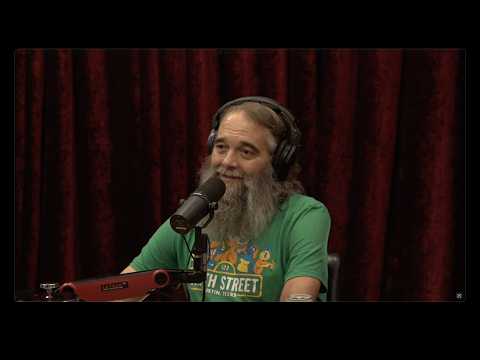
Link: https://youtu.be/cLm9Vu2iNQU
Duration: 168 min
Transcript: Download plain text
Short Summary
This episode of The Joe Rogan Experience features host Joe Rogan and guests (including Danny and Jamie) debating alternative archaeology, cranial modification, and institutional gatekeeping. They argue Pacific Northwest, Paracas, and Hawaiian elongated skulls reflect archaic hominin (Neanderthal/Denisovan) interbreeding, critique the Society for American Archaeology's handling of Graham Hancock's Netflix show, and discuss sites like Gobekli Tepe, the Baghdad Battery, the Copper Scroll, redacted Southwest cliff-dwelling papers, and the 1909 Grand Canyon cave hoax, while also weighing intelligence, consciousness, CRT TV frequencies, Social Marxism, and announcing the October16-18 Quest for Ancient Civilizations Conference at ACL Live in Austin.
Key Quotes
- "the average time for a peer review for a test on a vaccine is about 10 years. You crank it out in a year and a half, you haven't followed the proper [ __ ] steps. You haven't done science. I'm not a science denier. I'm not I've just do it right and come back," (00:12:22)
- "There's almost certainly in my opinion a different species is human that live there and I mean even you know I'm not into the ancient alien stuff but in all honesty I wouldn't be if if there was aliens intermingling with humans this would probably be the best smoking gun place for it." (00:48:55)
- "fundamentally, archaeology cannot be scienced any more than theology. Fundamentally, a miracle, you either believe or you don't. I dug up something in my backyard. You either believe it or you don't. You can't replicate either one of these things," (01:48:17)
- "Imagine you've got a Neanderthal and a homo sapiion and they're talking to each other trying to figure out a problem and they both walk away from that with like mad respect for the other person's ability to see what they don't. wouldn't they want to mingle that?" (00:30:57)
- "And it history doesn't when I say this [ __ ] All the archaeologist. Oh, there's no proof. It's simple math. To be buried here, you had to be a noble. To be a noble, your skull had to be modified. 3,000 burials were reported. 3,000 elongated skulls. Not complicated here. Not tricky." (02:58:26)
Detailed Summary
Joe Rogan Experience — Elongated Skulls, Ancient Civilizations, and Institutional Critique
Elongated Skulls and the Pacific Northwest
The conversation centers on Danny's claim that the majority of recorded elongated skulls come from the Pacific Northwest (Washington State and Oregon), not Peru, challenging popular perception of where this practice was concentrated.
- Danny claims the majority of recorded elongated skulls come from the Pacific Northwest, particularly Washington State and Oregon, contradicting the popular focus on Peru.
- A Smithsonian pamphlet titled "The Chinook Sign of Freedom" stated that Chinook people without artificially modified skulls were considered slaves, indicating social rank was tied to the practice.
- Chief Conley (Comly), who met Lewis and Clark, had an elongated skull that was attributed to his intellect, making cranial modification a status marker among leaders.
- About 3,000 above-ground burials at Mount Coffin in Long View, Washington were linked to elongated skulls, making it potentially the largest concentration of elongated skulls in history alongside Paracas.
- The site was destroyed when a campfire connected to the Skull and Bones Society in England burned the area, with skulls disappearing into private collections.
- On Ni'ihau, Hawaii, roughly 8.9% of excavated prehistoric skulls (dating ~1,000 years) were elongated, demonstrating the practice extended across multiple cultural regions.
- Elongated-head practices reportedly continued in France until World War I, originally tied to tightly tied baby bonnets used for fashion and protection, possibly spiritual protection earlier in history.
- Experts disagree on whether cranial modification actually increased skull capacity; some elongated Peruvian skulls reportedly lack a sagittal suture, a trait linked to Neanderthal/Denisovan anatomy.
Archaic Hominin Interbreeding and DNA Evidence
Danny theorizes that elongated skulls and trepanation practices reflect inherited anatomical mismatches from interbreeding between modern humans and archaic species like Neanderthals and Denisovans.
- Neanderthals had wider skulls at the back, larger eye sockets, barrel-like chests, smaller frontal lobes, and sometimes larger overall skull capacity than modern humans.
- Denisovans were reportedly at least six inches taller on average than modern humans, with heads comparable in size to Neanderthals.
- A 2023 study links a Neanderthal-Denisovan gene variant to polydactyly (extra fingers/toes) and cranial deformations; a Brazilian family with most members having six fingers and six toes is cited as a modern example.
- Danny theorizes humans inherited a skull/brain-size mismatch from interbreeding, producing chronic intracranial pressure that was addressed historically through trepanation or skull elongation across generations.
- Chiari malformation type one is discussed as possibly originating from this mismatch, presenting in modern populations as a chronic condition.
- Homo floresiensis ("hobbit people" from Flores, Indonesia) coexisted with Homo sapiens as a distinct species, contradicting singular human evolution narratives.
- A recent Chinese publication proposes Homo juluensis ("Dragon Man") may be Denisovan, suggesting taxonomic reclassification is ongoing.
- Skulls initially mistaken for Neanderthal/Denisovan remains in China have been reclassified as artificially modified by modern humans, complicating the fossil record.
Paracas Culture, Inca Bones, and Trophy Skulls
The Paracas culture of Peru is presented as evidence of a population exhibiting clusters of unusual anatomical traits and an unusually high volume of cranial surgery.
- The Paracas culture shows clusters of unusual traits including elongated skulls, polydactyly, and trepanation, suggesting a related genetic population.
- Inca bones (wormian bones, extra skull sutures) appear in Inca territory, Easter Island, the Pacific Northwest, and Asia, and also in Neanderthal skulls, suggesting possible shared ancestry.
- In the 1930s, a Paracas caretaker was paid $300/year to protect the skulls; Rockefeller allegedly paid $3,000 (roughly 10x the caretaker's stipend) for four burial bundles out of ~300.
- The four Rockefeller burial bundles were reportedly displayed at the Metropolitan Museum and Natural History Museum in New York, but no photos or drawings exist, leaving no public record.
- Some tridactyl mummies subjected to CT scans are claimed to be approximately 1,200–12,200 years old, though authentication remains disputed.
- Trophy skulls from South America with drill holes were attributed to young women aged 13–16; Spanish records described children born with cleft lips or six fingers as holy.
- The Mayan "jaguar people" are cited as an example of cultural honoring of genetic variations, validating physical differences through spiritual status.
- The Paracas Candelabra geoglyph is visible up to 12 miles out to sea and could have served as a navigational symbol along a potential migration route from Portland, Oregon to Paracas via Easter Island.
Graham Hancock, the SAA, and Institutional Critique
The host and Danny criticize the Society for American Archaeology (SAA) for what they describe as gatekeeping against amateur researchers and alternative interpretations, particularly regarding Graham Hancock's Netflix series.
- The Society for American Archaeology (SAA) originally had bylaws aimed at helping interested amateurs work with professional archaeologists, per the host's reading of its founding documents.
- The SAA sent Netflix a letter listing three problems with Graham Hancock's show; the host claims the first listed complaint was that Hancock "talks shit about archaeologists and doesn't listen to us," rather than specific factual errors.
- A second SAA-listed problem accused Hancock's show of "promoting white supremacy" by citing Ignatius Donnelly's 1882 Atlantis theory; the host notes Donnelly was actually a liberal feminist and abolitionist by his era's standards.
- About 20 years before Donnelly, French Americans Augustus Le Plongeon and another figure claimed the Maya were Atlanteans who had conquered the world, framing the narrative as a "master race" claim.
- The host pushes back on the white supremacist association, arguing that since white supremacists cite many kinds of data, banning any data they might use would be absurd.
- The host argues the SAA "lies about what happened 15 minutes ago on the internet" in debates about ancient history and that mainstream archaeologists who dissent face career destruction.
- Flint Dibble allegedly called Rogan "confidently wrong" about Easter Island evidence of contact between South America and Asia roughly 1,000 years ago, then acknowledged the claim was accurate in the same livestream.
- Rogan defends "interested amateurs" like Jimmy Corsetti, Luke Cavern, and Ben Van Kirkwood as able to "dive into" topics with fewer institutional constraints, noting Van Kirkwick's videos get millions of views.
- Followers of Flint Dibble are characterized as routinely mocking "lost civilization" believers; the host's counter is: "Do you think we found every civilization?"
- Jimmy Corsetti's X post asking if Nephilim could be Denisovans/Neanderthals was initially mocked; the hosts argue Gigantopithecus would have been a more appropriate scientific suggestion.
- Duncan Trussell compared Rogan's investigative passion to Isaac Newton, who the hosts note was an alchemist who died of mercury poisoning from his occult experiments.
- Carl Christian Rafn was an 1830s–1880s Norse anthropologist who argued the Norse discovered America before Columbus, eventually finding real evidence after initial flawed reasoning about Indigenous rock carvings.
Gobekli Tepe, Karahan Tepe, and Hunter-Gatherer Disputes
The guests challenge the mainstream archaeological attribution of monumental sites like Gobekli Tepe to hunter-gatherer societies, arguing for more complex pre-agricultural civilizations.
- A guest argues hunter-gatherers would not have built monumental stone structures like Gobekli Tepe without first building houses, disputing mainstream attributions to pre-agricultural peoples.
- The guest claims "something" significant was going on at least 12,000 years ago that challenges the conventional timeline of human civilization.
- Hugh Newman (Megalithomania) is reportedly doing archaeoastronomy work at Karahan Tepe, which is being covered and reburied similarly to how Gobekli Tepe was handled.
- Official justification for covering Karahan Tepe is site protection and tourism promotion, which the guest questions as inadequate.
- Caracol (Kanepe) is reportedly being covered on a similar schedule; Newman is critical of the site's coverage decisions.
- Lee Claire is identified as the archaeologist in charge of Gobekli Tepe and is described as antagonistic toward the guest on Twitter, illustrating personal disputes within the field.
Egypt, Zahi Hawass, and the Antiquities Trade
The conversation covers Egypt's management of antiquities, Zahi Hawass's promotional tactics, and the modern black market for looted artifacts.
- Zahi Hawass is described as a "wrestling heel" who cultivates a villain persona to drive tourism revenue; the host calls this "a little too tinfoil."
- After the Arab Spring, Hawass said tourism dropped 40%, but "new age" visitors kept coming regardless of regional conditions; Hawass preferred tourists from Japan, America, China, and Germany.
- Historical wealthy individuals held mummy-unwrapping parties and reportedly ate mummies; per a Big Think article, mummies were used as medicine from the 12th to 18th centuries before supply ran low and forgeries began.
- In 1834, surgeon Thomas Pettigrew unwrapped a mummy at the Royal College of Surgeons in a public medical event; the parties reportedly lasted about 30 years before becoming social entertainment.
- A 1875 photograph shows a street mummy seller in active commerce; the current black market for antiquity smuggling, including mummies, is worth about $3 billion per year.
- A recent Egyptian bronze cobra dated 664–30 BCE was listed for $4,850 and sold for $2,000, with provenance from a private New York City Egyptologist collection.
- A gold standing shaman pendant (89% gold, 148 grams, hollow) was listed at $67,000, estimated 500–1,500 years old, located in Alabama, with a monkey on its head and seven or eight fingers depicted.
- A friend told the host the South American antiquities market is a $3 billion business driven by cartels who use armed men to guard dig sites; Luke Caverns reportedly witnessed this firsthand.
John Reeves, the Baghdad Battery, and the Rockefeller Museum
The conversation covers disputes over bone collections, the mystery of the Baghdad Battery's disappearance, and the contents of major archaeological museums.
- John Reeves in Alaska built his own scientific research building because museums (allegedly including the American Museum of Natural History) would not return borrowed bones; he now requires researchers to come to Alaska.
- The Baghdad Battery's current location is reportedly unknown because it was taken by US intelligence agencies ("alphabet boys") in the early 2000s and never returned.
- The guest theorizes the Baghdad Battery was used for electrolysis to separate gold, silver, copper, iron, and nickel from mine runoff, harvesting residue so no trace remains of operations.
- A proposed experiment: drop a copper coin and metal nail into the electrolyte, wait two days, and observe gold buildup on the coin to test the theory.
- The Rockefeller Archaeological Museum in Jerusalem held 60,000 artifacts dating back 2 million years, including a reported ~100,000-year-old nearly complete skeleton and a 6,500-year-old skeleton some claim could be Noah.
- The Dead Sea Scrolls were originally housed at the Rockefeller Museum and moved after Israel's formation; the Copper Scroll from Cave 3 was moved to the Jordan Museum in Amman.
- The Copper Scroll is copper mixed with about 1% tin, has converted to brittle oxide, and lists 64 locations of buried gold and silver rather than literary content; a facsimile is on display at the Jordan Museum.
Easter Island, Peru, and Polynesian-South American Contact
The hosts argue for contact between Polynesia and South America based on genetic data, geographic positioning during lower sea levels, and shared cultural practices including elongated skulls.
- The host argues that when sea levels were lower, Easter Island was the center of a larger Polynesian island chain and empire, making it a "world navel" alongside Yggdrasil, Cusco, the Wailing Wall in Jerusalem, and the Oracle at Delphi.
- The host claims Easter Island has the most untapped archaeological potential because it has been dug and looted far less than Rome or Egypt.
- The Mexican government paid about $250,000 for the "coties" (mummified tridactyl specimens), which the family had held for about 500 years; the host suspects government pressure was involved.
- Genetic data shows drift between Easter Island and Peru in both directions, supporting a Polynesian–South American contact theory roughly 1,000 years ago.
- Speakers compare shared elongated-skull practices between Polynesia and South America to a "smoking gun" of cultural convergence and an evolutionary arms race.
- Many artifacts point to South America, especially Peru, including megalithic architecture, elongated skulls, and artwork only visible from the sky (geoglyphs).
Heliloqu Cliff Dwellings and Southwest Redactions
The host describes heavily redacted peer-reviewed archaeology papers on Southwest cliff dwellings, speculating that the redactions may hide evidence of advanced or anomalous civilizations.
- Around 1,000 years ago, tribes of roughly 5,000 people fragmented into bands of 500, 200, or as few as 50 and moved into cliff dwellings such as the Heliloqu dwellings, which housed about 60 people.
- The speaker visited the Hilaquift dwellings while driving through New Mexico and Texas oil fields last month.
- Peer-reviewed archaeology papers on these cliff dwellings have heavy black-bar redactions on artifacts, finders, and locations; the stated justification is to prevent looting.
- Yet the same redacted papers name predicted but unexcavated sites, creating a contradiction the host finds suspicious.
- Redaction is described as a ubiquitous pattern across the American Southwest, not limited to one or two sites.
- The host speculates the redactions may hide evidence of advanced civilizations, including out-of-place artifacts like a pre-Columbian iron arrowhead in a culture not known to work iron.
- The most mundane explanation offered is that artifacts are being sold on the black market; the speaker notes information he links in videos often disappears within about two weeks.
- Google searches for elongated skulls from certain Pacific Islands reportedly return results denying the practice ever happened, despite documented expeditions.
Longview, Washington, Mount Coffin, and Pyramid City Planning
The conversation connects R.A. Long's planned city layout to Masonic symbolism and the destruction of the Mount Coffin burial site for construction gravel.
- Longview, Washington was a planned city built by lumber baron R.A. Long with a pyramid floor plan, designed intentionally as a geometric layout.
- Mount Coffin in the Pacific Northwest contained about 3,000 burials and was purchased and mined away by the Portland Star and Cement Company in the early 1900s; the Daughters of the American Revolution tried to buy it first.
- R.A. Long was reportedly a Freemason who paved the four main pyramid-axis streets of Longview with gravel from the destroyed Mount Coffin burial site.
- A statue of Long in the town center depicts a girl handing him the 13th rose from a dozen, interpreted as Freemason symbolism; the statue originally faced the rising sun but has been relocated.
- The host argues that since burial at Mount Coffin required noble status, which required skull modification, the 3,000 burials imply 3,000 elongated skulls, making it potentially "the biggest concentration of elongated skulls in history" alongside the Paracas.
Grand Canyon, the 1909 Cave Hoax, and Restricted Sites
The discussion of restricted Grand Canyon areas includes the debunked 1909 Smithsonian cave story, official cave records, and observations of military activity near restricted zones.
- A part of the Grand Canyon is restricted to public access, with official explanations citing danger or Native American sacred-site status.
- On April 5, 1909, a newspaper article dramatically expanded claims by G.E. Kincaid about a Grand Canyon cave citadel allegedly investigated by "Professor S.A. Jordan" and the Smithsonian, describing hundreds of rooms, mummies, copper and gold vessels, strange writing, a Buddha-like idol, granaries, and space for up to 50,000 inhabitants possibly from Egypt or "the Orient."
- The 1909 Grand Canyon story is "overwhelmingly regarded as a period tall tale," with no physical evidence, field notes, photographs, maps, accession records, or peer-reviewed report, and the claimed Smithsonian personnel do not correspond to a documented project.
- Jason Colavito is identified as a "professional debunker" and someone Graham Hancock would list among his top 10 antagonists.
- The speakers argue that if a cavern housing 50,000 people with Egyptian hieroglyphs and mummies had truly been found, discoverers would become famous rather than suppressed.
- Around 1,000 hidden caves exist in the Grand Canyon area, of which about 335 are officially recorded and most are strictly off limits; Grand Canyon Caverns near Peach Springs, Arizona, is described as the largest dry caverns in the US with public tours.
- A commenter claimed a Grand Canyon researcher with high-quality footage was hit by a drunk driver and is now dead; the video about the researcher's findings has 4 million views in two years.
- Blackhawk helicopters have been seen circling the restricted Grand Canyon area, considered disproportionate if the closure were only about safety or sacred-site concerns.
- The restricted area is reportedly at the mouth of the Colorado River, on the cliff side, with access physically blocked.
- Hanford, Washington reportedly houses nuclear storage facilities built during World War II; nuclear testing was conducted in deserts rather than the east to avoid fallout near populated eastern areas.
Trepanation, Inca Medicine, and Peruvian Practices
The discussion highlights the surprisingly advanced surgical practices of pre-Columbian Peruvian cultures and the disappearance of cranial modification in modern populations.
- By Spanish arrival, the Inca were performing trepanation with up to 80% survival rate, compared to about 40% for American Civil War doctors, demonstrating remarkable surgical advancement.
- Trepanation was used to relieve brain swelling from musket-ball trauma, suggesting knowledge of intracranial pressure management.
- Modern Peruvians do not display elongated skulls today, attributed to illegality of the practice and possible evolutionary reduction in genetic traits supporting it.
- The oldest known elongated skulls date to around 10,000 BC, right after the Younger Dryas impact; archaic humans with larger brains in the back of the skull may have been intentionally bred via cranial modification.
- South America was less impacted by the Younger Dryas cataclysm than North America, parts of Europe, and Asia, with Africa almost unscathed, possibly explaining why cranial modification practices persisted there.
COVID, Science Communication, and Archaeology Critique
Rogan connects criticism of alternative archaeology to broader concerns about COVID-era science communication, arguing that institutional authority was used to suppress legitimate debate.
- Rogan argues COVID vaccines were pushed using "trust the science" messaging while skipping proper scientific steps; the average vaccine peer-review/test cycle is ~10 years, while COVID vaccines took ~1.5 years.
- He cites ivermectin being labeled a "horse dewormer" as evidence of propaganda rather than scientific evaluation.
- A backstage COVID outbreak occurred at Antone's during a concert, though Rogan says he did not contract it.
- Rogan reveals he was publicly called "anti-science" and accused of promoting vaccine hesitancy for sharing his unmedicated COVID recovery.
- Citing Carl Sagan ("Science is more than a body of knowledge; it's a way of thinking"), Rogan argues being wrong means admitting it, central to both honesty and science.
- Aaron Rodgers is cited as allergic to vaccine ingredients, while personal physicians were allegedly "thrown under the bus" during the rollout.
- Astronomy is accepted as scientific because ~100 telescopes can reproduce observations of a supernova, demonstrating the replicability standard.
- The hosts argue archaeology functions more like a religion than a replicable science; unique finds like the Antikythera mechanism cannot be reproduced.
- "Clovis First" is cited as an example where archaeologists used authority to dismiss competing evidence about the peopling of the Americas for decades.
Nature of Intelligence, Consciousness, and Shared Mind
The conversation ranges across evolutionary biology, collective consciousness, and whether human intelligence is fundamentally self-defeating due to tribal primate behavior.
- Humans have only one example of intelligence evolving, making assumptions about created (artificial) intelligence highly uncertain.
- Dolphins, orcas, and whales may be intelligent in ways humans cannot measure, while a raccoon may be better than a dolphin at manipulating its environment since dolphins move through 3D space.
- The open question is whether the end goal of intelligence is to have a good life, to survive, or to get off the planet.
- Rogan argues that collective human advancement is undermined by individual self-interest, citing retirement planning as a self-focused behavior rather than one benefitting humanity.
- Contributing something new, whether research or GSP's Superman punch, gives the feeling of adding to the grand total of human thinking, suggesting a subconscious drive to expand collective knowledge.
- There may be a shared "unimmind" tying humans together, similar to birds flocking, fish schooling, and human mobs, possibly explained by pheromones and chemicals.
- If a phenomenon starts as metaphysical, science will resist it indefinitely, with dowsing given as an example, even though well drillers who douse for a living do so reliably.
- Cops treat full moon fever as real, despite scientists disputing it statistically, showing institutional acceptance of intuitive phenomena.
- Humanity is estimated to be roughly 100 years from achieving interstellar travel and roughly 20 years from potentially wiping itself out.
- Researchers reportedly transferred a fruit fly brain into a physics engine simulation where it behaved as a real fly and was used to play games like Beat Saber and Doom.
- The book "I Have No Mouth but I Must Scream" is referenced, with aliens at the end genetically manipulating a person into a blob-like form.
CRT TVs, High-Frequency Perception, and Paranormal Experience
Listeners' experiences with running CRT televisions are explained through high-frequency emissions and their effect on the human body.
- CRT TVs used a flyback transformer and magnetic deflection system sweeping an electron beam across the screen, with parts vibrating around the 15 to 16 kHz horizontal scan frequency.
- Children and young adults tend to hear high frequencies better, making them especially likely to detect a running CRT TV behind a closed door.
- One viewer recalled that the hair on the back of the neck would stand up walking past a friend's house with a tube TV on, possibly from electromagnetic effects and iron in the blood creating a physical sensation.
Science, Bias, and Social Discourse
The conversation covers what counts as a science, how racial outcome data is politicized, and the limits of Marxist class analysis in identity politics contexts.
- Psychology and archaeology are not sciences because they rely on self-reported data; the purpose of science is to strip individual biases away via the scientific method, with replicability as a key test.
- It took roughly 100 years to reconcile gradualism and catastrophism in science, formalized in 1980 with the K-T impact discovery (Chicxulub crater) and the theory of punctuated equilibrium.
- Data showing racial differences in outcomes gets called racist by some researchers, but the data is not actually white supremacist because Asians outperform whites on the same measures.
- 95% of people shot by police in the US are men, and a police officer feels more threatened by a man than a woman and more threatened by a Black man than a white man, complicating claims that such shootings are purely racism or sexism.
- Donald Trump is about 20 times more likely to be wrongly shot by police than Kamala Harris, and white men are 20 times more likely to be wrongly shot than Black women.
- Attempts to apply Marxism socially lead to "oppression Olympics," comparing different groups' grievances rather than focusing on original class-based monetary critique.
- The University of Kansas was accused of not repatriating Indigenous remains it was required to return under 1990 federal law.
- Rogan attended the South by Southwest premiere of "The Age of Disclosure," where a land acknowledgment preceded an alien-invasion documentary, which he found absurd.
Sedona, Government Secrecy, and UAP Disclosure
The conversation covers Sedona's energy vortexes, restricted sites, and speculation about which governments would most likely cooperate with extraterrestrials if disclosure were real.
- In Sedona, hikers on Secret Mountain are reportedly approached by park rangers who are better armed and physically larger than typical rangers.
- Three known energy vortexes in Sedona are real, but additional ones claimed in the 1980s–90s are all about 5 feet from the highway, per a friend named Robert.
- Sedona is about 15–20 miles from the nearest town, has expensive rents exceeding business property costs on the main drag, cannot attract minimum-wage workers, and is "collapsing under its own weight."
- The host describes a personal experience in Sedona at Secret Mountain where he used night vision goggles and saw lights emerge from a cloud and disappear together, with locals saying this happens regularly.
- The speaker argues that if aliens are working with humans, they would most likely be cooperating with the U.S., Russia, or China, since other countries follow these powers.
- Early science was aimed at proving the Bible, focusing on floods and the walls of Jericho rather than erosion-based geology.
- Supposed meetings with pastors discussed imminent disclosure allegedly involving evidence of human genetic engineering and religion being created by extraterrestrials to placate mankind.
- The host finds human genetic engineering more plausible than aliens creating religion, citing Nazi eugenics, alleged engineering evidence in Peru, and the revival of the dire wolf.
- The host jokes about engineering humans to lust for gold and silver and periodically raiding Fort Knox, contrasting his view with the late Zechariah Sitchin.
- The Book of Enoch and the Watchers narrative of beings lusting for gold and silver are referenced as sources aligning with ancient alien theories.
- The Great Pyramid is at least 4,500 years old, with Herodotus's estimate of a 28-year build time; the host argues this is implausible given millions of stones and his own construction background.
- The Yang Shang Quarry in China, abandoned in the 14th century, contains stones with purposefully cut nubs made too large to move; similar nub features appear on stones worldwide.
Announcements, Production Decisions, and Notable References
The episode concludes with conference announcements, personal production decisions, and key sources referenced throughout the conversation.
- The Quest for Ancient Civilizations Conference will be held at ACL Live in Austin on October 16-18, with guests including Randall Carlson, Billy Carson, Duncan Trussell, Kurt Metzger, David Childress, and newly confirmed GSP (Georges St-Pierre).
- Randall Carlson reportedly wrote a rap song performed during breakfast at a shared Sedona, Arizona Airbnb in the late 1980s, demonstrating the guest's diverse creative background.
- A recent Teotihuacan-discussing codex, held ~500 years by a Mexican family, was purchased about three three years ago by the Mexican government for ~$250,000, returning it to national custody.
- Rogan refused a production team's offer because it required AI-generated videos, AI clipping, AI thumbnails, and AI communicating with his followers.
- HP Lovecraft reference used to characterize open inquiry: "I don't need to believe in Santa Claus to know that people exchange gifts on December 25th."
- Refer to Google Scholar for "Easter Island modified skull" since most elongated-skull imagery has been lost, destroyed, or removed from public view.