[@TuckerCarlson] Tucker Responds to the Israel Lobby Defeating Thomas Massie and Killing MAGA
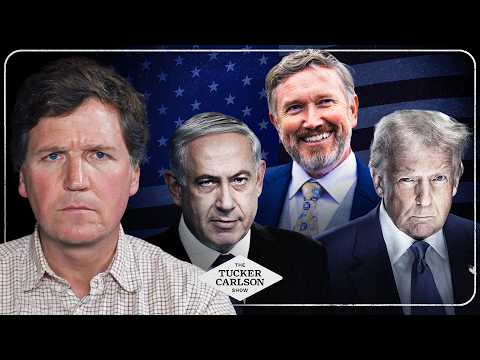
Link: https://youtu.be/JgjThZM8Z8U
Duration: 89 min
Transcript: Download plain text
Short Summary
This episode presents a narrator's disillusionment with the Trump administration's alleged departure from its America First platform, culminating in a detailed examination of Congressman Thomas Massie's defeat in Kentucky's 4th district Republican primary after $35 million was spent by the Israeli lobby and neocon billionaires—the most expensive House primary in US history. The discussion revisits the Jeffrey Epstein case, the suppression of Epstein files, and claims that Trump pivoted toward foreign wars and surveillance expansion rather than the transparency he promised, while presenting polling data showing MAGA support collapsing among millennials and Gen Z voters who increasingly view Israel as having "hijacked" the Trump presidency.
Key Quotes
- "The lesson and the reason it's funny is because the system is rigged and everyone knows it's rigged and Epstein proves that it's rigged." (00:15:54)
- "Thomas Massie is the only one who's never taken money from the Israeli lobby. He's the only one." (00:25:49)
- "Israel, which is not strategically important to the United States in any sense. We receive nothing of value from Israel, nothing." (00:23:05)
- "If you were a millennial 30 to 45 years old you were 66% identifying as MAGA. That is now around 40%. If you were 18 to 29 it was like 56 and now it's 36." (00:45:36)
Detailed Summary
Detailed Episode Summary: The Death of MAGA and the Thomas Massie Primary
Episode Overview
This episode presents a scathing critique of the Trump administration's alleged departure from its America First platform, focusing on the defeat of Congressman Thomas Massie in Kentucky's 4th district primary as a case study in donor influence over Republican politics. The narrator traces how Trump allegedly shifted toward surveillance expansion, foreign wars, and deference to the Israeli lobby despite initial promises of transparency and prioritization of American interests. The discussion connects Massie's ouster to broader themes of generational political realignment, with millennials and Gen Z expressing skepticism toward institutional narratives that older cohorts accepted uncritically.
- The episode uses a confessional tone of disillusionment, reflecting on how the Trump administration's actions have diverged from its campaign promises
- The $35 million spent against Massie represents the most expensive House primary in US history, dwarfing typical races that cost between $500,000 and $2 million
Trump's Alleged Policy Betrayal
The narrator claims that Trump abandoned his campaign platform almost immediately after taking office, pivoting toward covering up the Epstein files, encouraging government secrecy and surveillance, supporting data centers for spying on Americans, and preparing for a regime change war against Iran. The discussion examines how these policy shifts have alienated the MAGA base that propelled Trump to victory.
- Trump attacked his own supporters in a cabinet meeting when asked about Epstein, implying those interested in the Epstein files were "bad people" or part of a "Democrat hoax"
- The White House Focus Tracker has shown over 60% of respondents saying Trump was too focused on foreign policy and not enough on domestic issues for the past 2.5 months
- Foreign policy never rose above seventh place in voter concerns during Trump's entire term
- Trump's statement that he was "99% popular in Israel" while only maintaining 35% US approval is presented as evidence of misplaced priorities
- Trump joked about running for Israeli prime minister, a statement that resonated differently given his other policy positions
- The war in Iran started at 21% public support with 70% opposition and has returned to those levels following initial military action
The Epstein Files and Jeffrey Epstein's Case
The episode revisits the Jeffrey Epstein case in detail, presenting it as a window into the alleged cover-up and the forces that may be influencing Trump administration policy. The narrator connects Epstein's death to broader concerns about accountability and transparency in government.
- Jeffrey Epstein was arrested on July 6, 2019, at Teterboro Airport on a flight from Paris
- He faced the same federal charges previously brought by Florida in 2006 before securing a nonprosecution agreement that allowed him to avoid prosecution
- Jeffrey Epstein won Powerball in Oklahoma and collected almost $30 million with no explanation ever provided for how he won
- He was entangled with intel agencies from the United States, Israel, Britain, and France according to the narrator
- Epstein died exactly one month and three days after his arrest in federal custody
- The narrator states he was murdered and it was never investigated
- Attorney General Barr is identified as the son of the man who gave Epstein his first job teaching at the Dalton School and helped get him a job at Bear Stearns
Thomas Massie's Defeat in Kentucky's 4th District
Thomas Massie, described as the only Republican out of 217 in Congress who has never taken money from the Israeli lobby, lost the Republican primary to Ed Golin in what became a landmark case of outside money influencing a primary election. The episode examines how this outcome reflects broader trends in American politics where donors can overwhelm local preferences.
- Over $35 million was spent against Massie—the most expensive House primary in US history
- Typical House primaries cost between $500,000 and $2 million
- Massie was defeating his opponent with millennials voting 3 to 1 in his favor before AIPAC and other outside groups intervened
- AIPAC, the Republican Jewish Coalition, and major donors including Miriam Adelson, Paul Singer, and Paulson orchestrated the spending blitz
- Miriam Adelson was described by Trump as "more loyal to Israel than the US"
- Trump is alleged to have fixated on and begun to hate Massie when Massie publicly asked about Epstein and called for disclosure of Epstein documents
- Massie was the only Republican in Congress who had never taken money from the Israeli lobby
The Role of AIPAC and Major Donors
The episode provides detailed analysis of how AIPAC and mega-donors orchestrated Massie's defeat, examining the mechanics of modern political campaigns and the influence of outside money. The discussion reveals how unprecedented spending can reshape electoral outcomes in ways that contradict local voter preferences.
- AIPAC celebrated Massie's loss with a tweet stating "ProIsrael Americans are proud to help defeat anti-Israeli candidates. Being pro-Israel is good policy and good politics"
- The Republican Jewish Coalition spent millions against Massie because he opposes sending money to fund Israel's war
- Miriam Adelson's involvement represents a pattern of mega-donors using their wealth to influence primary outcomes
- Paul Singer and Paulson represent the broader class of neocon billionaires who have increased their influence in Republican politics
- The episode frames this as a test case for whether money can override grassroots support
Political Attacks and Characterizations
The episode examines the political attacks launched against Massie and his supporters, analyzing how anti-semitism allegations were used to discredit opposition to Israeli policy. The discussion explores the implications of these attacks for free speech and political discourse.
- CBS News interviewed Massie and asked if he was anti-Semitic, a question the narrator characterizes as slander posing as a question
- Massie denied being anti-Semitic, stating the Republican Jewish Coalition spent millions against him because he opposes sending money to fund Israel's war
- Mark Levin characterized Massie's supporters as "radical jihadis," Democrats, terrorists, and "Jew haters" for backing Massie's opposition to Israel aid
- Mike Johnson moved House floor resolutions equating anti-Zionism with anti-Semitism
- Leo Terrell, a Fox News contributor reportedly with 11 IRS leans against him over more than 10 years, is leading a multi-city anti-anti-semitism tour for the Department of Justice
- The narrator claims the DOJ position is that criticism of Israel is now officially defined as anti-semitism
- Florida under Ron DeSantis has made criticism of Israel a hate crime
Generational Political Realignment
The episode explores the dramatic shift in political allegiances among younger generations, connecting these changes to specific policy decisions and the perceived influence of Israel over American politics. The discussion argues that these shifts represent a fundamental realignment in American politics.
- Polls show MAGA support among millennials (ages 30-45) dropped from 66% to around 40%
- Support among ages 18-29 dropped from approximately 56% to 36%
- Those 65 and older have shifted toward traditional Republican identity
- The narrator argues millennials remember being told there were WMDs in Iraq and remember COVID, making them more sensitive to whether institutions are lying to them
- Older boomers grew up with mainstream media as the sole news source with no way to verify, making them more institutionally trusting and susceptible to war propaganda
- Tucker Carlson observes that an Israeli government internal report admits they have a "massive image problem" among younger Americans, particularly in the west
- The Israeli government's prescriptions focused on censorship and coercion rather than curbing behavior
- First-time young voters feel "apoplectic"—more disappointment than anger—which typically leads to staying home
Polling and Electoral Outlook
The episode presents extensive polling data demonstrating the collapse of Trump support among key demographics, connecting these numbers to specific policy decisions. The analysis suggests that the administration's policies are alienating the very voters who propelled Trump to victory.
- A New York Times poll shows the generic ballot 11 points against Republicans, described as historic and worse than 2018
- Republicans had held a lead on the generic ballot since mid-2021 before losing it in July 2025 following Epstein developments and bombing of Iran's nuclear sites
- Trump performed 1 point worse with voters 65 and older in 2024 than in 2020 yet won the election
- Young Americans under 45, including those who identify as America First, view what is happening in Gaza as a genocide
- Younger Trump voters view Israel with contempt because they feel Israel hijacked and derailed the Trump presidency
Historical Context: Broken Campaign Promises
The episode draws historical parallels to other instances where broken campaign promises fractured political coalitions, examining how voters respond when they feel betrayed by their chosen representatives. The discussion situates the current situation within a broader pattern of Republican Party betrayals.
- The narrator invokes George H.W. Bush's breaking of his "read my lips, no new taxes" promise as an example of how broken campaign promises fracture political coalitions
- Bush's broken promise put Republicans in the political wilderness for 8 years through the Ross Perot coalition
- The pattern suggests that when voters feel betrayed, they withdraw support or seek alternative candidates
- The episode argues that Trump's departure from his America First platform follows this historical pattern
- The comparison highlights how broken promises about foreign policy and national priorities resonate particularly strongly with voters
The Death of MAGA: Conclusions and Future Implications
The episode concludes with a stark assessment of the current state of the Republican Party and the MAGA movement, arguing that the party has been fundamentally transformed by its embrace of foreign policy interventions and deference to the Israeli lobby. The discussion explores what this transformation means for the future of American politics.
- The episode concludes that the Republican Party "bears absolutely no resemblance" to the party elected less than a year and a half ago
- The outcome is characterized as the "death of MAGA" and transformation into something unrecognizable to its base supporters
- Supporters who prayed for and supported Trump's election feel particularly betrayed by the direction of his administration
- The episode suggests that the $35 million spent against Massie represents a new model for political intervention by outside groups
- The generational divide in attitudes toward Israel and foreign policy points to a lasting realignment in American politics
Key Players and Notable Names
This section consolidates the key individuals mentioned throughout the episode, providing a reference for understanding the web of relationships and influences discussed.
- Thomas Massie: Congressman from Kentucky's 4th district, only Republican in Congress who never took Israeli lobby money
- Ed Golin: Massie's primary opponent who won after $35 million in outside spending
- Donald Trump: President whose approval ratings and base support have declined sharply
- Jeffrey Epstein: Convicted sex offender who died in federal custody in August 2019
- Attorney General Barr: Son of the man who gave Epstein his first job at the Dalton School
- Miriam Adelson: Mega-donor described by Trump as "more loyal to Israel than the US"
- Paul Singer and Paulson: Neocon billionaires who funded the campaign against Massie
- Leo Terrell: Fox News contributor with multiple IRS investigations leading DOJ anti-anti-semitism tour
- Mark Levin: Conservative commentator who attacked Massie and his supporters
- Mike Johnson: House Speaker who moved resolutions equating anti-Zionism with anti-Semitism