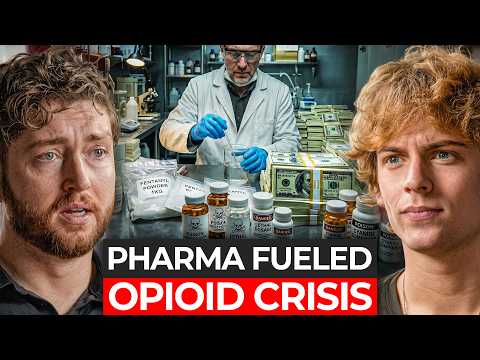
[@jackneel] "They Don't Want This!" The Irish Founder Using Chili Peppers to Solve The Fentanyl Epidemic
Link: https://youtu.be/HB6E7TxGXqg
Duration: 87 min
Short Summary
Irish entrepreneur Gareth Sheridan (also known as Gareth Kelly), founder of Neutraband (formerly Avera), discusses developing abuse-deterrent technology for opioid patches by coating them with denatonium benzoate and capsaicin to prevent abuse and accidental exposure, starting with fentanyl as a proof of concept. He shares his bootstrapped business journey from Ireland to a $20M valuation with only $40 in the bank, surviving an SEC investigation, and briefly running for President of Ireland as the youngest nominee. Sheridan emphasizes his philosophy that "with the right mindset, there's no such thing as failure—it's only feedback."
Key Quotes
- "fentinyl is a synthetic opioid that's 50 to 100 times stronger than heroin" (00:00:28)
- "2016 to now the market size for fentinel patches if you want to use that as an indicator uh is down about 75%" (00:12:35)
- "Probably about 20 million. >> And how much did you have in your bank account? >> $40" (00:59:00)
- "with the right mindset, there's no such thing as failure. It's only feedback" (02:02:48)
- "We're talking one person every 5 minutes. So, 24 people have died from an overdose since we started this." (02:02:12)
Detailed Summary
Overview
Irish entrepreneur Gareth Sheridan (also known as Gareth Kelly), founder of Neutraband (formerly Avera), discusses developing abuse-deterrent technology for opioid patches that could prevent both abuse and accidental exposure. The interview covers the fentanyl crisis (which claimed 24 overdose deaths during the ~120-minute recording), his bootstrapped business journey from Ireland to a $20M valuation with only $40 in his personal bank account, surviving an SEC investigation, and his brief presidential candidacy in Ireland as the youngest ever nominee.
Neutraband's Abuse-Deterrent Technology
Gareth Sheridan founded Neutraband to revolutionize the safety standards of easily abused medications by coating the back of fentanyl patches with two powerful deterrent agents. Denatonium benzoate—the world's most bitter substance—and capsaicin (red pepper spray) are applied in both immediate and slow-release forms, causing users to instinctively spit out the patch if they attempt to abuse it by chewing, sucking, or smoking it. Used fentanyl patches retain up to 70% of their residual fentanyl content and can be sold on the street for approximately $100, making them a significant abuse vector.
- The technology aims to achieve 90% greater safety while maintaining equivalent drug effectiveness for legitimate chronic pain patients
- Neutraband advocates for a government mandate requiring abuse deterrence in all opioid patches sold in the US
- The company plans to pursue regulatory approval to make the technology mandatory rather than optional
- Avera's threefold goal includes preventing abuse by people with addiction, increasing access for chronic pain patients, and nearly eliminating accidental exposure in children
- Dozens of hospitalizations of children under 5 have been linked to improperly discarded fentanyl patches left within reach
- The technology is applicable to an entire family of opioids including fentanyl and buprenorphine, as well as other addictive medications like methylphenidate
- The company is exploring a buprenorphine patch as a nicotine-patch-style replacement for methadone clinics
The Fentanyl Crisis and Its Death Toll
Fentanyl is a synthetic opioid that is 50-100 times stronger than heroin, causing overdose deaths by suppressing the respiratory system while users remain upright due to its lack of effect on balance or equilibrium. Prescription rates for fentanyl patches dropped approximately 75% from 2016 to present due to CDC anti-opioid guidelines and negative stigma, forcing chronic pain patients to seek illegal street sources. During the podcast recording (~120 minutes), 24 people died from drug overdoses in the US—effectively one person every five minutes throughout the interview.
- The anti-opioid clampdown achieved its goal of reducing prescription rates but created an unintended consequence
- Chronic pain patients who could no longer access legitimate prescriptions turned to illegal sources, potentially worsening overall overdose statistics
- The crisis has created a bifurcated problem: over-prescription of the past and under-prescription creating black market demand in the present
- Sherman argues that government-mandated abuse deterrence could address both issues simultaneously
Documentary: The Skid Row Reality
Gareth collaborated with Nick Shirley to create a documentary in Los Angeles's Skid Row area—located just 8 miles from Beverly Hills—interviewing residents about the paths that led them there. The documentary found that an overwhelming number of people interviewed were prescribed opioids without safety mechanisms, became reliant, and eventually ended up in addiction. One story involved a 12-year-old child living with his mother on Skid Row whom Nick helped by putting them up in a hotel temporarily.
- The documentary reveals how legal prescriptions without abuse-deterrent technology can lead to addiction and eventual homelessness
- Skid Row represents a stark contrast to the wealth concentrated in nearby Beverly Hills, illustrating economic disparity in Los Angeles
- The experience influenced Gareth's commitment to developing abuse-deterrent technology as a preventive measure
Pharmaceutical Industry Over-Prescription
The opioid crisis was driven by pharmaceutical companies that over-prescribed medications, pushed drugs on people who didn't need them, and offered major bonuses to sales reps who met quota targets. During the Oxycodone scandals, pill mills prescribed medications like 30-day supplies of OxyContin for routine dental procedures, surgeries, and minor injuries. Peak opioid abuse occurred around 2016, followed by lawsuits, criminal prosecutions, and a clampdown on prescription rates.
- Sales representatives received substantial bonuses for pushing opioid prescriptions on patients who didn't medically require them
- Pill mills operated as illegal or quasi-legal operations prescribing opioids for cash payments without proper medical justification
- Suicide rates for chronic pain patients skyrocketed over the last 10 years because they couldn't access adequate pain care
- Patients were told to take Tylenol for extraordinary injuries or cancer pain, pushing vulnerable individuals toward illegal addiction sources
- The industry created a two-track problem: over-prescription causing addiction, followed by under-prescription causing desperate patients to turn to street drugs
Business Journey: From Ireland to NASDAQ
Gareth started his first company at age 22 in Ireland, inspired by his father who wore a nitroglycerin heart medication patch for 20 years—demonstrating the potential for transdermal drug delivery. He won €20,000 from Ireland's Best Young Entrepreneur competition as early funding, which he used to find a manufacturer in China and sell multivitamin patches through distributors in Dublin. The company was eventually sold to a Utah-based company after listing on the OTC market, then later listed on NASDAQ where they raised approximately $8 million by issuing 1.2 million shares to private individuals.
- Gareth built the company without traditional venture capital, relying instead on startup competition prizes and small distributor orders
- He had a business background but no scientific training, yet formulated vitamin patch products himself
- Neutraband acquired 4P Therapeutics in Atlanta, which had developed the initial concept and patent filing for Avera technology
- The company eventually achieved a valuation of approximately $20 million on paper at its peak
The SEC Investigation and Financial Hardship
The company faced an SEC investigation regarding a filing that stated a vitamin patch product would not need FDA approval based on legal and dermatology opinions that turned out to be incorrect in retrospect. During this investigation period, the company was valued at approximately $20 million on paper while Gareth had only $40 in his personal bank account. He lived in an $800/month studio apartment in Columbus with a mattress on the floor and a $100 couch from Amazon, while his wife Heidi worked as a nanny for a wealthy family. He drove for Uber while running the company and was at one point asking family for help with rent.
- The SEC flew Gareth from Columbus to Miami for an in-person meeting, which signaled the investigation was serious and potentially criminal in nature
- Co-founder Sergey had a shouting match with SEC investigators while Gareth maintained a more relaxed demeanor during questioning
- The final settlement was a cease and desist with a no admit, no deny clause, with fines of $15,000-$25,000 each for the individuals involved
- As a result of the investigation, the company now obtains four legal opinions instead of three on regulatory matters to ensure compliance
- The SEC investigation was triggered by incorrect regulatory assumptions about product classification
Early Setbacks and Business Failures
An acquisition of a company in Columbus, Ohio failed when the partner stole back the IP that had been purchased, resulting in a multi-year lawsuit that consumed resources and attention. Gareth was initially offered 5% equity in an OTC-listed company valued at approximately $1.5 million, which was then diluted to worth approximately $15,000 within days after the acquiring company issued billions of new shares to themselves and consultants—a scheme that regulators eventually caught onto with management ousted and a new CEO brought in. Sergey advised against taking a $1 million bridge financing offer as a convertible note, warning it would convert at a problematic rate that would severely dilute existing shareholders.
- The Columbus acquisition failure involved IP theft and extended legal proceedings
- The share dilution scheme demonstrated how OTC-listed companies could rapidly destroy shareholder value through deceptive practices
- Gareth ultimately lost nearly all value from the equity position when the company issued billions of shares to insiders
Personal Support System and Relationships
Gareth credits his wife Heidi with deserving founder-level credit for sticking by during the tough years, never suggesting he get another job, instead saying "Okay, let's regroup. We'll figure it out." He met Heidi while visiting Utah on business, and she worked as a nanny for wealthy families during the lean financial years. Co-founder Sergey became his business partner for 10 years after being connected through Dena. His parents helped with rent for years, sending hundreds of dollars when short, never suggesting he come back home and abandon his entrepreneurial path.
- The support from Heidi and family allowed Gareth to continue pursuing the company without the emotional pressure of family conflict
- Gareth credits surrounding himself with people smarter than him as essential to his success and resilience
- He emphasizes the importance of building a team where each person can contribute their particular strengths
Presidential Run in Ireland
Gareth Kelly briefly left Neutraband to run for President of Ireland, becoming the youngest ever nominee in the country's history. To officially run, a candidate needs four council nominations, and his campaign only received two of the three available nominations from that route, falling short of qualification. He argued that younger presidential candidates could keep issues like housing costs and immigration top of the national narrative, rather than having older politicians view the position as a "retirement position." The Irish presidential nomination process is primarily dominated by older politicians seeking post-career sinecures rather than younger candidates with fresh perspectives on contemporary issues.
- The presidential run required temporarily stepping away from Neutraband operations
- The nomination process requires gathering support from local council members, which favors established political figures
- Gareth's platform focused on representing younger Irish citizens' concerns about housing affordability and immigration policy
Entrepreneurship Philosophy and Mindset
Gareth emphasizes perseverance and cites historical examples: the Wright brothers were told they were mad for trying to fly, Elon Musk was told self-driving cars were impossible, and iPhones and touchscreens were considered mad ideas 30 years ago. He recommends welcoming negative feedback as essential for improvement, arguing it's hard to improve when everything goes smoothly. He believes entrepreneurs building a movement rather than just a company attract like-minded people and better talent motivated by mission rather than just money. The philosophy he credits with his success is that "with the right mindset, there's no such thing as failure—it's only feedback."
- He received what he considered the worst advice—telling him not to develop Neutraband and come up with another idea—which he chose to ignore
- Gareth loves challenges and sees setbacks as opportunities for learning and growth
- He plans to pursue government mandates for abuse deterrence aggressively, arguing only safe versions of opioid patches should remain on the market
Full Transcript
Show transcript
Today's guests may have found the key to ending the deadliest epidemic in American history. You say something hurts. Prescribers kind of have to rely that you're telling the truth. You might be prescribed something like a fentinel patch. It's as easy to abuse as just chewing tobacco. They will take a patch and seep it in alcohol. People will scrape the contents of the patch and smoke it. A college student from Ireland, he used the money he made painting houses to build a company now fighting the fentanyl crisis. How are you using chili peppers to fight the opioid crisis? And so we just took their existing patch and we added an additional layer on the back of the patch again and it contains denatonium benzoate which is the most bitter substance on the planet and capsain or red pepper spray. >> But after nearly losing everything in a pump and dump scheme, he rebuilt the company and is now developing a technology designed to stop fentanyl abuse. So the SEC paid you to fly down to meet up with them because you didn't have enough money. >> Yeah. What was the valuation of the company at that time? >> Probably about 20 million. >> And how much did you have in your bank account? >> $40. >> In this episode, we'll expose the dark machine keeping fentanyl on America's streets, reveal the technology that could save millions of lives, and question why it took a broke Irish immigrant to build the solution big pharma never wanted to exist. You're developing these drugs to save lives. Profits kind of come with that, but not in reverse. You're not thinking profits over people. Gareth Sheridan, welcome to the Jagu podcast. Yeah, thanks. Great to be on. Jack, >> good place to start here. What is fentanyl? >> So, fentinyl is a synthetic opioid that's 50 to 100 times stronger than heroin. Was primarily, you know, created for managing chronic pain. The problem is again, it's 50 to 100 times stronger than heroin. It's 50 to 100 times more easily abused and easy to get addicted to essentially. So, it's a very effective pain medication, but has a bit of a negative stigma around it because it's so easy to abuse even accidentally or become exposed to even accidentally or misuse even accidentally. Um, so you might have the best intentions in the world to use this for chronic pain, but unfortunately it has resulted particularly over the last 10 years or so in people becoming addicted to it because they didn't know how much to take or they lost prescriptions from their physicians and so on. So people get prescribed fentanyl. >> Correct. Correct. There is a difference. It's very important that we differentiate between illegal fentinel coming over the border and prescription fentinel that manages people suffering from chronic pain, cancer patients, end of life care that has been around for two decades now. >> So if you had to paint me a picture of this, what is the most common way someone gets addicted to fentanyl? Like what would they be doing? What would be the series of events in their life? Like what does that look like? >> Let's say you were in a very bad car crash. You had a spinal injury. You had uh a neurological injury. You were suffering with pain 24/7. And 10 years ago, your doctor prescribed you fentinyl to ease that pain. And you had a patch that you could wear and it was a slow drip feed of fentinel into your body to kind of reduce the the pain levels that you were feeling on a daily basis. And then all of a sudden prescription rates for fentinyl dropped by 75% and your doctor said you could no longer get a prescription for fentinel to manage that pain. But you're welcome to go buy Tylenol and see if that works. Now obviously it's not going to have anywhere close to the same effect and you're back feeling debilitating pain on a daily basis. So what do you do? A thought comes into your mind. I'm just going to go buy my fentinel from somewhere on the street. I'm going to buy it illegally. I'm going to buy what I think is a correct amount to manage my pain that falls in line with what I thought I was taking when I was prescribed by my doctor and I misjudge it or you misjudge it and you start taking too much and then you become reliant and you become become addicted and that's you in a fentinel cycle. Now, when we've interviewed people across Los Angeles as part of a documentary I done recently, that that exact scenario happened to them and that now fuels the illegal opiate epidemic that we feel we feel across the country on a on a daily basis and is in the news on a daily basis. So, you're addicted to fentinel because you couldn't get it prescribed safely anymore and you're also contributing to the illegal fentinel that's seen across the country every day. And why is fentanyl so addictive? >> Fentinel is 50 to 100 times stronger than heroin. Now again, when used correctly, there's ways to manage it. It's not as addictive as it would be if you were to purchase it illegally and you don't know how much you're taking. But fentinel basically interacts with the brain in a way that it hits your dopamine levels. You're on a high. You feel really euphoric on it when you take it, you know, illegally. And when you try to not take it or try to come off it, then your body's craving that dopamine rush and it's not getting it. So your brain kind of goes into this fight orflight kind of mentality that you feel like you need that opioid again to get that kind of relief at a neurological level. So it's very easy to get addicted to it because you feel like almost you need it on a daily basis just to function. You try it once and you do it incorrectly. It's very difficult to try and wind off that. Again, it's 50 times stronger than heroin. So you can imagine heroin addicts and the pressure they feel to get their fix of of heroin. Multiply that by 50, it's not a small it's not a small amount. You recently did a collaboration with Nick Shirley and you guys made a documentary in Los Angeles Skid Row area. What was that documentary about? We talked and wanted to learn the backstory of people that had ended up in places like Skidro, for example, and what led to that and was it through addiction? Was it through drugs? And an overwhelming response from people that we talked to was exactly what I just described to you, that they were given opioids to manage pain. They were given opioids that didn't have a safety mechanism attached to it like what we're developing and they became reliant on the opioids. back 10 years ago, you know, during the the Oxycottton scandals and when when opioids were really at the forefront of of scandalous kind of news headlines, um this is what was happening all across the country. You had pill mills popping up. You had people being given oxycottton for a toothache. These this is very problematic and the knock-on effects were we're feeling today because it gave opioids a very bad name. We're now trying to fix that and make it accessible to people that rely on it and inaccessible to people that are trying to abuse it. What was the most heartbreaking thing you saw on Skid Row? >> I think the real heartbreaking thing was just the amount of people in that situation, you know, 8 miles from Beverly Hills. Um, that's something I think that's quite eye opening. Um, >> how many people? >> We're talking hundreds if not thousands of people living rough in in bad conditions in in conditions that I think many of them never saw themselves in. A lot of the times we'd ask people, you know, did you ever see yourself living here? Did you ever think that this would be your situation? One lady in particular that we spoke to came from a medical background. Was prescribed Oxycottton for a particular issue, ended up beating it um and beating her habit and through some bad friends was reintroduced to drugs and became addicted again. And that was somebody who understood fully what we were trying to develop with Avera because she said if I had been prescribed an opioid that had a safety mechanism attached to it or it was very difficult to abuse, I would never be in this position. >> And a lot of people that had just ended up down on their luck in that situation that had big dreams and aspirations and are now in that position. There was also a overwhelming amount of younger people. You know, there was one child, for example, was 12 years old um that was living with his mom and and you know, to Nick's credit, put them up in a hotel um for a couple of days and, you know, I think he posted about it to try and raise awareness and raise some some funds for them to try and help them get back on their feet. But that's one story from thousands that are in that position. And this is one section of one city in America. Um you know, these are it's all over the country. And I think there's solutions there. It's just been ignored for far too long, particularly by the pharmaceutical industry. I mean, I know we're a pharmaceutical company, but we are very patient focused in what we do. We're trying to have an impact. You know, I'm a big believer that, you know, physicians and doctors take an oath to look after a patient. I don't think pharmaceutical executives should be any different. As far as fentanyl, I think something a lot of people are confused about is I mean maybe just me, but when I walk around LA, I see people like I don't know almost like in this dreamy like state where they're not really conscious, but they're slightly conscious or sometimes you'll see someone folded over. uh like just technically speaking like what is the fentanyl fold or why are people folded over kind of dangling when they're on fentanyl? >> Yeah. So that's a really good question because it works. It's got complexities in how it works basically. So it hits your dopamine receptors. It makes you feel euphoric. Makes you feel high. Makes you feel really good basically. Um and that's why you'll see people just walking around in a days. They're just in they're in La La Land if you want to use that expression, right? Um they're just in a very good conscious state of mind. What opioids and fentinyl doesn't do is actually affect your balance. That's controlled primarily in a different part of your brain at the back lower back end of your brain and your inner ear. So fentinyl actually doesn't reach or or target those areas at all. So you will see people walking around in a days and kind of out of it, but they're not falling over. So they're losing control of you know in a way subconscious decision-making and that would lead into actually fentinyl can cause a lot of respiratory issues particularly when we talk about children who are overdosing on fentinel by accident for example it affects your respiratory system we breathe subconsciously we don't really think about it right your brain gets a warning that there's x amount of CO2 in your blood and it tells your lungs to breathe but if your brain is in this state of eup euphoria it's kind of forgetting the job it has to So you actually basically your brain stops sending signals to breathe and that's how a lot of people die from a fentinyl overdose. It just hits your respiratory system essentially. At the same time in its complexities it'll tell your body to stop breathing but you won't fall over in the process you know and that's why it's it's quite a dangerous drug especially when I talked about people that are self-medicating on opioids that used to rely on it from their prescriber who can't access it anymore. it will be a rapid onset of a lack of ability to breathe and before they know kind of even what's happening because they're in this state of euphoria essentially um that's how the overdoses happen. Fentinel takes your brain to a level where it stops doing its job. >> Do you know who created fentanyl? The first fentinel patch was Johnson and Johnson but they didn't create fentinel the drug like the the actual compound itself and that patch duresic is what it was called was widely successful helped thousands of people but then quickly uh when generic versions came out people with addiction suddenly realized that these patches could be easily abused I mean to give you an example on how they're abused even like it's as simple as just chewing the patch to take the residual fentinel out of it and it'll get you high. How can someone abuse fentanyl patches and how severe is that crisis? I think the big issue is obviously still pills, opioid oral pills, basically the oxycottton, the oxycodons, these types of things. Um, fentinel patches though are problematic in a sense that a used fentinel patch can be sold to somebody with addiction on the street for $100, for example, after use. um which is about twice as much as the price would be for a brand new fentinel patch for somebody using it to manage pain. So it's as simple as just taking that patch. There's up to 70% residual fentinel left in the patch after use in many cases. And like chewing tobacco, put in your mouth, chew it, extract the fentinel. People will take those patches and seep it in alcohol for example or try and make a type of tea out of it if you want to describe it that way and then drink the concoction. People will actually scrape the contents of the patch, uh, roll it up and smoke it. So, there's multiple roots of abuse, and they're all really easy, but they all have one thing in common for the most part, which is that they're kind of oral or nasal in how they're approached. So, again, people will chew it, they'll drink it, they'll smoke it, and all to get the residual fentinel out of the patch extremely easy. Um, and that's been a big problem, and it contributes to the opioid crisis that we're we're seeing. Uh, the the abuse of these types of uh products, particularly patches. Is it fairly easy to get fentanyl patches or are they prescribing them less because of the abuse? Yeah, prescription rates are way down. So 2016 to now the market size for fentinel patches if you want to use that as an indicator uh is down about 75%. So prescription rates essentially you can make the argument are down about 75%. And that comes back on prescribers not wanting the liability associated with opioids among, you know, there were CDC guidelines that were very antiopioid, which thankfully now is not the case. They've actually come out with a new opioid prescribing guideline only 2 years ago. And just the negative stigma, the media attention just it it just created havoc in the genuine pain industry. So those prescription rates are way down. When patch technology was first invented, what were the main use cases? Was it for uh fentanyl withdrawal patients or were there other types? >> Traditionally, there were obviously we're all aware of nicotine patches to help people wind off smoking. Um we have issues or other indications like pain which came around 20 25 years ago when the introduction of these types of patches were introduced to help people manage pain. And uh they've been really widely successful. But then we ran into the issue where people realized that these patches were easily abused. And then we had the the opioid crisis of 2016 era and it just kind of made a real negative impact on that industry which has you know seen a negative outfall from that and then has resulted in people just trying to get access to these types of drugs which were traditionally successful illegally. If I'm someone who has children, are they at danger with the current fentanyl patches? >> Yeah. Why? primarily accidental exposure. In all good conscience, somebody wears a fentinel patch. They're not really familiar even with fentinel or how strong it may be. They throw it in the garbage. Child under the age of five gets into the garbage one day, takes the patch out of the garbage, they chew on it, they get it on their fingers, they put their fingers in their mouth. It's enough fentinel actually to cause a reaction and in many cases death. Um, which is really problematic. So that's another thing that our technology would would tackle. It's risky in a sense that often people don't know or aren't aware of how to properly discard these types of products. And unfortunately that's it's been a data point that we're looking at across the states where dozens of hospitalizations uh with children under the age of five have been associated with just an improperly discarded fentinel patch. Your company Neutra created a technology called Avera to help fight the abuse of fentanyl patches. How are you using chili peppers to fight the opioid crisis? >> Yeah, so that's a good question. Um, I think if you understand the accessibility to these types of patches and how they're abused, it it helps answer that a bit. So pain is subjective, right? You say something hurts, prescribers kind of have to rely that you're telling the truth. So you might be prescribed something like a fentinel patch if you're saying the pain is unbearable. So there's a combination of genuine pain patients that are really in that situation and then people who are just trying to access these medications or drugs to use them incorrectly. Um and once they get their hands on a fentinel patch uh it's as easy to abuse as just chewing it like chewing tobacco. um they will take a patch and seep it in alcohol for example to let the fentinel drain out of the patch and then they'll drink the concoction or you will have people will scrape the contents of the patch and smoke it. Um so they're all kind of oral or nasal in their approach. So we looked at that and it was really important that we developed a technology that was easy to understand. It couldn't be overly scientific. It wasn't just for people in white coats, right? it was for people with with addiction to understand that this was not going to be a route for them to access these drugs as well. So when we look at these roots um they're primarily oral or nasal. So what's something that's easy to understand? Let's make it taste horrific, really bad. Let's make these patches so unbearable to chew anymore that they'll uh they won't be able to essentially. Let's make them unbearable to smoke. Let's make it really really potent if they tried to seep it in alcohol. So we coated the back of an existing patch that was already on the market. So we partnered with a company called Candeva Drug Delivery. It's formerly 3M drug delivery and they had a generic fentinel patch on the market already. And they offered their fentinel patch to us to add this technology and we've been developing it with them for a number of years. And so we just took their existing patch and we add an additional layer on the back of the patch again. And it contains denotonium benzoate which is the most bitter substance on the planet and capsain or rep red pepper spray. So we put it in high dosage form. It's a slow immediate or it's an immediate release and a slow release. So you can't wait it out essentially. And now if you want to chew the patch you have to chew a combination of pepper spray and the most bitter substance on the planet. If you want to smoke it you have to smoke that. If you want to try and seep it in alcohol, you have to drink a combination of the most bitter substance on the planet and red pepper spray. It is extremely potent. It is extremely extremely unbearable is probably a a simple way of putting it, but it's not harmful, non-toxic. Um, food grade ingredients, but I will tell you for a fact that your body has like a reaction to it that you spit it back out. I've tried it myself personally now without fentinel on the patch obviously um and it's not something that is for the light-hearted and you can imagine that will make it very difficult for people with addiction to try and abuse those patches in those roots. Um, it will also make the patches theoretically more accessible for people dealing with chronic pain because there won't be a reluctance on prescribers to give access to this type of drug because it's not going to be easily abused. And then I think we'll 100% eradicate accidental exposure in children. If a child picks one of these patches up out of the garbage, they put it in their mouth, they will spit it back out instinctively and you'll hear them crying probably about it. Um, but it will save lives from accidental exposure. So, it's a very simple fix to a very complex issue. And nothing is 100%, nothing's abuse proof, but if we're going to be nearly the same price, the exact same effectiveness, but 90% safer than what's there on the market today, I would count that as a win. Hey, really quick. Do you have a 401k, a Roth IRA, or happen to have a lot of money in crypto? Because you're definitely going to want to hear about this. See, the biggest supporters of this podcast right now are the guys over at iTrust Capital. And when they first reached out to me and explained what they did, it literally sounded like a cheat code. See, with their platform, you can convert your existing 401k or Roth IRA into one that lets you buy Bitcoin, Ethereum, and over 80 cryptocurrencies while maintaining the same tax-saving benefits. Now, of course, you can start a new IRA with them if you're bullish on Bitcoin and want to save on taxes if you ever decide to cash out. But if you're someone who already has a lot of crypto and you're worried about it getting hacked or stolen, iTrust also offers a PCA account, which is institutionalgrade level custody, meaning your assets are fully insured, ultra secure, and never sitting on any risky exchanges. So, if you guys want to get access, just go to jacknil.com/iritrust or scan the QR code on screen. Again, that is jackneil.com/itrust or hit the first link in the description for an easy $100 bonus. But anyway, back to the podcast. So, I think a lot of people might be thinking, "Okay, great. You made a patch that tastes bad." Uh, but why would the person take that if they can just get the normal patch? You know what I mean? That they can just put in their mouth and chew. Uh, it kind of reminds me of like I saw something come out years ago called consent condoms where it had to be two people opening the condoms and it's like well why would someone who doesn't want to have consensual sexual relationship uh buy those condoms? It's like kind of stupid in theory. Uh but this I'm guessing that there's more to the situation. Uh do you want to expand upon that? >> Yeah. Yeah. No, it's a good question to clarify. I think um we're not launching this product targeting people with addiction directly. We're launching this product to make sure that people suffering from chronic pain can access this drug. Because if you have this safety mechanism on the patch, prescribers won't be as reluctant to prescribe to genuine pain patients. And then it also cuts out that secondary issue where these patches can be resold to people with addiction and and abuse that way. So you cut out the accessibility to this drug for people with addiction. At the same time, you increase the accessibility for people with chronic pain. And then thirdly, again, and equally as important, you almost eradicate accidental exposure in children. M. >> So the goal is, you know, it's it's kind of a trifecta in a way. You make these products very difficult to abuse for for people with addiction or people using it incorrectly. As a result, again, you make it accessible to pain patients and you wipe out accidental exposure. >> We also have to assume that doctors would prescribe your technology over the previous technology. Would you want the previous technology to be banned? I think we have a strong case for a mandate on abuse deterrence. I mean, if we're doing exactly what the other patches do on the market, but we're 90% safer, why should they still be on the market? >> It's in the interests of of the country that they're not available when when there's a much safer version. There's a precedent there when with abuse deterrence and that's something that we'll be making a push for. If we're successful, I don't know, but we'll be loud about it and we'll try and uh make sure that only the safe version is available. We we do have a another approach we're taking and it's not really typically seen in pharmaceuticals. We are going to launch this pretty much at the same price. Going to be a very small premium to account for the cost of the additional technology. But what you typically see for a new product coming to market like this, there'll be a,000% markup or something and half the insurance companies will take it and half won't and it's just kind of messy. But that's been an accepted norm in the pharmaceutical industry, right? We're coming in virtually the same price with most likely 100% insurance coverage. So, we're coming in with a safer version that does the exact same thing as what's there now. And we won't be doing it at the expense of patients. Everybody will have access through their insurers to this product and it's non-transferable for a generic competitor as well. So, this would be a branded product, not a generic. Um, so I think we'll see significant market share with it out the gate because if you're a doctor, for example, and a patient can get one or, you know, a generic version of this patch or our patch virtually the same price. Insurance companies are going to take both, but we're 90% safer. You're going to prescribe ours all day. >> So there's a kind of a safe lock added in there. Whether you get a mandate or not, we're aggressively coming to the market. I mean, we don't think these unsafe versions should be easily accessible, >> right? So, the patches aren't for it's not like a nicotine patch in that you're trying to beat the nicotine addiction. It's for chronic pain. It's just a use case >> primarily, but we do have a secondary indication for the buponorphine patch. That is something we will be exploring is a nicotine patch type of of product um to replace methadone clinics. So, we think there's a wide array of targets that we can have here. It's primarily for treating chronic pain in a safe way, but we do have a pivot with our buponorphine patch to try and create a technology that's a bit more modern and a bit more what we think will be a bit more successful than a traditional methadone clinic for for winding people off opioid use. >> Right. So, one's for treatment and one's for uh like recovery essentially, like trying to get you unaddicted. >> Yeah, exactly. So the the primary uh goal with these products is for treating chronic pain, >> right? >> But in a roundabout way, you wind people off accessibility to the drug that has them addicted. So there will be an impact on addiction um kind of subconsciously with the product. So because you're you're taking certain drugs that are typically abused and you're making them very very difficult to abuse. So, some people are just going to not have an alternative and they won't have another choice but to wind off their opioid addiction as hard as it may be. We're going to do our best to make it as easy as possible through our secondary products. Um, but the goal is to just tackle it head on from all angles because what was really lost in me over the last 10 years is how forgotten people with chronic pain became. It became a sole focus on people with addiction. And what was overlooked was people that suffered from chronic pain who didn't have access to adequate care that literally were being told to take a Tylenol for extraordinary injuries or cancer pain. And that flushed those people into the addiction space. But it also what we don't talk about is suicide rates for people suffering with chronic pain skyrocketed over the last 10 years because they couldn't get access to adequate care. So that was another kind of heavy fallout from the mentality around opioids. When we talk about opioids, somebody says the word fentinyl or somebody says the word opioid, we instinctively just go negative. But if you have a substantial injury that only opioids can help, you won't think that way. And you're not thinking about it to get high. You're just thinking about it that you can walk around your apartment. Were you thinking about it that you could get up in the morning? That's the sort of patient we're talking about here. >> Right. So, if I were someone who wanted to be treated for chronic pain 20 years ago, what would that process be? >> You could be given a derogic patch. It depends on the the the severity of the pain. You could have been given a buprenorphine patch for example. You could have been given oxycottton. >> But what changed? Like did it get worse? Did the introduction of fentanyl make it that much worse? >> Not necessarily the introduction of fentinyl, which is a it's a weird um kind of dynamic there. What made it worse was an an industry that over prescribed opioids, pushed opioids on people. It's well documented. We've all seen, you know, the the dopick shows and everything else. the types of companies and the types of uh people that were involved in that industry at the time were pushing and pressuring doctors to prescribe opioids for things that didn't need opioids. Like you would have somebody going in for a routine, you know, crown in the dentist getting a 30-day supply of Oxycottton, you know, things that years ago you'd be sent home with a towel and uh, you know, some painkillers over the counter. So what really fueled the opioid crisis was a I think it was a realization from the industry that they could get people addicted unfortunately and that's why often the pharmaceutical industry has such a bad reputation because they put profits over people. So they were pushing these types of drugs out and offering major bonuses to sales reps and doing what they could to sell more and more of these types of products to people that didn't need them. And then all of a sudden we found ourselves in a an opiate crisis, you know, a pandemic almost, if you want to call it that, because people didn't realize that their doctor was giving them something so addictive. Now, it was primarily pill form. So even though fentinyl is 50 times stronger than heroin and is an extremely addictive drug when used incorrectly, it wasn't really fentinyl that drove that issue. um it just being the strongest opioid that is prescribed, it fell into that negative stigma naturally. So that was kind of 2010 to 2020, somewhere around 2016, I think, is where the peak was in terms of that abuse level. And that's when everybody realized there was an issue. And I think there was lawsuits, there was jail time, there was a clampdown on these prescription rates because people realized that it was a a scheme essentially to make money at at patients expenses. And because of that, the negative fallout then was to become very anti-opioid as a country, right? Prescribers tried to not prescribe. Um, the CDC revised prescribing guidelines. And I get it. We had to look like we were taking a stern stance on these overprescribing of opioids, but it it wasn't fully thought out and there was genuine patients that were using everything correctly and on these types of products and relying on them that, you know, fell into the mess that was the opioid scandal. we hit that peak and we're kind of turning a corner now, particularly with technology like a Versa where we'll make these types of products accessible, but we'll do it safely. And you know, these types of patches can't be overprescribed. These types of things aren't going to be pushed on people with a toothache. I think we'll be careful this time around. And it's easy to be careful when you take out the ability to abuse the drug as easily. I mean, there's drugs on the market today that are, you know, wildly dangerous in their own right. You know, it's not just opioids. Opiates just have that stigma. Like, I'm not sure how many people are aware of the effects on your liver if you take too much Tylenol. Tylenol and alcohol is a vastly dangerous concoction for your liver. But how many people go out on a Saturday night, get drunk, and take Tylenol Sunday morning? You know, it's normalized. It doesn't have that same negative stigma, that same bad rep. But opioids do because of the name. If opioids was named something else in the morning, I don't know if the bad rep would follow it if it was doing the right work. What do you think people most misunderstand about the way big pharma works? >> Big pharma is obviously another bad word. People don't necessarily trust big pharmaceutical companies. They don't, you know, it's a it's a hard stigma, right? And we're not big pharma. We're just a pharmaceutical biotech company trying to do good in an industry full of people with bad reputations. I guess I think the darkest part of the machine and there's definitely a feeling in it that when you get to a point that people are priced out of care that's problematic for me. Again, I I talk about, you know, doctors taking an oath. As a pharma company and as a pharma exec, you should be doing the exact same thing. People come first. You're developing these drugs to save lives essentially in many cases and you know profits kind of come with that but not in reverse. You're not thinking profits over people. You shouldn't be thinking that way anyway. You know I'm reminded often there's an old case study that I learned about in college and maybe I won't name the exact car manufacturer and won't get into any sort of details like that but I think it was in the 70s. Um, this particular car manufacturer had a issue with the brakes in one of its cars and they worked out that the cost of a recall would have been more than the cost paid out to the families of people who died in crashes. And that stuck with me forever. When I built a farmer company, I said I was never going to price people out of care. I was never going to have a premium product uh charging 100% premiums or you know versus competitors at the expense of patience. We're going to come in and we're going to show how pharmaceuticals can be developed right with patients in mind and all of our shareholders are going to do great in the process but it's not going to be at the expense of patients and I think that's often forgotten on the industry. So big companies in the pharmaceutical industry care about their P&L, their profit and loss, and they don't really care as long as they're profiting like who dies and what happens to them. >> I mean, I can't come out and say that directly, but that's certainly the mentality and feeling I think people have, especially if someone's suffering from cancer, for example. I mean the financial impact that has on them for the rest of their lives or for their families or whatever it may be when in certain circumstances I'm sure it doesn't have to be the case. Um, I think these companies are so big now that they have shareholders to answer to, they have boards to answer to, and it's it's run um, you know, it's run basically looking at numbers, but people aren't numbers. You know, people are people. And I think that's what's a lot of uh, you know, patients maybe feel certain c certain circumstances that if they're priced out of care or they can't afford their medications. And I know it's the case for thousands of people that they can't afford their prescriptions. >> Can you break that down for me? So priced out of care, like what are the most common things that are overpriced and like as someone who's building a pharmaceutical company, what are the margins on these things? Like how much does it cost to make a bottle of Xanax perhaps? How much does it cost to make that? And how much do they sell it for? >> Well, I can give you an example using our numbers, right? We're coming in at generic pricing almost, right? a small premium to cover the additional tech and our margins at what many people would deem lower prices is still 60 70%. So when it's typical for a big pharma company to come in and charge a premium of a,000% their margins have to be I can't say for sure but their margins have to be significantly higher than that again >> so that's common a premium of a,000%. Well, you had the situation, what was it a number of years ago, where Pharma bro purchased a certain drug and I think he was around a,000% premium or he increased the price by 1,000%, held the patent on it. I don't know the exact story, but it was the only drug of its kind. And you know, he made the argument that I think that the increase in price was to fund additional research, but you know, ultimately that priced people out of care. So, how much does your product cost? We don't have final pricing on it just yet, but a typical patch like this would cost about $40. >> And if you were purchased right now by a big company, what would you guess they would sell it for? >> Hard to say. It's hard to say, but I don't think it would be unreasonable to estimate $200. >> Interesting. So, but you know, we've had people that are aware of our company say, "Oh, no, you should sell this for like $200 or $300. It's fine." I mean, that's that's what you do in this case. And they're almost taken back when we say, "Why would we do that?" Because if we increase the price to $200 or $300, we probably lose 30% insurance coverage. That's 30% of people that need access to this drug that won't have it. And we'll be great. We'll get more money in the company, maybe. Or why don't we approach it different for once and instead of just trying to get market share, why don't we come in at virtually the same price, 90% safer than what's already on the market. Let's take the whole thing. Let's take the whole market and let's make this the new safety standard >> and that will put matters on people and that will put manners on competitors and and it's a different approach. We're not coming in for market share. We're coming in for the market >> and we're not doing it at the expense of patience. Are you afraid that if you did capitalize the entire market, you would have pressure from any shareholders, any equity stake members to increase prices? >> No, I don't think so. No, I think um we have a very loyal shareholder base. We're all on the same mission together. We're all aware of our strategy. It actually when you run the numbers, if we were to come in and try and take 20% market share but charge a bigger premium on the product, we actually do better financially as a company if we don't charge that huge premium and we just take a majority market share. And it's nice to be able to go to bed at night knowing that you're not doing that at the expense of patients. We're in a very it's a very unique situation and it's quite niche in a sense that we're going to do great for our shareholders. They'll all be really happy, but we're going to do great and save thousands of lives in the process. And that's twice the happiness. You know, we're not doing it at the expense of people getting priced out of care. I think that's the most important thing here. And that's often what we see and kind of deemed to be forgotten. Now, I can't say I think actually big pharma, if you want to describe it that way, have turned a corner and are their their mentalities are improving and you know, the approach they take is better. And I know a lot of them offer uh payment assistance to patients because I think we you know it peaked a number of years ago where people were just bitterly frustrated with the setup and the the system. So I think they're turning the right corner. But we got to keep heading that direction now. And if we can, you know, be at the forefront of that and kind of act like what our type of company should act like, then we'll we'll all be better for it. What's the most important moment from your childhood to understand why you built your company? >> The one that stands out, I guess, I think I must have been 12 or 13 and all my friends were getting the new Nokia 3310 or whatever it was, like the new Nokia phone. And I asked my parents if I could get the same one. I just said, "Can I get the new Nokia 3310?" And my dad turned around and said, "Of course you can. Yeah, no problem. What days do you want to come to work?" And I just taken back a little bit and I was thinking, "What?" And he said, "Oh, you can of course you can get it. When do you want to come earn your money and then you can go buy it?" And um my dad had a painting company. He was a painting contractor. And I just said, "Okay, we'll go over the weekend, I guess." And he said, "No problem." And I know he brought me to the most miserable job that he had on his his list that it wasn't outside. It was a cold like freezing day. We were painting window sills. And I know he threw me in the deep end basically and you know whenever he's kind of reminded of this story or is talking about it you know apparently I turned around and said you know do you do this every day and he said yeah of course I do and if you don't want to do this every day then you don't want to answer to somebody and go and build your company work on your terms and remember how hard it was to raise this money for your phone and went to work for two or three days with them got paid a50 a day or 50 a day at the time can't remember Exactly. And went and bought that phone and I held on to that phone like it was a piece of like a bar of gold, you know, and we all had the same phone. My friends had the same phone, but that my phone felt a bit more special because I knew how hard it was to get that phone. So, I thought at the time I thought, you know, this is terrible. Why would why would they do that? It was only when I got a bit older I realized kind of the lesson in that that you don't take the value of a dollar for granted. you know, it's hard to make money and when you do kind of earn it, you hold on to it and you feel that bit better about it and you feel like you've achieved something. And I think that's a mentality that we've had with this company. Um, and it kind of fell into my entrepreneurial career, I guess, if you want to describe it that way. That's the lesson I always go back to that I'll never take the the value of a a dollar for granted anyway. I know how hard it is to make it. And >> do you still have that phone? >> I think I do still have that phone. Yeah. It's in a drawer somewhere. I mean, that's again, that was my first that was my first big purchase myself. So, yeah. And it's probably still probably still has battery. It was a Nokia back then, so it's indestructible. >> Yeah. >> Your father, he he has a heart condition, right? >> He takes a nitro uses a nitroglycerin patch. It's a heart medication. Um, kind of widens the the veins and the arteries and it's a very successful patch technology actually. It's been around for decades now as well. So, he's been on that for, I want to say, 20 years. It was actually the original inspiration for the company cuz I saw him wearing that one day and I was thinking, "Wow, if you can take heart medication through a patch, it's obviously quite trusted. Why aren't we using that for other things?" Like, I got very in into the idea of diabetes medication through a patch because how uncomfortable it must be for a diabetic to take an injection every day, even though I know plenty get used to it. I'm sure plenty don't. I got really obsessive with that idea. and it was a bit ahead of its time. It really wasn't there wasn't much of a technology that could do that at the time, but there is now. We're actually exploring that in in neutrand as particularly for pediatrics. So, if you think of a child that has to, you know, take insulin every day, maybe they don't have to take an injection anymore. Maybe in a few years time they can wear a Peppa Pig sticker and it's fun for them, but little do they know they're getting a dose of insulin or exenitide at the same time. These are the types of things that we're we're going to work on as a company as well. And there is theoretically, I think, ways to achieve that. So, it's exciting. You know, the future is exciting for Neutra as well. If we make a big dent in the opioid crisis with our first line of products, wouldn't it be great to make a big dent in the diabetic market, particularly with children? That's interesting. Um, this is super off topic, but have you heard of insam? >> Insam. It's like a medication that really rich people take. It's like $10,000 a month. Sam Bangman Freed was taking it when he was running FTX. Okay. Have you heard of this? But >> is it a methylenadate patch? Is it similar to that? >> It probably is similar to that, but it's like its own thing. I don't know what insim stands for. But it was weird to me because my friend, he takes it. He's very into pharmaceuticals. Uh, and once he made enough money, he's like, I'm taking this [ __ ] But it I was like, I wonder why it's in patch form. Like I wonder if it's uh if it's easier to do patches or if it's easier to do like pills. I think if it's if it's similar to methylenadate for example um it's the slow delivery slow release rate over time. So if it's it's for people with ADHD which I know is rampant and that's you know rich people space. Um if it's an ADHD issue >> typically when you take something orally you'll kind of hit a peak and then you'll get this kind of comedown on it. You take it in a patch, it's more gradual in its delivery. >> Do you sleep with a patch or you take it off right before bed usually? I guess maybe with something like a um >> methinidate uh patch, you might not sleep with it or would you? >> It's really it's on a case by case basis really. >> Um yeah, but like but the nitroglycerin patch that my dad wears for example, that's a 24-hour patch. >> So really just depends on people's tolerance for things as well. But certain patches are definitely 24. Actually, fentinel patches can be I think up to three days in a row without taking it off. So, um >> that's interesting. I I would assume that medication would be like better to be taken in a patch if like you're taking anything that wears off. You know what I mean? Like a lot of people who take stimulants, it's like they have it for a few hours, then they like get a crash from it. Or like even caffeine. I'm sure there are caffeine patches. >> There are. I mean, there are caffeine patches. They don't typically I mean they kind of go through phases of popularity I feel like these caffeine patches um but patches in general offer a huge benefit right it's not just the kind of release rates that you see but it doesn't have the same negative impact on your stomach you don't have to digest it that way it doesn't have um kind of those sort of reactions a lot of drugs can be hard on your stomach for example or hard on your liver so when you're taking it straight into the bloodstream it's just a different way of delivery that in and often many cases can just be better for you. So, I'm sure that's part of the reason as well with the, you know, the hyper wealthy people taking a $10,000 patch. >> I think it does something where I can't remember exactly. It just always keeps the dopamine levels high and it's just consistent, which makes sense that it would be in patch form. >> Yeah, but isn't that isn't that problematic that we're talking about a $10,000 patch? That just falls right back into the previous conversation we had. No, I mean that should not be I can tell you for a fact that the cost of that patch is nowhere near $10,000. So if they they just know their market. Whoever selling it knows their market and people are willing to pay it. So I'll have to research that a bit more. So Gareth, your company is listed on the NASDAQ valued at tens of millions of dollars. Uh how did you take a company public with zero investors? not easily is the simple answer. It was kind of a theoretical approach that we had that we thought would work um and hadn't really been done successfully before. So I started the company in Ireland originally and spent a couple of years trying to get it off the ground and you know with varying levels of success and non-success and you know we had won some startup awards we had you know developed a bit of a you know reputation and a small customer base. I was originally selling like vitamin patches. Um I started in my final year in college so 22. >> It was actually my thesis at university. It was a thesis around delivering medication inspired by the patch my dad was wearing. >> And the more I was writing that thesis, the more I was thinking, this looks like a business plan to me. I mean, I'm just going to go scrap that thesis idea. I think I did my thesis on like I had to do I had to pull it together in like 3 days. So, I did it on like corruption in Italian football or something. Just filed it, submitted it, see you later. And I have now a business plan that I'm going to go and start right out of college. And so graduated uh all my friends went into industry becoming accountants, you know, lawyers, whatever. And I went painting houses for my dad's company and putting money aside to try and build what I thought was going to be a game-changing company, basically. And it was a little bit of a learning curve. I just thought everybody was going to see the idea I had. Everyone was going to think it was great. I was going to be thrown money and we were going to build this big amazing company and it would be simple. >> Did you want investors >> at the time? Probably. Um but luckily never really got to the point where it was really investable early stage I think. Um you know I started struggling to really get it off the ground and then I just said I need to you know raise some capital some way. So I started entering startup competitions that came with prize money. So I got €20,000 euro from Ireland's best young entrepreneur. I got uh a small injection of cash then from a a local enterprise office. I won other national awards which drew attention from some distributors who place small orders. But the product was a little bit premature I think. >> What vitamins? >> It was like a multivitamin >> in a patch form. >> Yeah. And it was maybe at the time um a little bit naive from a scientific standpoint. I didn't have a scientific background. I had a business background. I formulated the products myself. I found a manufacturer in China. I got it shipped over to Dublin and I went knocking on doors trying to sell it. These vitamin patches, it just didn't sell through like I thought it would. Sold a little bit here and there. I was wasn't enough to make a living really. But I caught the attention of a company in Utah who became very interested in it. And I thought, great. Um, you know, this is the ticket now. I mean, let's let's start selling together. And that relationship just kind of fell apart. I actually ended up selling my company to them after they they listed to go public on the OTC market. >> What's the OTC market? >> So OTC market is the over-the-counter stock market. So it's basically the penny stocks. It's the ones that are a little bit less regulated than the major exchanges like NASDAQ or New York. >> You know, a lot of companies use it because they haven't reached a big enough stature to list on a major exchange. So, they'll list there and and you know, they'll trade in good faith and they'll do what they can to grow. But, it's it's also where, you know, the pink sheets are that could be 5 cents a share today and $30 a share tomorrow. Just it's a little bit tricky in that sense. And so they listed on the OTC because they didn't qualify to list on a major exchange >> and they were trying to get like in theory someone who puts their company on one of these exchanges is trying to get capital from retail investors. >> Yeah. Primarily trades retail. Most institutions won't touch it. Yeah. So it'll trade retail. You'll you know sometimes >> is that the main mechanism like just so you can get capital like do if I buy $1,000 of your company do you does that money go in your bank account? does not if you buy it on an exchange. So, if you directly invest in the company, you know, it it'll give companies the ability to raise money privately and say, "Well, our share price is $4. Uh we'll let you directly invest in the company at 350." And it gives them that ability. So, if you buy $10,000 of our company, which is on the NASDAQ now, um you're buying it in most cases from another individual who's selling it. So, you're just trading. It's just exchanging. >> Well, who bought it first? So you sold a percentage of equity to the exchange. >> So if we when we listed on the NASDAQ for example, we raised through an institution $8 million thereabouts. And that was directly into the company. But to raise that $8 million, we issue at the time, I don't know, 1.2 million shares to these private individuals who then can go on the exchange and sell those shares if they want, >> right? And then the exchanges want the shares so they can make money off of transaction volume. >> Yeah. Like they'll they'll make money that way. They'll make money by listing fees. Uh and just generally there's there's tons of different mechanisms. Like Robin Hood, for example, is feeless trading to an extent, but they make money through settlements. So there's always like a couple of cents here and there between buyers and sellers that kind of they'll be able to pocket. And when there's millions of trading happen a day, um, you know, that adds up very quickly. >> So you before you were a public company, you had sold your company. >> Mhm. Yeah. >> Tell me the story then. >> Yeah. So this company that had listed on the OTC and I was a bit naive back then. Um, you know, a young business graduate, thought I knew it all. Uh, thought I had all the answers. You know, business was easy. They said, "We want to purchase your company. We'll give you 5% equity in the new public company." and we'll own your product and your you know IP and we'll launch it and try and market the product in Asia and you know sold a dream basically and I was like 25 26 at the time and I was thinking wow my the shares the 5% equity that I was going to get in this company I think was worth about a million and a half and I was thinking wow 25 one and a half million business is easy I'll just start another company sell it again you know fall into that kind of cycle so I did the the transaction and then a couple of days I don't even know if it was a couple of days later that company had issued I think billions of shares new shares that didn't exist when we did our deal. So that diluted me down to not point not not how many zeros fit on a calculator type percentage when I was at 5%. And my shares were now worth like 15 grand. So I had in the space of a couple of days become a millionaire and in the space of a couple of days later had sold my company for $15,000. And I was thinking again naively, oh, you know, it's all part of the master plan. Surely, I mean, there no way they were going to do that to me. >> Who did they issue the shares to? >> Themselves, consultants, like you name it. Just it was just a very >> So, it's a clever way to devalue the money that you had in the company and they also acquire yours. >> Yeah, I was an afterthought really. They used me, I think, mostly for a press release that it looked good that they bought this company. But these guys were just issuing shares and selling into the market, I think, and they were just making they were pocketing money themselves. Anyway, it became a problem. Regulators got involved. They caught on to it. The management was kind of ousted. A new CEO was brought in. Um, you know, I was kind of collateral damage really with with what happened. Did they try to make you CEO? There was a conversation about that. Yeah, I think that was uh when I think back on that, I was thinking great, yeah, I'm going to be CEO of a public company, but little did I know and only later in life, I was like, oh, they were trying to make me the the fall guy, you know, which would have just been like unfixable from a reputation standpoint when everything kind of when the roosters came to rooster, whatever the expression is, you know. Luckily, I just never got mentally to the place where I accepted that. I thought it was great. I was trying to almost convince myself, but you just, you know, when you just have that feeling in the back of your head, it's like too good to be true kind of stuff. And so, I didn't do it. And I kind of just got into this state for a while of just feeling like I thought I was still going to work with them. I thought everything was going to work itself out. The new CEO was going to fix things. Everything was going to be fine. And I just kind of got a little bit complacent and waiting for things to just, you know, hopefully turn a corner. And I was wrong. And then I remember it was like a cold Tuesday rainy afternoon in Dublin and a mutual contact that I had made in Utah had reached out and he said, "I know this lady Dena who is flying to Ukraine has like an 18-hour layover in Dublin. Nothing might come from it, but I think you should meet her and just tell her your story and tell her what you're doing uh and see what happens." And I remember just saying, "Yeah, okay. Thanks for the introduction." and then hanging up and saying, "I'm not going to that." Like, that sounds awful. Well, this random lady with a layover in Dublin. It's it's miserable outside. I'm cold. I'm, you know, riddled with self-pity. And something in my brain just said, "Get over yourself. Go take the meeting." At the very least, you know, it's another connection. You don't know what might come from it. And so, I went sat down with Dina and told her the story, told her the company I was trying to build. And she said, "That's really interesting. and I need you I need to introduce you to a guy called Sergey who's now the chairman of the company business partner for 10 years and tell them about what you're doing and what company you have and I'll set up a call and so we left the meeting Dina set up the call I think next day day after and I got on Zoom or Skype at the time and was telling Sergey about the company and you know he was like oh it's very interesting I think I might have an idea for this and I just said great and then at the end of the call I said oh by the I sold it. Don't really have it right now, but I think maybe I don't know. Maybe we can get it back. Or maybe we just I think I said to him, I didn't have a whole lot, so we can just do the exact same thing again and call it something different. And he just goes, "No, go get your company back and then we'll talk." And I think it was like a test. Like, have I got the the stones basically to to fight for what was really mine and get it back? And so that's what I did. I just reached out to the new CEO that was there, explained to him what happened and I just said, you know, the decent thing here to do would be just to sign my company back over and thankfully that he he just said, "Yeah, I agree." So, it's just lucky he was a nice guy. >> Yeah, pretty much. I just lucky that I don't think he wanted to deal with it and like in in a way. I mean, it wasn't like it was a huge thing for them. It wasn't there wasn't like IP associated with it. It was just a brand that they had going to bought and they were going to sell in Korea, right? And so I flew out to Salt Lake and sat down with him. And he just said, "Yeah, and you know, I'll sign it back over and let's see, maybe we can work together down the line." And I said, "Yeah, no problem. No way working with you guys again, but um you know, whatever I need to do to to get it back." And I did. And so that led to organizing a meeting with Sergey to sit down and and talk about it more and make a plan. And it was Thanksgiving of 2015. I had started seeing a girl actually who is my now wife, you know, on visits to Utah with this company. Um, Heidi is her name. And we, Sergey said, uh, I can meet you in Las Vegas in, you know, around Thanksgiving. And I said, Thanksgiving? You're not going to spend it with your family? And he goes, no, usually I go on a scuba diving trip or something around this time, but that got cancelled. and my in-laws make a really bad turkey. So, I'm looking to get out of Orlando and do something else. And so, myself, Heidi, we drove to Vegas from Salt Lake and met with Dina and Sergey and we sat down and we formulated a plan in theory that we would take all of the ideas and to avoid raising expensive money at the time, which would have been kind of an angel round, which would have been a huge amount given that we didn't have a huge amount to to offer. Um, we decided that we were going to, you know, pull together some money and list the company on the OTC, essentially what that other company had done in in in Utah. And but we were going to do it right. And we were going to use it as a means to build the company using stock in place of cash. So we would start buying up smaller patch companies using it the trading stock to do so uh instead of raising expensive money. And so we started a multi-year plan of acquisitions using shares as an OTC company. Uh the biggest kind of most important one was an acquisition of 4P therapeutics in Atlanta. And they had developed the initial concept and patent filing for what is now the Avera technology that we were developing to tackle the opioid crisis. So you did a massive roll up with a company as the parent company and essentially issued them shares. Would they sell immediately or would they just be a part of the >> They just came under as a wholly owned subsidiary. So the individuals would get shares in the company. For the most part, they wouldn't sell. I don't know where their sales records are today, but at the time we all basically said we were going to take this journey together as shareholders in a bigger company and let's aim to get listed on the NASDAQ cuz it's your it's in your best interest as a smaller company to be acquired by someone doing a rollup because you'll get a higher multiple if in an exit scenario or it'll just be worth more if it's on the NASDAQ. >> Yeah, exactly. 4P had developed what is going to be a really great technology, but it needed additional funding. It need like we couldn't really finance heavily the Aversa technology till we listed on the NASDAQ because that gave us the ability to raise millions of dollars. When we were on the OTC that was much tougher um to bring in any sort of financial raises. We did a couple of small raises that helped us with purchases like that um but nothing to the level that we were able to do on the NASDAQ. How many companies have been listed on the NASDAQ in the last like few years that didn't take outside funding? Is your store unique in that way? >> Yeah, I mean we took outside funding but not anywhere close to the levels like when we listed on the NASDAQ we raised money that day. >> But most companies will go back three, four, five times a year sometimes. >> I guess how many you're bootstrapped until that point? >> I would say we're bottom 1%. to in terms of bootstrapping. I'd say we're bottom 1% in terms of compensation for executives. >> So, how do you make money during this time? >> We have a subsidiary and we've just been very careful with how we spend money. So, we've raised money with existing shareholders as recently as last year, but we haven't raised it with institutions on Wall Street since, you know, a number of years now. >> I guess if you were reinvesting everything, like how did you stay afloat? You had said something along the lines of you were driving Uber while running the company. >> Back to kind of building the company, we we came up with that idea that we'd start buying smaller companies, but we were very reluctant to to take money. We actually got offered at one point a million dollars as like a bridge financing and it was going to be a convertible note that when we listed it would convert to stock and blah blah blah. It was just a bit messy. And I thought, "Wow, a million dollars. I mean, that's going to help us so much with what we need to do and what we need where we need to go." And it was Sergey in fairness to him just said, "We can't touch that money." And I was like, you know, living if we were taking a paycheck from anywhere we could get it. >> We were living paycheck to paycheck. And he just said, "That's going to come back to bite us in 2 years time, we can't touch it." And I just said, "Okay, we won't do it then." And we didn't take it. And he was right. It would have converted at a stupid rate. And you know, that person would have been a major shareholder and a massive headache. And um that was another kind of learning curve. But we actually got to a point where we acquired one company in Ohio in Columbus. That went south. Relationship fell apart. They actually from under our nose kind of stole back the IP that we purchased from them. It ended up in a lawsuit for that lasted a number of years and it was just a another learning curve basically. But it was while I was in Ohio. Um I was driving for for Uber and we actually had filed to list on the NASDAQ. We we then ended up in a position where you know in good faith we got into an SEC problem. And I you know when we listed on the OTC we said we're going to act like a NASDAQ company. We're going to do everything right and everything by the book. we're going to grow this uh idea through acquisitions and then we'll grow big enough that we list on a major exchange like NASDAQ. And then while we're in Ohio, the SEC contacted and basically said, we're doing an informal investigation on the company. Can you provide this information? And I just thought like what's that about? You know, like we've we've done everything, you know, right in in our minds. And unfortunately, despite the fact that we had taken an opinion from two lawyers and also a dermatologist on the regulation of one of the products we planned to create, it was an expansion on that vitamin patch, I think. So, we filed in one of our SEC filings that it would not need FDA approval because that's what we were told from, you know, expert opinions. Um, and it just happened to be wrong. And the SEC have this, you know, mentality that it doesn't matter if you did it on purpose or not. If you're wrong, you're wrong. and you you you pay the price. So, I remember I was sitting in a car park. Uh we had no money. We were actually at the point like where I was calling home embarrassingly asking for help with rent and like that was became quite a frequent thing and I got a call on my phone and it said something on it like US government or something and I was thinking oh what's this like this is weird and I answered and the lady said hi my name is whatever Lisa I'm with the securities exchange commission in Miami just wondering if you can come in and answer a couple of questions and I just thought yeah no problem. Um, where is your office again? Did you say? And she said, "We're in the Miami office." And I just kind of said to her, "Uh, yeah, that's no problem, Lisa. Um, the only problem is I don't think I have the money to fly down there." And you know, there was kind of this pause for a second and then she says, "Is this Garage Sharon, CEO of Neutraand, your publicly listed company?" And I said, "Yeah." And she was like, "You can't fly down to Miami?" I said, "No, I'm to be honest, I'm sitting in a car park right now, ready to go to do my other job, and I don't have the means to get down there." And she just said, "Hold on a second." And then came back on the phone a couple of minutes later and said, "Uh, we'll fly you down and put you up." And that's kind of when I knew we were in trouble. Um, and so I was like, "Oh, so the SEC paid you to fly down to meet up with them because you didn't have enough money?" >> Yeah. They flew me to Miami from Columbus, Ohio. What was the valuation of the company at that time? >> On paper, probably about 20 million. >> And how much did you have in your bank account? >> $40. >> So >> So were you where were you living? Were you >> We had a a studio apartment in Columbus that was I think like $800 a month that was basically I was scrging money together. My wife was nannying for another family and we were just pulling money in piece by piece to try and make it work. We we had a studio apartment with a mattress on the floor and a $100 couch off Amazon and that was it. >> Just in the corner and we kind of just lived like like two broke college students building the company basically. Um >> so yeah, basically Sergey got the same call. Um, Sergey was very Sergey's, you know, a bit more, we have this good good cop, bad cop kind of situation where he's a bit more fiery and a bit more uh, you know, gung-ho and I think I'm a bit more relaxed. So, he went in first, went down to Miami. He said that they ended up getting in like a shouting match with each other and basically came out and said, you know, I don't know what they're after and, you know, good luck uh, when you go in, but maybe you should win with a lawyer. So, we actually found a lawyer that took shares in the company to come represent me and thankfully he did because I went in for like a 4-hour interrogation then as well. And I came out saying, "Well, I don't know what they're looking for either, you know, like we'll see what happens here. Maybe it's just I kind of naively convinced myself that it was just housekeeping. They were just making sure we were doing everything right. You forget about the fact that they actually flew you down to Miami and put you up in a hotel. That's usually not how people are treated if they're doing something right." Couple weeks passed and then we got a letter that basically said we've turned the investigation formal and uh you know we believe you've broken whatever law or whatever guidance. We just thought, you know, that they were wrong and we kind of went back and forth a bit and eventually we spoke to an FDA attorney who was like a specialist in the area and he said, "No, look, this product would be considered a drug because uh the method that it's delivered. It doesn't matter if the ingredient itself is a supplement." Uh, and we had basically filed that we thought it would be supplement and wouldn't need FDA approval. So we ended up getting to a position where we had to hire an ex SEC enforcement attorney, Joe. He spoke their language. We went back and forth for a while. You know, at one stage they were threatening to I think Joe called up at one point and said, you know, they want $75,000 each in a fine. You can never trade a share under $5 again and you can't be an executive or director in your company. And I just thought, well, that's like that's like Bernie Maidoff type stuff. for me and I don't think that deserves that sort of treatment but okay and so we can surely we can't accept that like that would have been career ending kind of stuff. So he kept at it and eventually got to the point where it was a a cease and desist no admit no deny settlement. They were aware of the fact that we relied on information in good faith but it was still wrong. So, we acknowledged that it was wrong and I think maybe they acknowledged I can't say for sure. Maybe they acknowledged that we really didn't mean to be wrong. But the the real kind of settling point was that the shares never really traded on the information. There was nobody harmed essentially um because I think it happened before the stock started trading on the OTC. >> So, we ended up paying a a fine of 15 or 25,000 each um which was a huge amount of money at the time. didn't have that. Obviously, uh we had a shareholder in the company who said he would help with the the fine and we pay him back down the line. But, you know, I always laugh at the fact that Sergey went in kind of aggressive. They were yelling at each other across the table back and forth. They offered me to pay it in installments, but they didn't offer him to pay in installments. And I think that was kind of the last like the last win on their side, >> right? >> Um and we've never had an issue with the SEC since. It was a learning experience. It was really in the grand scheme of things. It's not like it was anything huge, but I can't be on the record saying that it was right or wrong. It's a no admit, no deny, cease and desist. Can't say we were right. Can't say we were wrong. But you can get read between the lines if you want or make your own judgment on it. How serious it really was. Um but yeah, I mean, so we're extra careful now. Now we get four opinions on things like that instead of three. You know, it just kind of you take it as a learning curve. >> Yeah. So to touch on the period of your life where you were driving Uber. So you're driving around the country with your wife, broken brakes, you're staying at different Airbnbs, you're driving for Uber sometimes, and you have millions of dollars on paper in your company. Do you think picking the right wife is the most important business decision a man ever makes? >> Oh, it's huge. Like I don't know. Like when I think of what Heidi went through during their startup years, I don't know how she stuck by basically. I mean, first of all, she's way better looking than me. She could have any guy she wants. Um, but second of all, like the that was real tough times. That was uh different level kind of supporting one another. And I mean, she got a job, you know, as a nanny for a pretty wealthy family. So, she'd be among that lifestyle of wealth every single day. and then coming home to me in our, you know, studio apartment with a mattress and a $100 couch off Amazon and nothing else. Um, so yeah, I think partners in general are huge. So obviously your first partner was your wife or your girlfriend or whoever it may be, uh, your husband, whatever the case is. And but partners extend to business as well. Like I think Sergey is there is no Neutra Band without his partnership and what we tackle together. You know, Heidi deserves a huge amount of credit almost as like a founder for sticking by through all of that because uh it couldn't have been easy. Why do you think she stayed? Um I like, you know what, through all the tough parts and all the setbacks and everything else, she never once said to me, "Maybe you should do something else and get another job." She always just kind of subtly believed it would work out without ever being too emotionally expressive about it. It was just in her mannerisms. She just said, "Okay, you know, I'd come back with terrible news again and she just say, "Okay, let's regroup. We'll figure it out." You know, that sort of person by your side is huge. And I'm lucky now that I have a huge amount of people like that surrounded in my life. Like my parents again for years and years would help with rent and would send over, you know, a couple hundred euro if we were short or dollars and um never once said maybe it's time to come back and get a job. They always had just this subtle way of letting you figure it out. I think that's really important and I think it's it's often overlooked. I'm glad you brought it up cuz it's often overlooked in these kind of entrepreneurship stories that entrepreneurs are always viewed as this like one person that has done something big, but very few if any have done it alone. They've done it with the right people by their side. And I think that's that needs to be talked about a little bit more. You know, things only changed for me as an entrepreneur when I started talking to people about the idea and started asking for advice and started realizing that the smartest version of you is to surround yourself with people smarter than you. That's still something I stick by today, I think. Um, and yeah, just yeah, Heidi deserves a huge amount of credit uh for for where Neutra Band is today. I think a big reason people supported you on this journey. This is just my assumption is that because it wasn't like uh I'm just trying to get rich, you know? It wasn't like I hate my life and I'm just a guy on Wall Street and I'm just making a bunch of money. uh like there's a movement attached to it. To entrepreneurs thinking about starting a company, why should you build a movement instead of a company? >> Yeah, that's a that's an interesting question. Um I think you want you want to have and and it's you know Warren Buffett I'm not comparing myself by any means to Warren, but Warren Buffett isn't motivated by money. He's motivated by the competition, you know, having an impact, wanting to be the best at something. I think that's what a lot of entrepreneurs feel as well. But our big motivation and what I'm really excited about the most is the fact that we'll be able to confidently claim that we're saving lives through a company we built. I think that's really nice and it's really great and the impact that will have. Building a company is it's, you know, it's complex in a way because I think most successful entrepreneurs build a company around something they're passionate about. Anybody can start a industry firm and build it up that way and like you said have their 9 to5 and maybe they're not passionate or excited about it but if you're going to have an impact that's lasting that's something that really drives me is we like to think big have an impact how are we going to leave an impression and that's something I think that we'll do with Neutra Ban now and numerous other things over the last number of years that I worked on have been surrounded uh you know kind of revolving leaving an impression and and doing something big. And I love when people say you can't do something or it will never work out cuz that happened with Neutribrand numerous times in the early years. But, you know, advisers that you would typically rely on. I mean, I had, you know, state bodies in Ireland that said the company would never work. Here's all the reasons why. And, you know, there's there's two mindsets you can have as an entrepreneur. And you can have a growth mindset or you can have a fixed mindset. And a fixed mindset thinks you're born an entrepreneur. A growth mindset thinks you can learn to become one. And a fixed mindset will hear negative feedback and take it as a decision. And a growth mindset will hear negative feedback and ponder how to fix it. >> So I think having that sort of mindset, I just I just love that. I love hearing that something will never work or that's a crazy idea and then saying, "Okay, perfect. Let's get to work." >> Can you break that down for me, the movement portion? cuz like I'm curious of the benefits of uniting around a goal. Like this podcast for instance, I can hire an editor and tell him I need my videos done and you'll get paid uh this amount of money. Or I can say, "Hey, do you want to edit for the biggest podcast or the fastest growing podcast in the world?" Like there's that version of the story, but like what does that really do? Cuz people don't think that's tangible. Like do you notice you attract better talent? I think you definitely you definitely do attract similar mindsets if you act that way and that's your mentality. There's certain lang like people different entrepreneurs kind of speak different languages, right? So you have entrepreneurs that will you know start a a little retail store and they'll be happy living that entrepreneurship kind of style. Um or you'll have entrepreneurs that want to have an impact and want to go big and want to make a change. And typically when they're loud about it and they get stuck in and they're confident about it despite maybe people saying it won't work, they'll usually attract people if they push through that initial negative uh kind of feedback. Um, so yeah, that's certainly something I would say from my perspective, I'm surrounded with very like-minded people. Like I have a network of people that I'll I'll approach and say, "I have this idea. What do you think?" Uh, and they'll say, "It's everybody's going to think it's mad. Let's do it. And I love that. Yeah. On that point, I seems to me that if you want to attract top level talent uh and you are someone who's addicted to making money, like the only way to get top level talent working for you is basically a pyramid scheme. Or you have a situation like Wall Street where they're just vicious with each other and there's different levels to it basically organized like a pyramid stream structure. uh or you have a company that it's like, hey, we want to create tremendous impact and people aren't as motivated by the money and they're motivated by the mission of it. Um that's what I would guess. >> Yeah. Usually if you have a major impact or you create a major impact, it comes with financial reward, >> right? >> So we're going to have a huge impact with a Versa, right? And our shareholders are going to do really well. >> But you know, the stock price goes to $100 because we own this particular side of the market. Everybody's feeling happy and everybody's feeling great. But the last thing I'm going to think about at night is how many lives do we save today from a company that was a college project. You know, the money stuff comes secondary almost. Now, I know there shareholders that are are going to be primarily focused on returns and that's great. But if you have a big impact and you become the uh kind of number one in your space, then the reward comes financially anyway. But it's hard to do it the other way around. And it's hard to try and become financially the most rewarded company, but your impact isn't as big because that financial reward, how long is that going to last? You know, if uh you know, a young upand cominging company is more aggressive than you, wants to have a bigger impact, then pretty soon they'll have the best financial reward. So, um you just have to put one in front of the other sometimes. So, you left your company briefly to run for president of Ireland. They don't really like outside candidates uh entering that space. So, it ultimately didn't work out. But now that you're back as CEO of Neutraband, uh just what did that political defeat teach you? >> Um I suppose firstly of no regrets with with how things went. I think we definitely started a positive conversation about the nomination process. for example. Um we definitely I would hope encouraged some younger people maybe to look at politics in Ireland which is primarily dominated by an older age group >> cuz you were the youngest person to run ever. Right. >> Correct. Youngest ever nominee. >> Nominee. Got it. >> So it's a nice that's a nice kind of record to have but I think the impact I think firstly people were surprised by it. It wasn't typically done. Uh it's usually a position for you know an outgoing politician who's kind of you know they've done their their work in in the doll or or parliament for example and are looking for a role to go into that's kind of almost like a retirement position. Um and I said look the president of Ireland should be an active engaging you know energetic role and with so many of the issues facing younger generations today like the cost of housing and you know immigration uh people leaving the country because they can't afford you know to rent even in big cities like Dublin wouldn't a younger president be a great candidate that is of that generation and can keep those issues top of the narrative and uh yeah I think it went uh pretty well. I think in the grand scheme of things, considering there was a very aggressive, you know, block, but in terms of outside independent candidates, I think for the first time in decades, um our council route was more or less blocked off. We only had three nominated councils. I got two of the nominations from that three. You need four to officially run in the end. So, we're the youngest ever nominee. We didn't pull it off in the end. It was always going to be a long shot. Um but hopefully there's positives to be taken and it encouraged maybe politicians that would be far better than me up and down the country that uh would get into politics now and and not be restrained by age. So but it was another thing that fell back into that kind of entrepreneurial mentality that you want to be impactful. You want to make a change. You want to take on things that people think is mad. And that's exactly where that one fell. Has it changed the way you think about companies in general? >> Um not really. I think um you know probably it hasn't really changed the way I think about companies. No, I think we've the mentality stayed the same through the the election versus how we run neutrand. You know, we think big. We we dream big. We we take things on that people think are going to be very difficult to do. Like we basically created a whole company around developing opioid medication in a time when even the word opioid is a negative word, you know. But we're trying to have people think about things differently. You know, opioids are dangerous when you use them incorrectly. But, you know, so are lots of things. If you use, I don't know, what's like a silly example? Like, if you use like opioids incorrectly, it's dangerous. But if you use uh, you know, bleach incorrectly, it's dangerous. But you can get you can get bleach at the store. You know, if you use Tylenol incorrectly, it's dangerous. Gareth, we've been filming this podcast for 120 minutes. How many people have died from fentanyl since we've been filming this podcast? We're talking one person every 5 minutes. So, 24 people have died from an overdose since we started this. >> That's 24 people in many circumstances that probably didn't need to die if circumstances were different. Um, so it's it's not a small number and this is just the United States. >> And do you think fentanyl is the problem? I think it's a major part of the problem, but people overdose from lots of different drugs. Opioids and fentinyl are the largest component of that >> number. So, fentanyl, if used correctly, is it a miracle drug? >> I would imagine if you asked anybody suffering from roundthe-clock chronic pain that question, they would say yes. If your technology, the abuse deterrent patch works the way you hope it will, what could the fatol crisis look like in 10 years? I don't think it'll be solved. I would hope that it would encourage other solutions to to come to market at the same time, but I we will definitely see a positive impact on numbers. Uh we will definitely have an impact on overdose rates. We will have an impact on debts and we will have an impact on adequate care for pain patients. And it doesn't stop at fentinyl. You know, we have an entire family of opioids that this tech is applicable to. Uh buprenorphine next for example and other addictive medications like methylenadate. Um so we're proving the model with fentinyl but the goal is to revolutionize the safety standard of easily abused medications period starting with fentinel. And I think we've a proper candidate there to set the tone. Gareth, after building your company, losing it, taking it public, and running for president, what do you think is the best piece of advice you've ever received or given? That with the right mindset, there's no such thing as failure. It's only feedback. So you can take any outcome, even negative, and use it to create a positive or try and achieve what you're trying to do. I think that's something that's been really powerful for me. Lord knows we had a lot of negative setbacks along the way and a lot of people would have taken that as a indication to call it a day. But you know, I think everything improves and can improve with negative feedback. It's hard to get things to improve if everything is going smoothly. So, if you're always trying to better yourself, negative feedback needs to be welcome as well. What's the worst piece of advice you've ever received? The worst piece of advice I've ever received was don't develop neutra band. Come up with another idea. I would say that was a terrible piece of advice because it was from somebody who I should have maybe listened to. Uh, you know, and had I listened, probably wouldn't be sitting here chatting to you. Don't know if we would have a potential solution to the opioid crisis in the works. Um, you know, that piece of advice, had I listened to it, wouldn't just impact me today, it would impact thousands of people that we're hoping to impact as a company. >> So, it had a knock-on effect. So, I don't know if that is necessarily the piece of advice uh you were looking for in terms of how it kind of structured you as a person, but for me it was terrible advice and it was probably not wrong advice in a way when they looked at things black and white. Maybe I shouldn't have tried to develop the company. It was a uphill battle and it it proved to be. But that comes back to that kind of same mindset again. Do you like challenges or do you like, you know, an easy an easy ride? I I love a challenge. I love when people say something's mad because the Wright brothers when they were trying to fly, I'm sure were told they were mad a million times. >> Mhm. >> And you know, I flew here yesterday on a big old metal plane in the air because they didn't take that advice. >> Um, you know, if you want to if you want to change things and you want to have an impact, most ideas sound mad before they become reality. I think Elon Musk, I'm sure, was told he was mad a million times. Uh, self-driving cars was a mad idea 20 years ago. Um, you know, iPhones, touchscreen were was a mad idea 30 years ago. Things that we just consider normal now were mad ideas at some point. Maybe safe opioid treatment uh, won't be a mad idea in another year or so. Well, everyone, uh, this has been your guest, Gareth Sheran. This is the Jack Neil podcast. Thanks, Jack. I appreciate you coming on, brother. Absolutely. Thanks.