[@MINDMASTERYHUB-e4q] Activate Your Brain’s Relaxation Mode: 7 Proven Neuroscience Habits for Instant Calm & Clarity

· 5 min read

@MINDMASTERYHUB-e4q - "Activate Your Brain’s Relaxation Mode: 7 Proven Neuroscience Habits for Instant Calm & Clarity"

Link: https://youtu.be/1uOKG81ApwQ

Short Summary

This video explains how to activate the brain's relaxation mode using science-backed tools to combat stress and enhance well-being. It details practical methods like deep breathing, movement, mindfulness, nutrition, sleep, and social connection, all of which help shift the nervous system from a stressed, "fight-or-flight" state to a calmer, more focused "rest-and-digest" state.

[@MINDMASTERYHUB-e4q] How to Forget Someone Who Hurt You | Emotional Healing & Letting Go (Powerful Speech)

· 7 min read

@MINDMASTERYHUB-e4q - "How to Forget Someone Who Hurt You | Emotional Healing & Letting Go (Powerful Speech)"

Link: https://youtu.be/wdWBp_7UKF4

Short Summary

Healing from someone who hurt you is a challenging process deeply rooted in biology and psychology, requiring a conscious effort to rewire the brain and detach emotionally. The key lies in naming the wound, reclaiming personal power, rewriting the narrative, establishing new emotional anchors, and ultimately choosing peace and self-compassion without seeking external validation.

[@PeterAttiaMD] From the Front Lines of Africa’s AIDS Crisis | Susan Desmond-Hellmann M.D., M.P.H

· 5 min read

@PeterAttiaMD - "From the Front Lines of Africa’s AIDS Crisis | Susan Desmond-Hellmann M.D., M.P.H"

Link: https://youtu.be/r0daB5ODpw8

Short Summary

After obtaining a master's in public health, the speaker became an oncologist for the AIDS clinic at UCSF and was later approached by the Rockefeller Foundation to study heterosexual HIV transmission in Uganda during the late 1980s/early 1990s. The experience was deeply impactful, exposing them to the devastating AIDS epidemic and high rates of Kaposi's sarcoma, ultimately driving them to triage patients and find ways to cope with the overwhelming grief while contributing to the public health response.

[@RenaissancePeriodization] Exercise Scientist Critiques CROSSFIT CHAMPION Mat Fraser

· 5 min read

@RenaissancePeriodization - "Exercise Scientist Critiques CROSSFIT CHAMPION Mat Fraser"

Link: https://youtu.be/p5yiJDmY9kQ

Short Summary

Dr. Mike from RP Strength analyzes a day of training from CrossFit athlete Matt Fraser's program, highlighting the intelligent workout structure that prioritizes athletic performance and recovery. He emphasizes Fraser's skill and dedication, while also humorously contrasting Fraser's training with popular, often ineffective, celebrity workouts.

[@ChrisWillx] Limerence Explained: Why Do We Get Addicted To People? - Crappy Childhood Fairy

· 2 min read

@ChrisWillx - "Limerence Explained: Why Do We Get Addicted To People? - Crappy Childhood Fairy"

Link: https://youtu.be/BBthcu_nNlc

Short Summary

Key Quotes

Here are five direct quotes from the YouTube transcript that I consider to be particularly insightful:

  1. "Limrance is this handy word for this thing that most people have experienced a little bit of and some people unfortunately have completely like lost their lost their happiness over."
  2. "I think infatuation is the right word. It's just that infatuation ends before it turns sick. And so you know limrance when it just gallops forward it's really like up on a level of heroin addiction."
  3. "And when you feel good and happy and you notice that, you know what, I'm I'm like getting better as a person. That's love. That's a good partnership. when you're starting to check out, when you're starting to go down, I've sort of defined this whole this downward ladder of stuff that happens to you, when it's taking over your brain and your life, you start avoiding people. You're not emotionally available. You can't love. So, it's really a different thing. And it feels like it's about the other person, but it's clearly not."
  4. "...that natural instinct to fall in love and have a mate is is just sitting there going along like an engine without the right person in front of it."
  5. "You've assured your failure privately by avoiding your failure publicly."

Detailed Summary

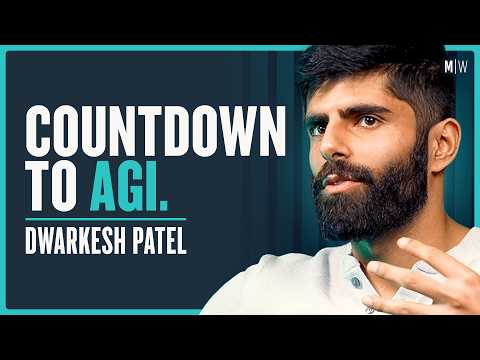
[@DwarkeshPatel] The Last Human CEO

· 5 min read

@DwarkeshPatel - "The Last Human CEO"

Link: https://youtu.be/bJD1NpdMY5s

Short Summary

This video argues that AI will revolutionize firms by enabling the creation of digital copies of skilled workers, leading to massive scalability and knowledge accumulation far surpassing human limitations. Future AI-driven companies, unconstrained by human resource limitations, will achieve unprecedented evolvability and efficiency, potentially transforming the entire economy.

[@hubermanlab] How Smell, Taste & Pheromones Shape Behavior | Huberman Lab Essentials

· 2 min read

@hubermanlab - "How Smell, Taste & Pheromones Shape Behavior | Huberman Lab Essentials"

Link: https://youtu.be/_eDg9yOvvrQ

Short Summary

Key Quotes

Here are 4 quotes extracted from the provided transcript that represent valuable insights, interesting data points, surprising statements, or strong opinions:

  1. "But what is absolutely clear, what is undeniable is that there are chemicals that human beings make and release in things like tears onto our skin and sweat and even breath that powerfully modulate or control the biology of other individuals." - This highlights the less obvious ways we chemically influence each other, going beyond the contested idea of pheromones.
  2. "What that means is that the act of inhaling itself wakes up the brain. It's not about what you're perceiving or what you're smelling. And indeed, sniffing as an action, inhaling as an action has a powerful effect on your ability to be alert, your ability to attend, to focus, and your ability to remember information." - A surprising and actionable insight into the cognitive benefits of the act of smelling, independent of the specific odor.
  3. "It is a total myth, complete fiction that different parts of your tongue harbor different taste receptors...They are completely intermixed along your tongue." - Debunks a widely held misconception about taste perception.
  4. "You and every other human from the time you're born until the time you die are actively seeking out and sensing and evaluating the chemicals that come from other individuals." - Emphasizes that the continuous chemical interactions between people, both consciously and subconsciously, can influence personal connections.

Detailed Summary

[@PeterAttiaMD] Chronic Pain & Muscle Relaxants: Neurontin and Baclofen | Sean Mackey, M.D., Ph.D.

· 3 min read

@PeterAttiaMD - "Chronic Pain & Muscle Relaxants: Neurontin and Baclofen | Sean Mackey, M.D., Ph.D."

Link: https://youtu.be/B4Ilh8xKGoc

Short Summary

Key Quotes

Detailed Summary

Here's a detailed summary of the YouTube video transcript, presented in bullet points:

Key Topics:

  • Muscle Relaxants (specifically Baclofen/Blephin)
  • Neuropathic Pain Management (specifically Gabapentin/Neurontin and Pregabalin/Lyrica)
  • Chronic Pain Definition and Management
  • Context Specific Approach to Pain Management

Muscle Relaxants (Baclofen/Blephin):

  • Benefits of Baclofen (Blephin):
    • Not particularly potent but offers a gentler alternative to stronger medications like Valium (benzodiazepines) or Flexeril (cyclobenzaprine).
    • Does not carry the same baggage of drowsiness or nausea that other muscle relaxants might cause.
    • Effective for acute muscle spasms or flare-ups (e.g., kink in the neck, lower back pain).
    • Considered a relatively safe medication.
  • Baclofen vs. Other Muscle Relaxants:
    • Not habit-forming, unlike some muscle relaxants (e.g., Somas).
    • Flexeril has tricyclic antidepressant properties that can cause sedation, while Baclofen is more benign.
  • Use Cases and Dosage:
    • Effective for acute or subacute conditions. Can be used as a trial for chronic conditions.
    • Typical oral dose: Up to 20 mg three times a day (up to 80 mg max).
  • Intrathecal Baclofen:
    • Used for severe spasticity (e.g., spinal cord injury).
    • Delivered via an intrathecal pump (catheter into the CSF).
    • Allows for lower doses and fewer side effects compared to oral administration.
  • Long-Term Use Considerations:
    • Careful evaluation of benefit vs. cost (side effects) is necessary.
    • Ongoing monitoring is crucial to determine if the medication should be adjusted or discontinued.
    • The individual cost and benefits need to be weighed.

Neuropathic Pain Management (Gabapentin/Neurontin and Pregabalin/Lyrica):

  • Gabapentin and Pregabalin: Similar Mechanisms:
    • Work on the alpha 2 delta subunit of calcium channels in the spinal cord and brain.
    • Reduce pain signals being processed in the central nervous system (spinal cord and brain).
    • Do not directly impact peripheral nerves.
  • Safety Profile:
    • Both have a high safety profile; no lethal dose.
    • Side effects: Drowsiness, risk of falls (especially in elderly patients), peripheral edema (water retention), weight gain (more prominent with pregabalin).
    • The need to avoid operating heavy machinery is stressed.
  • Use Cases and Benefits:
    • Effective for reducing neuropathic pain, especially in cases that are difficult to treat.
    • Can help with sleep, especially pregabalin, by promoting appropriate sleep architecture.
    • Daytime dosing helps with pain, and nighttime dosing promotes sleep.
  • Dosage and Considerations:
    • Gabapentin: Maxes out at around 900-1000 mg per dose due to active transport limitations in the small intestine.
    • Pregabalin: Linear kinetic profile (the more you take, the more gets into your system).
    • Switching from Gabapentin to Pregabalin: Consider switching to pregabalin if the patient benefits from gabapentin but maxed out on the dose.
  • Stanford context: They are tertiary referral center, seeing patients with recalcitrant pain.

Chronic Pain Definition and Management:

  • Definition of Chronic Pain:
    • Pain that persists beyond the expected time of tissue healing.
    • Context-specific; dependent on the nature and extent of the injury or surgery.
  • Context-Specific Pain Management:
    • The appropriate timeline for pain resolution varies depending on the specific condition.

In essence, the video discusses the appropriate use of muscle relaxants and medications for neuropathic pain, emphasizing the importance of individualized treatment plans and careful consideration of benefits vs. risks. The speakers also highlight the challenges of defining and managing chronic pain, particularly in patients who have not responded to standard treatments.

[@RenaissancePeriodization] What Women REALLY Want in a Physique (And How to Build It)

· 5 min read

@RenaissancePeriodization - "What Women REALLY Want in a Physique (And How to Build It)"

Link: https://youtu.be/G1cM_vuCqoI

Short Summary

Key Quotes

Okay, here are 5 direct quotes from the transcript that represent valuable insights or interesting points:

  1. "A lot of guys are like extremists. Well, I I heard you're supposed to be lean and then girls like you and you're like, 'I'm at 1% body fat, Cindy, do you love me?' That's not going to go so well because typically women that are into men are into men and then you have social skills to work on." (Highlights the point that extreme leanness can be a turn-off and that social skills are just as, if not more, important.)

  2. "And then they can use you to breed and discard you like the trash that you are, which is kind of hot. Yeah." (Humorous take on a potential evolutionary/biological underpinning.)

  3. "At 6'3, there seems to be a cresting. 6'4, 65, and 66 seem to be roughly equivalent to 63 as far as attractiveness. But once you get much beyond 66, you actually have a little bit of a freak factor." (Provides specific, actionable data on the perceived attractiveness of height.)

  4. "Most women do in fact prefer a male mating partner. That's the technical terminology. That is visually bigger than them." (Emphasis on the importance of being physically larger without necessarily knowing exact numbers).

  5. "Stated preferences, which is what women say they like, and revealed preferences, which is how they act in the world and actually select mates for mating. And revealed preferences illustrate that women just don't care on average about legs much." (Highlights the difference between what people say they want and what their behavior indicates, specifically regarding leg muscle.)

Detailed Summary

Okay, here's a detailed summary of the YouTube video transcript, broken down into bullet points:

Overall Topic: What physique do women find attractive in men? This video aims to dispel gym bro myths and provide data-backed insights based on examining hundreds of men.

Introduction:

  • The video's initial (unsuitable) title alluded to the "ideal male physique."
  • The central question: What do women actually find attractive, versus what men think women find attractive?

The Four Essentials (Plus a Bonus):

  1. Wider Shoulders and Narrower Waist (Dorito Shape):

    • This is a near-universal preference across cultures.
    • Achieved by prioritizing training:
      • Side deltoids (for width).
      • Lats (for back width and V-taper).
      • Upper pecs (for an "armor-plated" look).
    • Narrower waist is mostly genetics and body fat, not gym work.
    • Avoid excessive oblique training, but the effect is minimal anyway.
    • Waist size is primarily about calorie control (calories in vs. calories out).
    • It's mandatory for getting in that like potential for peak attractiveness kind of vibe for your shoulders to visibly be wider than your waist
    • Extreme V-tapers can be polarizing; ROI diminishes beyond a certain point.
  2. Leanness (8-15% Body Fat):

    • Not just as lean as possible.
    • Benefits of being lean:
      • Better facial aesthetics (defined cheekbones, jawline).
      • Enhanced muscle definition ("insta gains" effect).
      • Smaller waist (genetically permitted).
      • Visible abs (ravioli abs).
    • The ideal range is 8-15%:
      • "Athletic leanness" is preferred over extreme "contest shredded" look.
      • Below 6-7% can be less attractive to most women.
      • Provides the "look" without being too extreme.
    • Importance for sexual function: being too lean (under 5%) can negatively impact sex drive and erectile function ("Mr. Winky").
  3. Size Matters:

    • Women generally prefer men who are visually bigger than them.
    • Includes:
      • Height:
        • Attractiveness increases up to around 6'3".
        • Taller than 6'6" can be off-putting to some ("freak factor").
      • Weight:
        • Rough rule of thumb: ~35 lbs heavier than the woman.
        • Being significantly heavier (60+ lbs) can be less appealing to many women.
        • Muscle fetishist women like the bigger you get
        • For smaller women, 25-30lbs is fine, for bigger women, 40-50lbs is more attractive.
        • At that point it helps because you can make her feel small and dainty and very secure
  4. Bigger Arms and Forearms:

    • Not necessarily a universal obsession, but important.
    • "Thin, weak little spaghetti arms" are a negative.
    • Well-developed arms and forearms convey "masculine energy."
    • Not about having giant arms for the sake of it, but enough to make an impression, even when clothed.
  5. Bonus: Legs (Glutes > All Else):

    • Legs are generally less important to women than the other factors.
    • The exception: Avoid having "bro legs" (comically underdeveloped compared to upper body).
    • Shapely glutes are a bonus for some women, but not critical.
    • Prioritize upper body development (delts, pecs, lats) over obsessing about leg size.

Summary and Conclusion:

  • To maximize attractiveness (on average):
    • Be ~30lbs heavier than your target woman.
    • Have broader shoulders than your waist (hard rule).
    • Have visible abs.
    • Have at least decently developed arms and forearms.
  • Steroids aren't necessary to achieve the "ultimately attractive male physique" for most women.
  • After meeting the four essentials, personal preference in body type trumps additional "min/maxing."
  • Confidence is key: Confidence is more impactful than physical attributes alone.
  • Encourages viewers to share stories of their own transformations.

[@MINDMASTERYHUB-e4q] FIX YOURSELF: A Powerful Speech by DENZEL WASHINGTON

· 5 min read

@MINDMASTERYHUB-e4q - "FIX YOURSELF: A Powerful Speech by DENZEL WASHINGTON"

Link: https://youtu.be/RXfMPdGayFQ

Short Summary

To achieve your goals and live a fulfilling life, you must take full responsibility for your current situation and actively work on self-improvement. This involves setting clear goals, building resilience to overcome obstacles, prioritizing your physical and mental health, and consistently fixing yourself by confronting your demons and adopting a growth mindset.