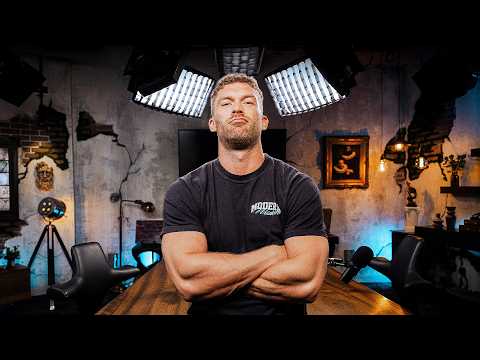
Link: https://youtu.be/baecUt1GaPk
Duration: 175 min
Transcript: Download plain text
Short Summary
Huberman Lab host Andrew Huberman sits down with former Navy SEAL turned wingsuit world record holder Andy Stumpf, author of "Drown Proof," and retired SEAL commander Jocko Willink, who lives in Montana and runs a jiu-jitsu gym with his wife. The wide-ranging conversation covers the neuroscience of discipline and the anterior midcingulate cortex, post-flow state benefits after wingsuit BASE jumps, the special operations suicide crisis, and the small daily choices that compound over time. Both guests share hard-won frameworks for life philosophy, including defining "enough," energy allocation, and confronting pre-service trauma.\n\nIn the interview, Andy Stumpf, a retired Navy SEAL who set two wingsuit world records with the Red Bull High Performance Team and authored "Drown Proof," discusses his "influence vs. concern" exercise, the "low-resolution" nature of social media addiction, the physics and risk of wingsuit BASE jumping, and the personal hardships—above all a brutal divorce—that proved harder than his military career.", "detailed": "# Huberman Lab Episode — Andy Stumpf & Jocko Willink: Navy SEALs on Discipline, Flow States, Suicide Prevention & Life Philosophy\n\n## Guest Backgrounds\n- Andy Stumpf is a retired Navy SEAL who set two wingsuit world records with the Red Bull High Performance Team, is the author of Drown Proof, owns a Montana coffee shop, and started his post-Navy career moonlighting for a strength and conditioning company before quitting 16 months later to sell things out of his garage on Craigslist.\n- Jocko Willink is a former U.S. Navy SEAL who served in combat (including being shot in Baghdad), now lives in Kalispell, Montana, owns a Black Rifle Coffee Company shop, runs a jiu-jitsu gym with his wife as coach, and has built a post-military career spanning professional skydiving and BASE jumping, public speaking, and podcasting.\n- Host Andrew Huberman is a Stanford neurobiology and ophthalmology professor who frames the conversation around rising suicide rates and the timeliness of discussing mental health.\n\n## Andy Stumpf: The "Influence vs. Concern" Exercise\n- The exercise involves drawing a line down a piece of paper, writing "concern" on one side and "influence" on the other, then listing everything occupying waking hours.\n- Stumpf frames the sphere of concern as roughly the size of a table while the sphere of influence is the size of a pin drop on that table — he has never been able to write more than one item under direct influence: "yourself."\n- He distills the framework into a Stoic principle: "I have no control over what happens to me in my life but I have absolute and complete and total control over how I respond to it."\n- Stumpf performs the exercise once a month or every six months when sticky thoughts arise; Huberman had been performing it once a week since listening to the audiobook and called it "a game changer."\n- The hosts noted that social media has expanded the "left column" of uncontrollable concerns, making the exercise harder.\n\n## Social Media as a "Low-Resolution" Addiction\n- Huberman theorizes social media is the "perfect addiction" because it is "low resolution" — it doesn't fully occupy the mind, so users exit sessions reporting they wasted 30–45 minutes feeling it "didn't feel good."\n- Unlike intoxication with drugs or alcohol where people lose the sense of time, social media users remain aware they are wasting time.\n- Huberman states he fears social media's effect on younger generations "way way worse" than the opioid crisis, and more than AI in terms of taking away jobs and creative output.\n- A January phone-screen-time challenge between Huberman and former SEAL teammate Chad Wright started at 4.5 hours/day; Wright's best was ~90 minutes and Huberman's was 30 minutes — by the time of the conversation (~March) both had relapsed.\n- Stumpf references SEAL selection attrition (maybe 15 of 100 candidates get through, 10 consistently) to frame how two high-consequence veterans still relapsed, implying the platforms themselves bear much of the responsibility.\n\n## Jocko Willink: Flow States and Post-Flow Effects\n- Jocko described the post-jump state after a wingsuit BASE jump as feeling like a "9-volt battery" — not adrenalized, but "settled" and "anchored" with clearer thinking for roughly 3 months.\n- Key disagreement with Huberman: while the host proposed flow states raise stress threshold, Jocko argued they actually lower stress threshold and strip away "BS stress," making him less likely to engage in riskier behaviors.\n- Jocko found similar flow-state benefits in art, yoga, meditation, ice baths, sauna, and especially jiu-jitsu — the "totally artificial violence" forces presence.\n- He does NOT recommend wingsuit skydiving or BASE jumping as a path for military members transitioning out.\n- Rick Rubin has described a similar prolonged post-flow state after completing album work, and a recent paper showed that stress impairs the ability to make insightful connections between prior memories.\n\n## Discipline and Small Daily Choices\n- Jocko's mantra: "It always takes longer to do it wrong" — illustrated by his kids stacking empty toilet paper rolls into a pyramid that falls behind the toilet.\n- When checking his daughter's bathroom pre-recording, he found 3 rolls of toilet paper: 2 empty wedged on the side and a third placed vertically.\n- Doing laundry once takes less total time than letting it pile up, and macro discipline is actually the accumulated result of micro discipline nobody sees.\n- Mantra from "the games": "How you do anything is how you do everything."\n\n## Neuroscience: The Anterior Midcingulate Cortex\n- Stanford neurosurgeon Joe Parvizi discovered the function of the anterior midcingulate cortex (aMCC) while electrically stimulating the cingulate cortex to locate epileptic foci for surgical ablation.\n- Stimulation caused every patient to report "there's a storm coming and I want to lean into it" or a sense of persevering through something big.\n- The aMCC grows in volume in people who successfully diet by adding three 30-minute cardio sessions to their existing program — but ONLY if they hate the cardio.\n- Core finding: "It's not the thing, it's the thing you don't want to do."\n- Growth of this structure is the defining feature of "superagers" who maintain cognitive ability into their 80s and 90s.\n\n## The Host's Medical Emergency\n- While driving from Salt Lake City back to Kalispell, Montana, the host experienced severe abdominal pain from an intestinal blockage caused by scar tissue from earlier surgery; he still rolled at open mat for 90 minutes before slouching in a chair unable to stand straight.\n- He shares a genetic blood abnormality with his sister that prevents normal processing of opiates; morphine first failed in a Baghdad ER, and he was eventually given ketamine in ICU that nearly put him in the K-hole (he heard hairs inside his ears moving in a silent room).\n- His sister, a nurse on vacation, communicated the opiate-processing issue in clinical language to staff over his objections.\n\n## The Suicide Crisis in Special Operations\n- The Green Beret community has lost more people to suicide than to combat operations since 2001, and Jocko believes SEAL community suicide numbers are close to or will eclipse combat losses.\n- Dave is referenced as a specific case: a SEAL who died by suicide at his Florida home, alone, with alcohol involved and a gun, who left behind journals the speaker could not read without crying.\n- Dave was described as "the standard for a team guy" — the gap between his high standards for himself and his own reality "destroyed him."\n- The "lonely at the top" hypothesis: leaders over ultra-high performers face increasing pressure to maintain their image.\n- Jocko estimates "trending past 50% of the guys brought a lot of stuff with them" — pre-service ("seabag") trauma including childhood trauma or bullying that may have led them toward special operations to "dispatch bullies."\n- The "foggy goggles" intervention: tell a struggling person "your goggles are foggy, so you can't trust anything you think or see about yourself for the next six months" and to trust only three specified people.\n\n## Wingsuit Risk, Speed & the Dunning-Kruger Curve\n- Stumpf's heart was maxed out during wingsuit BASE jumps, requiring maximal human performance for about 4 seconds after exit to survive.\n- On a Swiss valley jump with a 4-hour hike, flying aggressively ~6 feet off the ground increases the risk of impacting a tree at 100 mph.\n- Stumpf frames the primary danger as the Dunning-Kruger effect, where inexperienced or overconfident jumpers take on risks beyond their skill — particularly in the "middle phase."\n- His recurring framework: "Did you nail it or did you get away with it?" — a phrase he believes should be "stamped into everyone's brain."\n- He directly associates the death of a wingsuit jumper named Alex with the Dunning-Kruger curve.\n\n## Cold Exposure, Sauna & Heat/Cold Protocols\n- Stumpf uses a sauna at 220°F and prefers cold plunges in the low 40s°F with a heat-cold protocol of three rounds each at Jacos (sauna at 210–220°F for 20 minutes per round).\n- The Jacos "factory reset protocol" involves not knowing how hot, how long, how cold, or how long you will be in the sauna/cold.\n- Cold exposure vasoconstricts and can reduce strength and hypertrophy gains if done immediately after training; Stumpf recommends waiting at least 6 hours or using cold on off-days.\n- Hyperventilation breathing followed by jumping into cold water "has killed people," and Stumpf warns against jumping into an ice hole.\n\n## Skydiving & BASE Jumping\n- Stumpf had 3,000 skydive jumps before putting on a wingsuit for the first time; most recommendations require about 200 jumps before wingsuiting (1–2 years for non-professionals).\n- A first-timer is recommended a tandem jump or a commercial wind tunnel session (Oceanside, LA, San Diego, Virginia Beach cited).\n- BASE stands for Building, Antenna, Span, Earth; Pine Bridge in Twin Falls is the one US location legal to BASE jump 24/7, 365 days a year.\n- Stumpf's first cliff (earth) BASE jump was Monte Brento in Italy, followed by two and a half weeks in Lauterbrunnen, Switzerland.\n\n## Personal Life: Divorce, Son, Mother\n- Stumpf describes the end of his first marriage as the hardest thing he has ever done — harder than being a Navy SEAL.\n- The ~2-year divorce was "very contentious" and "soul crushing," rated "10 out of 10. Do not recommend."\n- He lost contact with his oldest son for 18 months after initiating the divorce; his son once burned out of a parking lot rather than acknowledge him. By staying the course, the relationship is now closer than ever.\n- Huberman disclosed he grew up in a very high-conflict divorce and is the son who wanted to protect his mom while still loving his dad.\n\n## Money Philosophy & Defining "Enough"\n- Both guests' stated money philosophy is to make only enough so they can say no to things, calling "no" the most powerful word and noting that subtraction grows more powerful with age.\n- Andy's business litmus test for saying no: do I naturally do this in my life, and would I actually enjoy this regardless of the check.\n- He attributes a quote to Naval: "one of the reasons to win the game is so you can stop playing the game."\n- Andy cites a research figure that the income threshold past which more money does not increase happiness was previously ~$70,000/year and has scaled with inflation; he disagrees, saying money can buffer stress but not buy happiness.\n- The host recommends using five-year increments when setting goals and argues overnight 10-year success stories are outliers that don't scale.\n- Stumpf recommends Morgan Housel's The Art of Spending Money as mostly psychological and focused on assessing what things are worth in terms of resources required.\n\n## Energy Allocation Framework\n- The host argues the difference between people ranked 11th through 100th in their profession versus the top 10 is primarily a matter of how they allocate their energy.\n- He credits Andy's book Drown Proof as the source of this framework and used it the previous week during a talk in New York.\n\n## Jiu-Jitsu and Unmasterable Pursuits\n- Jocko believes jiu-jitsu cannot be mastered; even black belts cycle through seasons of believing they have it figured out before being shown otherwise.\n- Advice for couples training together: just drill, let the partner take a dominant position, and don't submit them; Jocko submitted his wife once and "regretted the long-term social consequences."\n\n## Daily Routines and Closing\n- Recommendations: get close to sweat once a day, 30-minute sauna as a substitute for a hard workout, 105°F as the perfect sauna temperature, start the day with a disciplined act (making the bed or 16-oz glass of water before coffee), and use mouth tape during sleep.\n- Small disciplined choices made roughly a hundred times a day, compounded over a week/month/year, will visibly change a life.\n- The Huberman Lab podcast is available on YouTube, Spotify, and Apple; the Neural Network Newsletter is a zero-cost monthly newsletter with podcast summaries and protocol PDFs (sleep, dopamine, cold exposure, cardiovascular, resistance training).", "tags": ["navy seal", "huberman lab", "andy stumpf", "jocko willink", "wingsuit base jumping", "suicide prevention", "discipline", "flow states", "mental health", "drown proof", "neuroscience", "money philosophy", "jiu-jitsu", "social media addiction"], "notable_section_indexes">